
Whole Wheat vs White for Bagel - Selecting the healthier flour option
Choosing between whole wheat and white bagels often feels like a compromise between health and texture. While standard dietary guidelines frequently oversimplify flour selection, understanding specific grain composition grants you better control over your metabolic health. Note that milling and processing methods significantly alter glycemic impact; for instance, sprouted whole wheat provides superior fiber density compared to bleached white flour. The following analysis explores these nutritional profiles to help you align your bagel choice with your dietary goals.
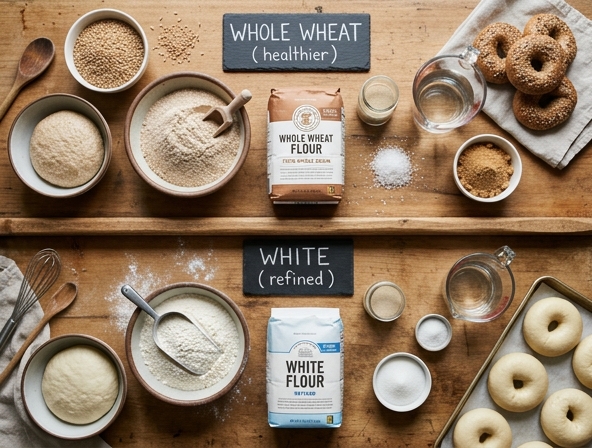
| Flour Type | Key Characteristic | Metabolic & Nutritional Impact |
|---|---|---|
| Sprouted Whole Wheat | Less processed; retains grain integrity. | Superior fiber density; supports better metabolic health and lower glycemic impact. |
| Bleached White | Highly processed and milled. | Higher glycemic impact; lacks the fiber density of sprouted varieties. |
The Bagel Battle: Whole Wheat vs. White Flour
For many, the bagel is the undisputed heavyweight champion of breakfast. Whether it's a toasted sesame bagel smeared with cream cheese, a savory everything bagel with lox, or a simple cinnamon-raisin start to the day, this boiled-and-baked staple has earned a permanent place in the global culinary consciousness. However, as health-conscious consumers become increasingly savvy about the ingredients they put into their bodies, a classic debate has surfaced: is the traditional white flour bagel a nutritional liability, or is the whole wheat alternative actually worth the trade-off in texture?
The Anatomy of Flour: Understanding the Processing Difference
To understand the difference between white and whole wheat bagels, we must first look at the grain itself. A wheat kernel consists of three primary parts: the bran (the fibrous outer shell), the germ (the nutrient-rich core), and the endosperm (the starchy energy reserve).
White flour, often referred to as refined flour, is produced by stripping away both the bran and the germ. What remains is only the endosperm. This refining process creates a fine, powdery flour that is highly prized by bakers because it produces a consistent, light, and airy crumb. However, this convenience comes at a significant nutritional cost. By removing the bran and germ, we lose the vast majority of the fiber, B vitamins, iron, and phytochemicals inherent in the grain.
Whole wheat flour, by contrast, uses the entire kernel. The bran provides insoluble fiber, which is essential for digestive health, while the germ is packed with healthy fats, antioxidants, and trace minerals like magnesium and zinc. When you eat a whole wheat bagel, you are consuming the grain in its natural, complex state, which changes how your body processes the energy contained within.
The Nutritional Breakdown
When comparing the two, the differences extend far beyond just the color of the crumb:
- Fiber Content: This is the most glaring differentiator. A standard white flour bagel may provide 1 to 2 grams of fiber, while a dense whole wheat bagel can provide 5 to 8 grams. Fiber is essential for regulating blood sugar, promoting satiety, and maintaining gut health.
- Glycemic Index (GI): White flour is highly processed and breaks down into glucose almost immediately upon digestion. This leads to a rapid spike in blood sugar and a subsequent crash. Whole wheat flour, thanks to its fiber content and complex structure, slows down the rate of digestion, providing a steadier release of energy over a longer period.
- Micronutrient Density: While many white flours are "enriched" with vitamins (meaning synthetic vitamins are added back in after processing), they still lack the complex array of natural minerals found in the whole grain.
The Texture and Culinary Experience: The "Chew" Factor
If whole wheat is nutritionally superior, why isn't every bagel shop exclusively selling 100% whole wheat? The answer lies in the science of baking. The iconic bagel texture-that signature, toothsome "chew"-is the result of strong gluten development. The proteins in white flour are incredibly efficient at forming these gluten networks, which trap gas bubbles during the boiling and baking process, creating a light, airy, yet resilient structure.
Whole wheat flour presents a challenge for bakers. The sharp edges of the bran flakes can physically "cut" through the gluten strands as the dough is kneaded, preventing them from developing the strength needed for that classic bagel chew. Consequently, 100% whole wheat bagels can often feel dense, heavy, or even "bready" rather than "bagelly." To combat this, many commercial bakeries use a blend of flours, which allows them to retain some of the nutritional benefits of wheat while maintaining the desired texture.
Health Implications: Satiety and Blood Sugar
For the average consumer, the choice between white and whole wheat comes down to blood sugar management and satiety. If you eat a plain white bagel, you are essentially consuming a high-carb, low-fiber snack that can lead to cravings later in the morning. This is the "bagel crash."
Conversely, a whole wheat bagel keeps you fuller for longer. Because it takes more effort for the digestive system to break down the complex structure of the whole grain, you avoid the insulin spike. For those living with metabolic issues or trying to manage their weight, the whole wheat option is undeniably the better choice. However, it is worth noting that "whole wheat" labels can sometimes be deceptive. Some manufacturers add caramel color or molasses to refined white flour to mimic the appearance of a healthier bagel. Always check the ingredient list: the first ingredient should be "whole wheat flour," not just "wheat flour" or "enriched flour."
The "Middle Ground" Options
If you find that 100% whole wheat bagels are too dense for your palate, there are alternatives that bridge the gap:
- Sprouted Grain Bagels: These are made from grains that have been allowed to germinate. The sprouting process breaks down some of the starch and anti-nutrients, making the bagel easier to digest while preserving the fiber and nutrient profile.
- Sourdough Bagels: While the base flour might still be refined, the fermentation process inherent in sourdough baking actually lowers the glycemic impact of the flour. The beneficial bacteria break down some of the gluten and starches, which can be easier on the gut.
- Multi-Grain/Seed Bagels: Adding seeds like flax, chia, and sunflower to a bagel increases its fiber and healthy fat content, helping to offset the glycemic impact of the white flour base.
The Verdict
Is the whole wheat bagel the healthier option? Objectively, yes. The fiber, nutrient density, and lower glycemic impact make it a superior choice for metabolic health and sustained energy. However, the "healthiest" diet is one that is sustainable. If you absolutely despise the taste of whole wheat, forcing yourself to eat it every day might just lead to resentment of your diet.
If you love the classic white flour bagel, try to mitigate the impact. Top it with high-protein or high-fiber additions-think smashed avocado, smoked salmon, or a poached egg. These additions slow the absorption of the carbohydrates, effectively lowering the glycemic index of your entire meal. Ultimately, the choice between whole wheat and white is a balance of biology and joy. Choose whole wheat when you can for your long-term health, and enjoy the classic white bagel as an occasional, intentional indulgence.
Disclaimer:
The information provided on Eateryn is for general educational and informational purposes only and is not intended as medical, nutritional, or healthcare advice. It should not be used to diagnose, treat, cure, or prevent any disease or medical condition.
Always consult a qualified physician, registered dietitian, or other certified healthcare professional before making changes to your diet, exercise routine, or lifestyle, or regarding any medical questions or concerns you may have. Never disregard or delay seeking professional medical advice because of something you have read on this website.