
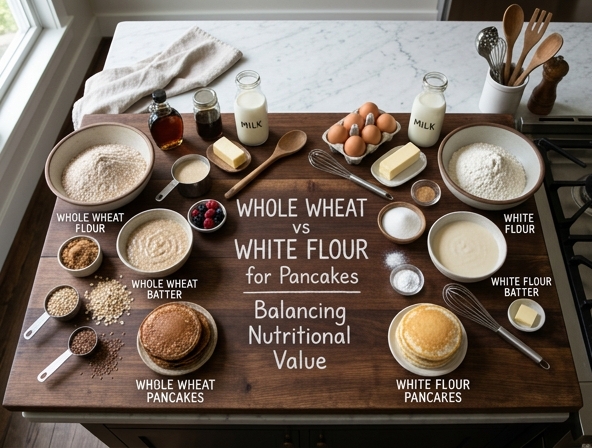
Whole Wheat vs White Flour for Pancakes - Balancing Nutritional Value
Achieving the perfect pancake often feels like a difficult trade-off between culinary pleasure and nutritional goals. While refined white flour is the industry standard for light, fluffy textures, many health-conscious cooks find it lacking in essential fiber. Integrating whole wheat flour boosts satiety, though it necessitates specific adjustments to maintain consistency. By utilizing a 50/50 ratio of white whole wheat to all-purpose flour, you capture both heartiness and fluffiness. This guide evaluates how to balance these staples effectively.
| Flour Type | Key Benefits | Primary Drawbacks |
|---|---|---|
| Refined White Flour | Provides a light, fluffy, and classic pancake texture. | Lacks essential fiber and nutritional value. |
| Whole Wheat Flour | Boosts fiber content and increases satiety. | Can lead to heavier, denser pancake consistency. |
| 50/50 Blend (Recommended) | Balances heartiness with desired fluffy texture. | Requires careful measurement to maintain consistency. |
Whole Wheat vs. White Flour for Pancakes: Balancing Nutritional Value
The pancake is arguably the world's most beloved comfort food. Whether served with a simple pat of butter and maple syrup or dressed up with fresh berries and Greek yogurt, it serves as the ultimate Saturday morning tradition. Yet, for the health-conscious home cook, the standard pancake recipe often presents a nutritional dilemma. The primary culprit? The flour. Traditionally, white all-purpose flour has been the gold standard for achieving that light, airy, and fluffy texture we associate with a perfect pancake. However, in an era where we are increasingly aware of the importance of fiber and blood sugar management, the debate between whole wheat and white flour has moved from the bakery to the breakfast table.
The Anatomy of the Grain: Why Flour Type Matters
To understand the nutritional divide, we must first look at how these flours are made. A wheat kernel consists of three primary parts: the bran (the fibrous outer shell), the germ (the nutrient-dense core), and the endosperm (the starchy energy store). Whole wheat flour retains all three components, meaning you are consuming the entire grain as nature intended. White flour, conversely, undergoes a refinement process that strips away the bran and the germ, leaving only the starchy endosperm.
While this process creates a fine, silky powder that produces a delicate crumb in baked goods, it effectively removes the very elements that provide nutrition. By discarding the bran and germ, we lose the majority of the grain's fiber, essential fatty acids, B vitamins, and minerals like magnesium and iron.
Nutritional Breakdown: The Case for Whole Wheat
When you opt for whole wheat flour in your pancake batter, you are significantly upgrading the nutritional profile of your meal. The most immediate benefit is fiber. Fiber is essential for digestive health, and it plays a critical role in satiety-the feeling of fullness that prevents mid-morning snacking. A diet rich in whole grains is linked to a lower risk of heart disease, type 2 diabetes, and certain digestive cancers.
Furthermore, whole wheat flour has a lower glycemic index compared to white flour. Because the fiber content slows the absorption of glucose into the bloodstream, whole wheat pancakes are less likely to cause the rapid blood sugar spikes-and subsequent "sugar crashes"-associated with refined carbohydrates. For parents, this is particularly relevant; swapping to whole wheat can provide sustained energy for children, helping them stay focused and full throughout the morning.
The Culinary Challenge: Texture and Taste
If whole wheat is so much better for us, why is white flour still the dominant choice for pancakes? The answer lies in chemistry and physics. The bran particles in whole wheat flour act like tiny, sharp blades that can cut through the gluten strands as they form. This results in a pancake that is denser, heavier, and potentially grittier than its refined counterpart. Furthermore, the germ in whole wheat contains oils that can oxidize over time, potentially giving the flour a slightly nutty or even bitter edge if not fresh.
For many, the "perfect" pancake is synonymous with a cloud-like texture. White flour allows for maximum gluten development, which traps the carbon dioxide bubbles created by baking powder, resulting in that signature fluffiness. When you switch entirely to whole wheat, those bubbles struggle to hold their structure, often leading to a pancake that feels more like a heavy griddle cake than a light breakfast treat.
Bridging the Gap: The 50/50 Strategy
The good news is that you don't have to choose between nutrition and enjoyment. Finding the "golden ratio" is the secret to successful healthy pancakes. Most culinary experts recommend a 50/50 blend of whole wheat pastry flour and all-purpose flour.
Pro-tip: Look specifically for "whole wheat pastry flour" rather than standard "whole wheat flour." Whole wheat pastry flour is milled from a soft white wheat variety, which is naturally lower in protein than the hard red wheat found in standard whole wheat flour. This results in a finer texture that mimics the behavior of white flour while maintaining the benefits of the whole grain.
Tips for Elevating Whole Wheat Pancakes
If you are determined to use 100% whole wheat, you can employ several culinary techniques to mitigate the density:
- Soaking: Mix your whole wheat flour with your liquid ingredients (milk, buttermilk, or yogurt) and let the batter sit for 20 to 30 minutes before cooking. This allows the bran to soften and hydrate, resulting in a tender pancake rather than a gritty one.
- Add Acid: Use buttermilk or a mixture of milk and apple cider vinegar. The acidity helps tenderize the gluten, making for a lighter finish.
- Aeration: Separate your eggs and whip the whites to stiff peaks, then fold them into the batter at the very end. This adds structural lift that helps counteract the weight of the whole wheat.
- Flavor Boosters: Because whole wheat has a heartier flavor, it pairs beautifully with robust additions like cinnamon, nutmeg, mashed bananas, or even a tablespoon of flaxseed meal. These ingredients complement the nutty profile of the grain.
Conclusion: Finding Your Balance
At the end of the day, nutritional value isn't just about the nutrient density of the ingredients; it is about the sustainability of your eating habits. If you force yourself to eat pancakes that you don't enjoy because they are "healthy," you are less likely to stick to a balanced diet in the long run. By experimenting with blends, utilizing whole wheat pastry flour, and applying techniques like soaking the batter, you can create a breakfast that bridges the gap between indulgent comfort and health-conscious nourishment.
The goal isn't to demonize the occasional light, fluffy white-flour pancake-a celebratory breakfast is part of a balanced life-but to reclaim the pancake as a nutritional powerhouse. Whether you choose to go half-and-half or all-in on whole grains, understanding the trade-offs allows you to make an informed choice that keeps both your body and your taste buds satisfied.
Disclaimer:
The information provided on Eateryn is for general educational and informational purposes only and is not intended as medical, nutritional, or healthcare advice. It should not be used to diagnose, treat, cure, or prevent any disease or medical condition.
Always consult a qualified physician, registered dietitian, or other certified healthcare professional before making changes to your diet, exercise routine, or lifestyle, or regarding any medical questions or concerns you may have. Never disregard or delay seeking professional medical advice because of something you have read on this website.