
Whole Milk vs Heavy Cream for Macaroni and Cheese - Achieving The Dreamiest Consistency
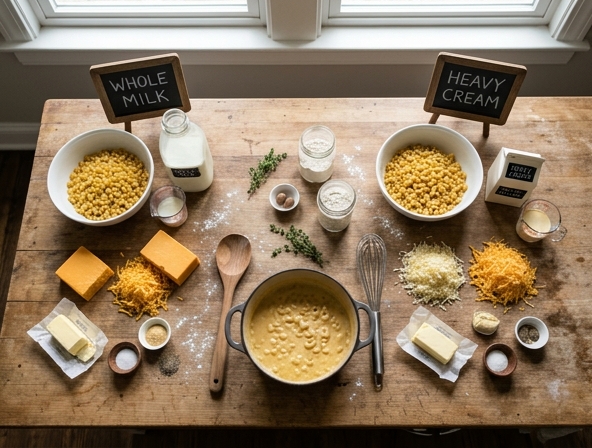
| Dairy Source | Key Characteristic | Texture Impact |
|---|---|---|
| Whole Milk | Lighter profile | Provides a clean, balanced finish. |
| Heavy Cream | High-fat content | Adds luxurious, dense viscosity. |
| Expert Approach | Combine both with a starch thickener (Mornay style) to ensure a stable, silky emulsion and avoid graininess. | |
Whole Milk vs. Heavy Cream for Macaroni and Cheese: Achieving The Dreamiest Consistency
There is perhaps no comfort food more universally adored than macaroni and cheese. It is a dish of humble origins, yet it remains a battleground for home cooks and chefs alike, all striving for that elusive, perfect texture: a sauce that is velvety, clingy, and indulgent without becoming a cloying, oily mess. While the cheese selection and the pasta shape are certainly factors, the real secret to the ultimate consistency lies in the dairy foundation. The eternal debate usually pits two heavyweights against each other: whole milk and heavy cream.
The Science of the Sauce: Why Dairy Matters
To understand why milk and cream behave differently, we must look at the science of the emulsion. A macaroni and cheese sauce-specifically a Mornay-is essentially a suspension of cheese solids, fat, and proteins in a liquid base. Your goal is to keep these elements perfectly integrated even as the temperature fluctuates.
Milk is approximately 3.25% to 3.5% fat. It is mostly water, which makes it an excellent medium for distributing flavor. Heavy cream, by contrast, contains anywhere from 36% to 40% fat. This drastically higher fat content changes the physics of your sauce. Fat acts as a stabilizer, but it also dictates the "mouthfeel"-the sensory experience of viscosity and weight on the tongue.
Whole Milk: The Humble Foundation
Using whole milk as your primary liquid results in a sauce that is often described as "cleaner." Because whole milk has a lower fat content, the flavors of your chosen cheeses-whether it's a sharp aged cheddar or a nutty Gruyère-are allowed to shine without being muted by a heavy blanket of butterfat.
However, whole milk comes with a challenge: stability. Because it is largely water-based, a whole milk-based sauce requires a more robust roux (a cooked mixture of equal parts flour and fat). Without that structure, the sauce may struggle to cling to the pasta, often sliding off into the bottom of the dish. A whole milk sauce is lighter, which means you can theoretically eat more of it, but it lacks that "gourmet" coating that characterizes restaurant-style mac and cheese.
Heavy Cream: The Decadent Shortcut
Heavy cream is the darling of the "fast and indulgent" school of cooking. Because of its high fat and protein content, it reduces rapidly. You don't necessarily need a large roux to achieve a thick consistency with heavy cream; heat alone will cause the water in the cream to evaporate, leaving behind a rich, concentrated liquid that binds to the pasta almost instantly.
The danger of heavy cream, however, is two-fold: oiliness and "palate fatigue." If you cook the sauce too aggressively or use a cheese that is already high in fat, the emulsion can break, leaving a sheen of grease on top of your pasta. Furthermore, a purely cream-based sauce can be so rich that it becomes overwhelming after only a few bites. It lacks the subtle "bite" that the water content in milk provides.
The "Hybrid" Approach: Finding the Sweet Spot
For the home cook who wants the best of both worlds, the answer rarely lies in extremes. The most dream-worthy macaroni and cheese is almost always achieved through a 50/50 blend of whole milk and heavy cream.
By using this hybrid method, you provide enough fat (via the cream) to ensure a luxurious, coating consistency, while maintaining enough water (via the milk) to keep the sauce stable and prevent it from becoming overly heavy. This ratio allows the sauce to emulsify perfectly with the cheese proteins, creating a structure that stays creamy even after the dish has cooled slightly.
Technique: The Final Piece of the Puzzle
Regardless of which dairy you choose, technique is the ultimate arbiter of consistency. Here are three rules to ensure your sauce stays dreamy:
- Temperature Control: Never add your cheese to a boiling sauce. The high heat will cause the proteins in the cheese to seize, leading to a grainy, stringy texture. Turn the heat down to low or remove the pot from the burner entirely before whisking in your cheese.
- The Pasta Water Hack: Always reserve a half-cup of your starchy pasta water. The starch acts as a natural emulsifier, helping to bind the sauce to the macaroni. If your sauce looks a little too thick, a splash of that liquid gold will loosen it up and make it glossy.
- The Secret Weapon (Sodium Citrate): If you want to achieve "processed cheese" smoothness without using processed cheese, consider adding a pinch of sodium citrate. This salt turns any cheese into a meltable, silky sauce that won't break, regardless of the dairy you use.
Conclusion
So, should you choose whole milk or heavy cream? If you are aiming for a sophisticated dish where the nuanced profile of an expensive artisanal cheese is the star, lean toward whole milk. If you are looking for pure, unadulterated comfort that feels like a warm hug, go with heavy cream. But if you are chasing the dream-that perfect balance of flavor, body, and mouth-coating richness-take the middle road. A 50/50 blend, combined with careful heat management and the inclusion of starchy pasta water, will ensure your macaroni and cheese is not just a side dish, but the highlight of the meal.
Experimentation is the key to mastering your own signature mac and cheese. Next time you head to the kitchen, don't just reach for the first carton in the fridge; consider the role your dairy plays in the final architecture of the dish. Your patience, and your palate, will be rewarded.
Disclaimer:
The information provided on Eateryn is for general educational and informational purposes only and is not intended as medical, nutritional, or healthcare advice. It should not be used to diagnose, treat, cure, or prevent any disease or medical condition.
Always consult a qualified physician, registered dietitian, or other certified healthcare professional before making changes to your diet, exercise routine, or lifestyle, or regarding any medical questions or concerns you may have. Never disregard or delay seeking professional medical advice because of something you have read on this website.