
Wet Rub vs Dry Rub for Barbecue Ribs - Choosing The Right Flavor Base
Wet Rub vs Dry Rub: Mastering Your Base
Pitmasters often struggle to balance seasoning, leading to inconsistent bark or bland meat. While standard salt-and-pepper blends provide a base, the right rub fundamentally transforms flavor retention and texture. Note that seasoning is a tool, not a substitute for proper technique. From the crunchy, spice-forward profiles of Memphis dry ribs to the rich, caramelized finish of Kansas City wet styles, each approach offers distinct advantages. This guide evaluates both methods to elevate your barbecue craft.
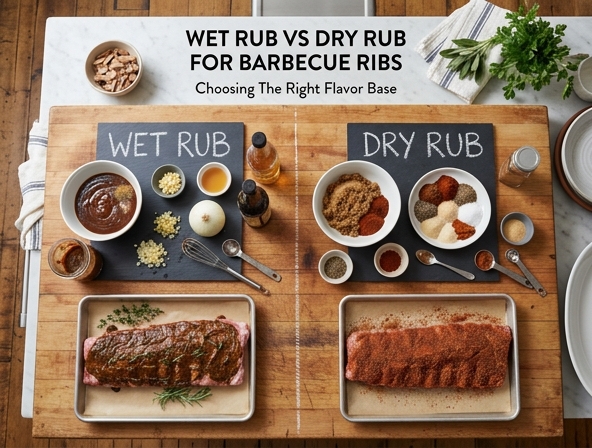
| Feature | Dry Rub | Wet Rub |
|---|---|---|
| Core Characteristic | Spice-forward seasoning blend | Paste or marinade base |
| Texture/Finish | Crunchy, bark-heavy exterior | Rich, caramelized finish |
| Flavor Profile | Intense, toasted spice flavors | Deep, developed, and often sticky |
| Regional Style | Memphis-style | Kansas City-style |
| Key Benefit | Enhances texture and spice crust | Increases flavor retention and moisture |
The Great BBQ Debate: Wet Rub vs. Dry Rub for Ribs
For every pitmaster, from the backyard hobbyist to the competition circuit legend, the quest for the perfect rib is a lifelong pursuit. While the quality of the meat and the precision of the smoke are critical, the flavor base applied to the ribs-the rub-is where the personality of the barbecue truly shines. The eternal debate between wet rubs and dry rubs often comes down to personal preference, but understanding the chemistry and texture outcomes of each is the key to mastering your grill.
The Anatomy of a Dry Rub
A dry rub is the traditional foundation of low-and-slow barbecue. Composed primarily of dried spices, herbs, granulated aromatics (like garlic and onion powder), salt, and sugar, a dry rub is designed to do one thing exceptionally well: create "bark."
When you apply a dry rub to the surface of a rack of ribs, the salt draws out moisture from the meat through osmosis. As this moisture hits the surface, it dissolves the sugars and spices, creating a concentrated, sticky layer. Over several hours in the smoker, the heat causes the sugars to caramelize and the proteins to denature, transforming that initial coating into a dark, flavorful, and slightly crunchy crust known as "bark."
- Pros: Excellent texture development, cleaner presentation, ease of storage, and quintessential "classic BBQ" flavor.
- Cons: Can potentially dry out if the cooking temperature is too high or the meat is lean; requires a binder to ensure adhesion.
The Power of the Wet Rub
A wet rub, often referred to as a spice paste, incorporates liquid elements such as oils, vinegars, mustards, or even fruit purees into the spice blend. By turning the rub into a thick, spreadable paste, you change the way the flavors interact with the meat before the heat even touches it.
Wet rubs are often used for their superior ability to penetrate the outer layer of the meat. Because the spices are suspended in a carrier (like oil or acid), the volatile flavor compounds are carried deeper into the muscle fibers. Furthermore, wet rubs are less prone to burning during long, intense smoke sessions, making them a secret weapon for those who prefer a more succulent, tender exterior rather than a crusty bark.
- Pros: Deep flavor infusion, superior moisture retention, and impossible for the spices to "shake off" during transport or handling.
- Cons: Does not produce the same level of crunchy bark as a dry rub; can sometimes result in a "steamed" effect if the paste is too thick.
The Science of the Binder: Why It Matters
Regardless of whether you choose wet or dry, the application process usually involves a "binder." A binder is a thin layer of liquid applied to the meat to help the spices stick. Common choices include yellow mustard, olive oil, or even Worcestershire sauce.
In a dry rub scenario, the binder acts as the "glue." Once the smoke begins to roll, the binder evaporates, leaving the spices locked onto the meat. In a wet rub scenario, the ingredients *are* the binder. Understanding this distinction is vital: if you use a wet rub, you don't need an additional binder. If you use a dry rub, skipping the binder often results in a patchy, uneven application where spices fall off into the firebox rather than onto your plate.
Comparing Results: Flavor, Texture, and Time
When choosing between the two, consider the final texture you crave. If you love the contrast between the tender interior of a rib and a toothsome, caramelized crust, the dry rub is your best friend. It excels on spare ribs, which have more fat to render and benefit from the textural contrast.
If you are working with leaner cuts or are aiming for a melt-in-your-mouth, almost "confit-like" texture, a wet rub is superior. The oils in a wet rub help maintain surface moisture, ensuring the ribs stay succulent even if they are subjected to a slightly higher temperature or longer smoke time.
Furthermore, consider the flavor profile. Dry rubs rely heavily on the smoke to provide depth, while wet rubs can carry acidic or pungent notes-like cider vinegar or crushed garlic-that would otherwise char and become bitter in a dry format.
The Hybrid Strategy: The Best of Both Worlds
Many competition pitmasters have moved toward a hybrid approach. This involves applying a thin binder (such as mustard) to the ribs, followed by a generous layer of a spice-heavy dry rub. After the ribs have been in the smoker for about two hours, the pitmaster applies a "mop" or a light glaze-essentially a wet application-to refresh the moisture and add a final layer of complexity.
This hybrid method allows you to build a structured bark early in the cook, while using wet elements later in the process to deepen the flavor profile and prevent the meat from drying out. It is the culinary equivalent of having your cake and eating it too.
Final Verdict
Choosing between a wet rub and a dry rub shouldn't be about following a rigid rule, but rather about serving your vision for the dish. Are you looking for the crunchy, charred, spice-forward experience of a Memphis-style rib? Reach for a high-quality dry rub. Are you looking for a succulent, deeply flavored, and tender rib that clings to the bone? A wet rub or spice paste will be your greatest asset.
Start with a simple dry rub to understand how heat affects your spices, then experiment with adding oil or mustard to turn that rub into a paste. The true beauty of barbecue lies in the experimentation-so fire up the smoker, grab your spices, and find the balance that best suits your palate.
Disclaimer:
The information provided on Eateryn is for general educational and informational purposes only and is not intended as medical, nutritional, or healthcare advice. It should not be used to diagnose, treat, cure, or prevent any disease or medical condition.
Always consult a qualified physician, registered dietitian, or other certified healthcare professional before making changes to your diet, exercise routine, or lifestyle, or regarding any medical questions or concerns you may have. Never disregard or delay seeking professional medical advice because of something you have read on this website.