
Vinegar Vs Lime Juice For Buffalo Wings - Optimizing The Tangy Sauce Component
Achieving the perfect "zing" in Buffalo sauce is often a struggle, resulting in either a flat profile or harsh, lingering acidity. While white vinegar remains the traditional standard, professional kitchens are re-evaluating their acidic base to achieve a more nuanced, signature finish. Success requires precise pH balancing to ensure acidity complements rather than masks the butter. Iconic establishments like the Anchor Bar prove that acid selection defines brand consistency. This article evaluates the flavor profiles and chemical advantages of vinegar versus lime juice.
| Feature | White Vinegar | Lime Juice |
|---|---|---|
| Role | The traditional industry standard. | Modern professional alternative. |
| Flavor Profile | Sharp, classic acidic "zing." | Nuanced, complex finish. |
| Performance | Risk of a flat or harsh profile if imbalanced. | Creates a signature, distinct flavor. |
| Key Objective | Precise pH balancing to complement butter without masking it. | |
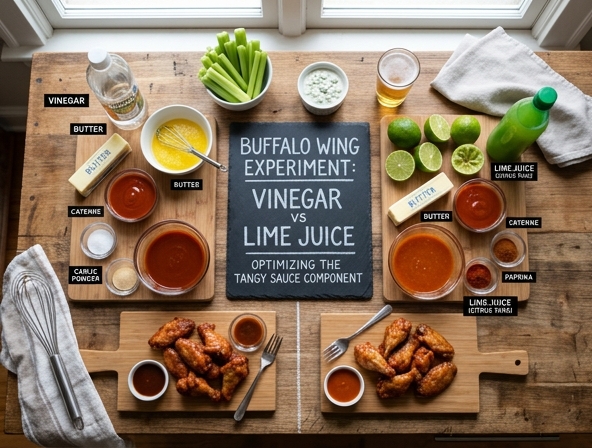
Vinegar Vs Lime Juice For Buffalo Wings: Optimizing The Tangy Sauce Component
The perfect Buffalo wing is a delicate exercise in balance. It relies on the trifecta of richness from butter, heat from cayenne-based hot sauce, and, crucially, a sharp, cutting acidity to slice through the heavy, fried fats. While traditional recipes have long defaulted to distilled white vinegar, a growing contingent of culinary enthusiasts and professional chefs are turning to lime juice to achieve that signature "tang." But does swapping the classic vinegar for citrus elevate the wing, or does it disrupt the holy trinity of Buffalo flavor?
The Role of Acid in Buffalo Sauce
Before diving into the vinegar vs. lime debate, it is essential to understand why acid is non-negotiable in this sauce. Buffalo sauce is essentially an emulsion of melted butter and hot sauce. Butter is rich and mouth-coating; hot sauce is piquant and salty. Without a high-acid component, these elements sit heavily on the palate, quickly leading to "flavor fatigue."
Acid serves two functions: it cleanses the palate after every bite and balances the natural sweetness of the chicken skin and the creaminess of the butter. Furthermore, it acts as a flavor enhancer, pushing the spice to the front of the palate rather than letting it linger muddily in the background.
The Case for Vinegar: The Traditionalist's Anchor
Distilled white vinegar is the foundation of the iconic Frank's RedHot style. There is a reason for this: its flavor profile is clean, sharp, and remarkably stable at high temperatures.
- Volatility and Impact: Acetic acid (the primary acid in vinegar) is highly volatile. This means it hits the olfactory system immediately, providing that signature "sharp" smell that defines a Buffalo wing.
- Consistency: Because vinegar is a sterile, shelf-stable product, it doesn't change flavor when heated. You can simmer your Buffalo sauce for hours or keep it in a warming crockpot, and the tang will remain exactly as you intended.
- The "Clean" Finish: White vinegar does not carry secondary flavors. It is a workhorse acid that plays a supporting role, highlighting the cayenne pepper without interfering with the butter's dairy notes.
The Case for Lime Juice: The Modern Brightener
Lime juice introduces citric acid, which behaves very differently from the acetic acid found in vinegar. When you introduce fresh lime juice to a wing sauce, you are adding an element of complexity that leans toward the vibrant, aromatic side of the flavor spectrum.
- Floral Complexity: Unlike the one-dimensional sharpness of white vinegar, lime juice brings floral and zest-driven notes. This makes the sauce taste "fresher" and more alive.
- Complementary Aromatics: Lime juice has a natural affinity for garlic, butter, and chili peppers. In a culinary context, it mimics the flavor profile of a sophisticated hot sauce like a lime-infused habanero or a complex green chili sauce.
- Mouthfeel and Brightness: Citric acid tends to make the tongue salivate more than acetic acid. This creates a "brighter" sensation that keeps the diner coming back for the next wing, even when the heat level is high.
The Technical Comparison: Acetic Vs. Citric
The primary issue when using lime juice in Buffalo sauce is heat sensitivity. Unlike vinegar, fresh lime juice loses its brightness when boiled. If you add fresh lime juice to your sauce at the beginning of the cooking process, the flavor will become dull and lose its aromatic potency.
Furthermore, the chemistry of the emulsion can be affected. Vinegar is naturally acidic enough to help prevent the butter from breaking down into a greasy mess. Lime juice is also acidic, but it brings more water and sugars to the party. If not balanced correctly, an excess of lime juice can result in a thinner, less-clinging sauce compared to the vinegar-based original.
Optimizing Your Sauce: A Hybrid Approach
Rather than choosing one over the other, many high-end wing joints are adopting a hybrid approach to maximize the best of both worlds. The goal is to keep the "punch" of the vinegar while adding the "glow" of the lime.
The Professional Method:
- The Base: Start with your classic hot sauce and vinegar base. This ensures your sauce has the viscosity and shelf-stable sharpness required for a true Buffalo experience.
- The Finish: Whisk in your butter off the heat to create the emulsion.
- The Zest: Add fresh lime zest into the sauce. This provides the aromatic lime oils without adding the liquid volume of the juice.
- The Splash: At the very last second, right before tossing the wings, add a small splash of fresh lime juice. This allows the bright, citrus acidity to sit on the surface of the sauce, providing an initial pop that the vinegar later grounds.
Conclusion: Which One Should You Choose?
If you are aiming for the classic, nostalgic experience-the kind found at a gritty sports bar-stick to distilled white vinegar. It is the reliable backbone of the Buffalo wing and provides a consistent, sharp heat that acts as the perfect foil to blue cheese dressing.
However, if you are looking to elevate your wings for a dinner party or a modern culinary presentation, the lime-infusion strategy is the superior choice. By utilizing the hybrid approach of vinegar for structure and lime zest/juice for brightness, you create a more nuanced sauce that feels sophisticated without losing its identity as a Buffalo-style wing.
Ultimately, the "optimized" sauce is the one that forces the diner to keep reaching for another wing. Whether that drive comes from the aggressive, sharp bite of vinegar or the bright, floral lift of lime, the success of the sauce is measured by its ability to balance the fat and the heat-everything else is just a matter of personal style.
Disclaimer:
The information provided on Eateryn is for general educational and informational purposes only and is not intended as medical, nutritional, or healthcare advice. It should not be used to diagnose, treat, cure, or prevent any disease or medical condition.
Always consult a qualified physician, registered dietitian, or other certified healthcare professional before making changes to your diet, exercise routine, or lifestyle, or regarding any medical questions or concerns you may have. Never disregard or delay seeking professional medical advice because of something you have read on this website.