
Vinegar Sauce vs Tomato Sauce for Barbecue Ribs - Balancing Tanginess And Sweetness
Vinegar Sauce vs. Tomato Sauce for Barbecue Ribs
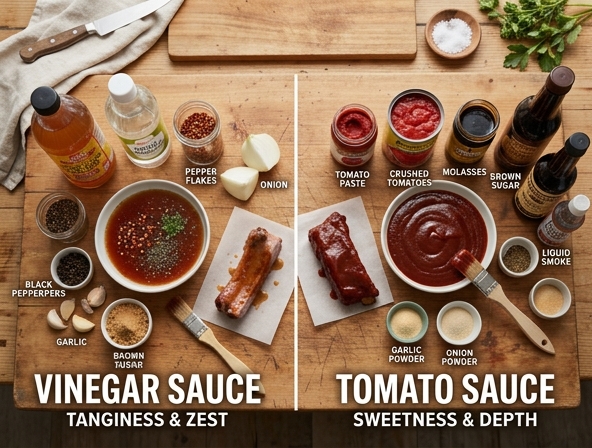
Balancing acidity and sweetness in rib glazes often overwhelms even seasoned pitmasters. While generic store-bought blends offer baseline flavor, mastering the vinegar-tomato dichotomy is essential for competition-grade results. Proper sauce selection elevates the meat's natural richness through precise acidity management.
Stipulation: Vinegar-based sauces require careful heat control to prevent scorching. Benchmarks include Carolina vinegar mops and Kansas City tomato glazes. We will now analyze these profiles to optimize your barbecue strategy.
| Sauce Type | Flavor Profile | Key Consideration | Regional Benchmark |
|---|---|---|---|
| Vinegar-Based | Sharp, acidic, tangy | Requires precise heat control to prevent scorching | Carolina Vinegar Mop |
| Tomato-Based | Sweet, rich, savory | Acts as a standard, reliable glaze | Kansas City Glaze |
| Note: Success depends on balancing acidity against the meat's natural richness. | |||
The Great Barbecue Debate: Vinegar vs. Tomato
In the world of competitive and backyard barbecue, few topics spark as much debate as the sauce. When it comes to pork ribs-the canvas upon which many pitmasters express their culinary soul-the conversation almost always narrows down to two distinct philosophies: the sharp, cutting acidity of a vinegar-based sauce versus the rich, clinging sweetness of a tomato-based glaze. Both have deep roots in American tradition, and both offer a unique way to highlight the tenderness of perfectly smoked meat.
Understanding these two styles isn't just about regional preference; it's about understanding the science of flavor. Whether you are aiming for the "bite" of a Carolina-style mop or the sticky, mahogany finish of a Kansas City-style rack, balancing tanginess and sweetness is the key to elevated barbecue.
The Case for Vinegar: The Palate Cleanser
Vinegar-based sauces, often associated with the Eastern North Carolina tradition, are the unsung heroes of heavy, fatty meats. Pork ribs are inherently rich. Rendered fat, collagen, and the natural juices of the meat create a heavy mouthfeel that, without intervention, can quickly lead to palate fatigue.
A vinegar sauce is not meant to sit on top of the meat like a blanket; it is designed to penetrate. The acidity of white or apple cider vinegar acts as a chemical catalyst, cutting through the richness of the pork fat and "brightening" the flavor of the smoke. When you take a bite of a rib hit with a thin, vinegar-based vinegar mop, the immediate sensation is a jolt of brightness that prepares your tongue for the savory meat beneath.
- Flavor Profile: Sharp, tangy, often spicy (thanks to red pepper flakes), and savory.
- Consistency: Thin and watery, allowing for deep absorption into the fibers of the meat.
- Best For: Those who want the taste of the meat and the smoke to take center stage, with the sauce acting merely as a seasoning.
The Case for Tomato: The Crowd-Pleaser
On the opposite end of the spectrum lies the tomato-based sauce, a staple in Kansas City, Memphis, and virtually every backyard gathering in the United States. If vinegar is the scalpel, tomato sauce is the velvet glove. These sauces rely on a base of tomato paste or ketchup, bolstered by sweeteners like brown sugar, molasses, or honey.
The magic of a tomato-based sauce lies in its viscosity. Because it is thick, it adheres to the surface of the rib, creating a "bark" that undergoes a beautiful transformation in the final stages of the cook. As the sugars in the sauce hit the heat of the pit, they caramelize. This creates that iconic, sticky, slightly charred exterior that defines "sticky ribs." It appeals to our primal love for sweetness, masking the harsher notes of over-smoking and providing a comforting, familiar finish.
The Balancing Act: Why Sweet and Tangy Collide
The true genius of barbecue lies in the "third way"-the hybrid approach. Most great pitmasters realize that a sauce consisting purely of vinegar is too aggressive for the average palate, while a sauce consisting purely of tomato and sugar can be cloying and one-dimensional.
The goal is a perfect equilibrium. You want the sugar to provide the initial appeal and the caramelization, but you need the vinegar to provide the "finish." When you taste a world-class rib, you should experience the sweetness on the front of your tongue, the savory smoke in the middle, and the acidic tang on the back of your tongue that compels you to take another bite.
Application Techniques: A Masterclass in Timing
The difference between a "good" rib and a "great" rib often comes down to *when* you apply these sauces. Here is how to manage the balance:
1. The Mop (Vinegar-Heavy)
Apply your vinegar-heavy sauce during the smoking process, specifically in the final hours. Because vinegar doesn't burn easily, it acts as a hydration layer, keeping the meat moist while it absorbs the smoke. This creates an internal base of flavor that is essential for a balanced profile.
2. The Glaze (Tomato-Heavy)
Never apply a sugar-heavy tomato sauce at the beginning of the cook. The sugars will burn, turning bitter and carbonized long before your meat is tender. Instead, apply the glaze in the final 15 to 30 minutes of cooking. This allows the sauce to "set" or "tack up" under the heat, creating that glossy, appetizing sheen without scorching the sugars.
Finding Your Personal Equilibrium
If you find your ribs are too sweet, look to your acid sources. Don't just rely on vinegar; consider incorporating a splash of mustard, a squeeze of lemon juice, or even a shot of bourbon to add complexity to the tang. If your ribs are too sharp, slowly increase the molasses or honey content of your base, but always keep an eye on the heat-the higher the sugar content, the lower the temperature you need to maintain during the final glazing phase.
Ultimately, the choice between vinegar and tomato is a false dichotomy. The best barbecue doesn't choose sides; it marries the two. By using vinegar to cut the fat and tomato to provide the signature sweetness, you create a dynamic profile that keeps your guests coming back for more. Don't be afraid to experiment with your ratios; after all, the perfect balance of tangy and sweet is whatever makes your own taste buds happiest.
Disclaimer:
The information provided on Eateryn is for general educational and informational purposes only and is not intended as medical, nutritional, or healthcare advice. It should not be used to diagnose, treat, cure, or prevent any disease or medical condition.
Always consult a qualified physician, registered dietitian, or other certified healthcare professional before making changes to your diet, exercise routine, or lifestyle, or regarding any medical questions or concerns you may have. Never disregard or delay seeking professional medical advice because of something you have read on this website.