
Vegan Cheese vs Dairy Cheese for Macaroni and Cheese - Comparing Meltability And Flavor
Vegan vs. Dairy Cheese: Achieving the Perfect Melt
Finding a plant-based substitute that mimics dairy's signature melt is a common struggle for home cooks. Traditionally, sharp cheddar and gruyère have served as the culinary standard for binding creamy sauces. However, recent advancements in fermentation and starch-based alternatives now offer impressive, functional textures. Note that meltability varies significantly based on protein structure and oil bases. Products like Miyoko's Creamery and Follow Your Heart exemplify this innovation. We will now examine these technical differences to determine your optimal choice.
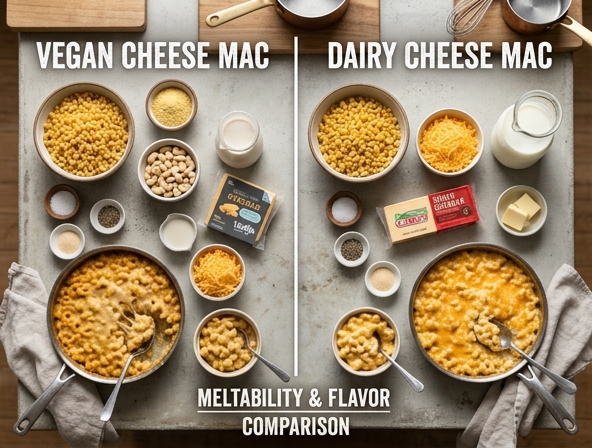
| Feature | Dairy Cheese | Vegan Cheese |
|---|---|---|
| Culinary Role | Traditional standard for binding and creamy sauces. | Modern alternatives achieving functional textures. |
| Meltability | Consistent and predictable. | Variable; depends on specific protein and oil base. |
| Composition | Natural dairy proteins and fats. | Fermentation or starch-based ingredients. |
| Key Examples | Sharp Cheddar, Gruyère | Miyoko's Creamery, Follow Your Heart |
The Great Mac and Cheese Debate: Dairy vs. Vegan Alternatives
Macaroni and cheese is more than just a dish; it is a cultural cornerstone of comfort food. Whether it's a stovetop recipe from a blue box or a sophisticated baked casserole laden with artisanal ingredients, the expectation is universal: a rich, velvety sauce that clings to every nook and cranny of the pasta. However, as plant-based diets move from the fringes to the mainstream, the question has shifted from "How do I make the best Mac and Cheese?" to "Can a vegan version truly compete with the dairy-based classic?"
The Science of the Melt: Why Dairy Reigns Supreme
To understand the challenge of replacing dairy cheese, we must first look at the science behind why it melts so perfectly. Dairy cheese is fundamentally an emulsion of fat, water, and protein-specifically casein. When heated, the casein protein matrix relaxes, allowing the fat to flow freely, creating that signature "stretch" and gooey consistency we crave in a pasta dish.
Traditional cheddar or gruyère in a roux-based cheese sauce provides both body and elasticity. The protein structures maintain enough integrity to prevent the sauce from becoming greasy, while the fat molecules contribute to the creamy mouthfeel that coats the palate. This structural stability is exactly what makes dairy cheese the "gold standard" for comfort food.
The Evolution of Vegan Cheese: Beyond Plasticity
Early attempts at vegan cheese were, frankly, lackluster. Many were starch-heavy, leading to a gluey, gummy texture that solidified into a rubbery mass upon cooling. However, the last decade has seen a revolution in food technology. Modern vegan cheeses, particularly those designed for melting, utilize a sophisticated blend of refined coconut oil, potato starch, and specialized proteins (often derived from peas or chickpeas).
While vegan cheese does not possess the same casein protein structure as dairy, it uses hydrocolloids-like carrageenan or xanthan gum-to mimic the viscosity of melted cheese. In a mac and cheese context, this means that while you might lose that iconic "cheese pull," you can achieve a very similar, luscious sauciness if the formula is correct.
Flavor Profiles: The Umami Gap
Flavor is where the divide between dairy and plant-based becomes most apparent. Dairy cheese carries a deep, complex flavor profile developed through the fermentation of lactose and the natural presence of amino acids. Aged cheddar, for instance, offers a sharp, tangy, and slightly nutty profile that is difficult to replicate through plant sources alone.
To bridge this "umami gap," vegan cheese makers and home cooks rely on a few key ingredients:
- Nutritional Yeast: The powerhouse of vegan cooking, providing a savory, nutty, and "cheesy" depth.
- Lactic Acid/Vinegar: Used to mimic the sharp tang of aged dairy cultures.
- Miso Paste: Adds a fermented, salty complexity that mimics the aged depth of real cheese.
- Spices: Smoked paprika, garlic powder, and onion powder are essential for rounding out the flavor profile.
Culinary Application: Making the Sauce
The secret to great mac and cheese-regardless of the type of "cheese" used-is the sauce structure. Whether you are using a sharp cheddar or a store-bought vegan shreds, the most successful method is a Bechamel-based roux. By cooking flour and fat together and whisking in milk (or a thick plant-based alternative like oat or soy milk), you create a stable foundation that allows the cheese to melt into a homogenous, velvety sauce.
Tips for Dairy Mac and Cheese:
Avoid pre-shredded cheese. The potato starch used to prevent clumping in the bag inhibits proper melting. Grate your cheese fresh from a block for a smoother, silkier result.
Tips for Vegan Mac and Cheese:
Embrace the blender. If you are making a homemade vegan sauce using cashews or potatoes, blending is essential to get that smooth, emulsified texture. If using store-bought shreds, whisk them into a warm sauce slowly, and consider adding a splash of pasta water, which contains starch that helps bind the sauce to the noodles.
The Verdict: Can You Tell the Difference?
In a blind taste test, a side-by-side comparison usually reveals that dairy cheese has a slightly more complex finish and a more "elastic" melt. However, when integrated into a well-crafted mac and cheese with breadcrumbs, herbs, and seasonings, the differences become remarkably subtle. The vegan version often benefits from a cleaner, lighter finish, while the dairy version offers that deep, heavy richness that defines traditional soul food.
Ultimately, the "better" choice depends on your priorities. If your goal is the perfect cheese pull, dairy remains the king of the kitchen. But if you are looking for a creamy, indulgent, and satisfying pasta dish that aligns with a plant-based lifestyle, the gap has narrowed to the point of near-irrelevance. Through careful attention to emulsification and a smart layering of umami-rich ingredients, vegan mac and cheese has officially graduated from a "substitute" to a legitimate culinary delight in its own right.
Whether you choose the heritage of dairy or the innovation of plant-based alternatives, the heart of mac and cheese remains the same: it is the perfect vessel for warmth, texture, and flavor. Experimenting with both, and perhaps even blending the two during the transition, is the best way to find your own version of the perfect bowl.
Disclaimer:
The information provided on Eateryn is for general educational and informational purposes only and is not intended as medical, nutritional, or healthcare advice. It should not be used to diagnose, treat, cure, or prevent any disease or medical condition.
Always consult a qualified physician, registered dietitian, or other certified healthcare professional before making changes to your diet, exercise routine, or lifestyle, or regarding any medical questions or concerns you may have. Never disregard or delay seeking professional medical advice because of something you have read on this website.