
Tomato Sauce vs Pesto Base for Pizza - Finding the Superior Flavor Profile
Choosing between tomato sauce and pesto for your pizza base often feels like a culinary stalemate. While traditionalists rely on marinara, modern palettes increasingly favor herbaceous alternatives. Mastering this choice grants you the nuance to elevate flavor profiles significantly. Note, however, that success hinges on ingredient compatibility; for instance, tomato sauce complements acidic toppings like pepperoni, whereas pesto enhances earthy profiles like pine nuts. This guide evaluates both foundations to refine your signature slice.
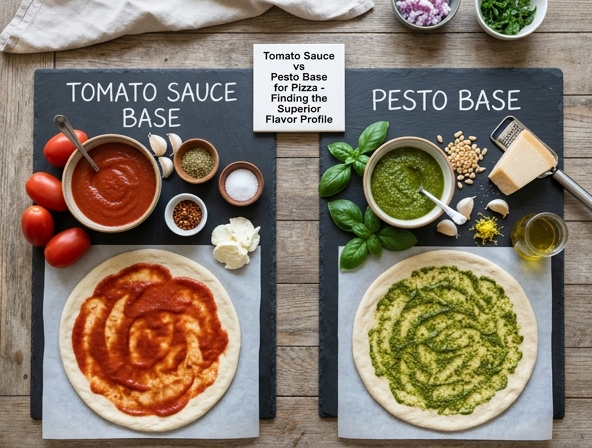
| Pizza Base | Profile Characteristics | Best Topping Pairings |
|---|---|---|
| Tomato Sauce | Traditional and classic foundation. | Acidic toppings (e.g., pepperoni). |
| Pesto | Herbaceous and modern alternative. | Earthy profiles (e.g., pine nuts). |
Tomato Sauce vs. Pesto Base: Finding the Superior Flavor Profile for Your Pizza
The pizza base is the structural and flavor foundation upon which all other culinary decisions are made. While the dough provides the canvas, the sauce provides the primary flavor profile that defines the eating experience. For decades, the tangy, vibrant acidity of tomato sauce has been the undisputed monarch of pizzerias worldwide. However, the rise of artisanal and modern pizza making has thrust the herbaceous, nutty richness of pesto into the spotlight. Choosing between these two is not merely a matter of personal preference; it is a fundamental shift in the chemistry, balance, and architecture of the dish.
The Case for the Classic: Tomato Sauce
Tomato sauce, specifically the classic red base, is a masterpiece of culinary simplicity. At its best-using high-quality San Marzano tomatoes, a touch of sea salt, and perhaps a whisper of fresh basil-it provides a bright, acidic backbone that cuts through the fat of mozzarella cheese. This acidity is crucial; in the world of gastronomy, acid is the ingredient that keeps a dish from feeling "heavy" or one-dimensional.
The tomato base acts as a flavor bridge. It has a high natural umami content, which harmonizes beautifully with cured meats like pepperoni, prosciutto, or sausage. When subjected to the intense heat of a pizza oven, the sugars in the tomatoes caramelize, creating a complex, sweet-savory profile that is fundamentally nostalgic. Because tomato sauce is largely water-based, it also serves a functional purpose: it provides moisture to the dough during the bake, preventing the crust from drying out before the toppings are cooked.
The Pesto Revolution: Herbal Sophistication
Pesto, the traditional Genovese green sauce made from basil, pine nuts, garlic, parmesan, and high-quality olive oil, offers an entirely different sensory experience. Unlike the tomato's sharp acidity, pesto brings an earthy, aromatic, and buttery profile to the table. It is a concentrated burst of freshness that highlights the savory notes of nuts and the sharp, salty punch of aged cheese.
Using pesto as a base creates a "gourmet" pizza immediately. It feels luxurious and deliberate. Pesto does not "cut" through the cheese in the same way tomato sauce does; rather, it complements it, creating a rich, decadent mouthfeel. It is particularly adept at elevating ingredients that might get lost in a sea of red sauce-such as roasted vegetables, artichokes, mushrooms, or delicate proteins like shrimp and scallops.
Flavor Chemistry: The Battle of Profiles
When analyzing the flavor profile, we must look at the balance of the "Big Five" tastes: sweet, sour, salty, bitter, and umami.
- Tomato Base: Dominates on the Sour and Umami spectrums. It provides a sharp contrast, making it perfect for fatty toppings. It thrives on high-heat baking because the tomatoes become more concentrated and sweet as the liquid evaporates.
- Pesto Base: Dominates on the Umami, Salty, and Aromatic spectrums. Because pesto is oil-based rather than water-based, it behaves differently under heat. The delicate volatile oils in the fresh basil can dissipate or even burn if subjected to extremely high temperatures for too long.
Practical Culinary Considerations
There are technical hurdles to consider when choosing your base. Tomato sauce is incredibly forgiving; it can withstand long, high-heat bakes without losing its integrity. Pesto, conversely, is sensitive. Many professional pizzaiolos choose to apply pesto *after* the pizza comes out of the oven, or they mix a small amount of it into a ricotta or béchamel base to ensure the basil flavor doesn't become bitter or "cooked out."
Furthermore, the fat content in pesto-derived from olive oil and pine nuts-can make the dough soggy if too much is applied directly to the center of the crust. A light hand is required. Tomato sauce allows for a more generous application, as the water evaporates into the crust, creating a cohesive, unified bite.
Pairing Guide: Which Base for Which Topping?
To determine the superior base for your specific meal, consider the intended "personality" of the pizza:
Choose Tomato When:
- You are using classic Italian cured meats (pepperoni, sopressata, fennel sausage).
- You want a "comfort food" experience that relies on the interaction between acid and dairy fat.
- You are serving a crowd with diverse palates; tomato is the universally accepted standard.
Choose Pesto When:
- You are building a vegetarian masterpiece (sun-dried tomatoes, roasted peppers, kalamata olives, feta).
- You want to highlight high-quality fresh produce or seafood.
- You are looking to impress guests with something outside the traditional "pizza night" box.
The Verdict: Is There a Superior Choice?
In the objective search for the superior flavor profile, there is no single winner, but there is a clear distinction in purpose. Tomato sauce is the foundation of *texture and balance*, providing the necessary acid to cleanse the palate between bites of rich, melty cheese and oily crust. It is a workhorse-reliable, bold, and essential.
Pesto, however, is the foundation of *aroma and depth*. It transforms a pizza from a casual snack into a complex dish that engages the olfactory senses as much as the taste buds. It provides a sophisticated complexity that tomato sauce simply cannot replicate.
If you are looking for the "perfect" pizza, the answer may not be to choose one over the other, but to understand their limits. A master of the craft knows that the tomato is the soul of the pizza, but the pesto is its spirit. Whether you opt for the sun-drenched, acidic punch of a San Marzano reduction or the vibrant, nutty green of a crushed basil pesto, the superiority of the flavor profile ultimately rests on the quality of your ingredients and the intention behind your pairing. When in doubt, let the toppings dictate the base-and don't be afraid to experiment with the boundaries of the traditional pie.
Disclaimer:
The information provided on Eateryn is for general educational and informational purposes only and is not intended as medical, nutritional, or healthcare advice. It should not be used to diagnose, treat, cure, or prevent any disease or medical condition.
Always consult a qualified physician, registered dietitian, or other certified healthcare professional before making changes to your diet, exercise routine, or lifestyle, or regarding any medical questions or concerns you may have. Never disregard or delay seeking professional medical advice because of something you have read on this website.