
Toasted vs Untoasted for Bagel - Perfecting the texture profile
The Bagel Texture Dilemma
Struggling with inconsistent textures-soggy crumbs or brittle crusts-is a common frustration for bagel enthusiasts. While many default to the standard grab-and-go untoasted consumption, this assumption often overlooks the nuances of flavor development. Mastering the toast-to-topping ratio provides a superior sensory experience. Note that heat application alters crumb density, making it situational; for example, a dense sesame bagel requires different heat than a plain variety. We will now examine how specific base types dictate your ideal preparation.
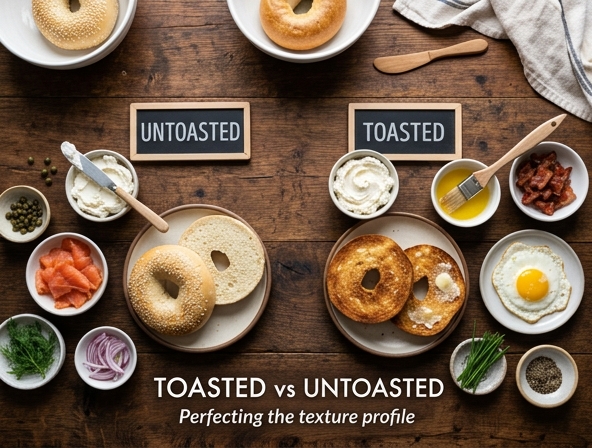
| Aspect | Untoasted Approach | Toasted Approach |
|---|---|---|
| Sensory Profile | Standard "grab-and-go" experience; preserves the baseline texture. | Enhanced flavor development; elevates the overall sensory experience. |
| Common Issues | Risk of soggy crumbs or unappealing chewiness. | Risk of brittle crusts if heat is not managed properly. |
| Preparation Logic | Minimal intervention; relies entirely on the quality of the raw product. | Dynamic; requires adjusting heat based on the specific density of the bagel. |
| Best Practice | Ideal for immediate consumption without equipment. | Essential for tailoring texture to specific types (e.g., dense sesame vs. plain). |
The Great Bagel Debate: Toasted vs. Untoasted
In the world of breakfast, few topics ignite as much passion-or controversy-as the treatment of a bagel. Whether you are standing in a bustling New York deli or preparing a quiet morning meal at home, the question inevitably arises: "Do you want that toasted?" For some, the answer is a knee-jerk "yes," a quest for warmth and crunch. For others, the very suggestion is an affront to the integrity of the bread. To understand which camp you belong to, we must dive into the science of texture, the art of the bake, and the culinary philosophy of the bagel.
The Anatomy of the Perfect Bagel
To understand why we toast, we first have to understand what makes a bagel unique. Unlike standard bread, a true bagel is defined by its two-stage cooking process: boiling and baking. This process creates a distinct structural profile-a shiny, slightly tough exterior (the crust) and a dense, chewy interior (the crumb).
When a bagel is pulled fresh from the oven, it sits at the peak of its existence. The crust is thin but provides a satisfying "snap," while the interior remains pillowy and elastic. This is the "Goldilocks zone." At this moment, the bagel is arguably perfect in its untoasted state. The yeast, malt, and flour have achieved a harmony that needs no heat-induced interference.
The Case for the Untoasted Purist
Purists-particularly those who hold the New York-style bagel in high esteem-argue that toasting is a "cover-up" for an inferior product. The logic is sound: if a bagel is fresh enough, the texture is its primary selling point. Toasting it alters the structural integrity of the crumb, effectively turning a chewy, doughy marvel into something resembling a slightly thicker piece of burnt toast.
When you eat a bagel untoasted, you are engaging with the specific gluten structure developed by the baker. You feel the resistance of the crust against your teeth, followed by the soft, dense give of the center. This is the hallmark of a high-quality bagel. For those who enjoy their bagel with cold lox, capers, and onions, the untoasted bagel provides a cool, firm base that doesn't wilt under the weight of the ingredients.
The Case for the Toasted Enthusiast
While the purists hold the moral high ground for "fresh" bagels, the reality of the average consumer is that bagels are rarely eaten within an hour of leaving the oven. By the time a bagel makes it to your pantry, it has begun the inevitable process of starch retrogradation-the fancy term for the bread getting stale and firm.
This is where toasting becomes a vital culinary tool. Heat serves two functions: it re-gelatinizes the starches, restoring some of the flexibility to the interior, and it triggers the Maillard reaction on the surface. The Maillard reaction is a chemical process between amino acids and reducing sugars that gives browned food its distinctive flavor. By toasting, you aren't just heating the bagel; you are layering on complex, nutty, and savory notes that weren't there before.
Furthermore, toasting creates a structural barrier. If you are slathering a toasted bagel with butter, the heat melts the fat into the crevices of the crumb, creating a flavor profile that is richer and more indulgent. For heavy toppings like bacon, egg, and melted cheese, a untoasted bagel is often too soft to support the weight. A toasted bagel provides the necessary "structural reinforcement" to ensure your sandwich doesn't collapse.
The Texture Profile: Analyzing the Variables
To decide whether you should toast, consider these three factors:
- Age: If the bagel is fresh, leave it alone. If it's more than 24 hours old, toast it to revive the crumb.
- Topping Choice: Delicate toppings (cream cheese and smoked salmon) perform best on a neutral, untoasted canvas. Savory, warm toppings (bacon, eggs, sausage) cry out for the textural contrast of a toasted crunch.
- The "Toast Level": Many people fail because they over-toast. A bagel should be lightly golden, not dark brown. Over-toasting dehydrates the bagel, turning it into a brittle disc that shatters rather than chews.
The Verdict: Is There a Right Way?
If you are lucky enough to be at a bakery where the steam is still rising from the bins, respect the baker's work and eat it untoasted. The internal moisture and the delicate, slightly chewy crust are a masterpiece of chemistry that deserves your full attention. Do not compromise that experience with the heat of a toaster.
However, if you are working with a store-bought bagel or one that has been sitting on your counter for half a day, toasting is not a sin-it is a rescue mission. It provides the texture and flavor stimulation necessary to make that bagel satisfying. Ultimately, the "perfect" bagel texture is a personal journey. Whether you prefer the raw, doughy elasticity of a traditional fresh-baked classic or the warm, crispy, butter-drenched crunch of a toasted creation, the goal remains the same: to enjoy one of the most iconic, satisfying, and enduring breads in human history.
Next time you find yourself standing in front of the toaster, pause. Feel the bagel. If it's soft, keep it raw. If it's firm, give it a light kiss of heat. In the debate between toasted and untoasted, the true winner is the one who understands how to bring out the best in the bread they have in front of them.
Disclaimer:
The information provided on Eateryn is for general educational and informational purposes only and is not intended as medical, nutritional, or healthcare advice. It should not be used to diagnose, treat, cure, or prevent any disease or medical condition.
Always consult a qualified physician, registered dietitian, or other certified healthcare professional before making changes to your diet, exercise routine, or lifestyle, or regarding any medical questions or concerns you may have. Never disregard or delay seeking professional medical advice because of something you have read on this website.