
Thyme vs Parsley for Clam Chowder - Evaluating Herb Flavor Profiles
Many chefs struggle to balance the delicate, briny notes of clams with the perfect aromatic finish. While traditional recipes often rely on standard mirepoix, the choice between thyme and parsley dictates the chowder's final profile. Selecting the correct herb elevates a standard soup into a nuanced experience. Culinary success requires balancing earthy thyme against the clean, bright finish of parsley. From New England traditions to coastal variations, this guide evaluates both options to ensure an ideal pairing.
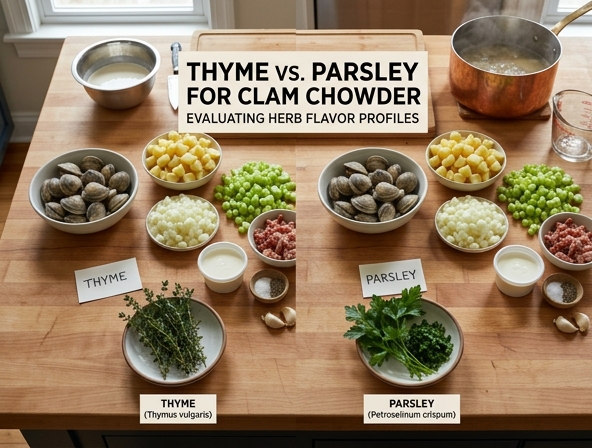
| Herb | Flavor Profile | Culinary Impact |
|---|---|---|
| Thyme | Earthy and aromatic | Provides depth and complexity; best for traditional, savory bases. |
| Parsley | Clean and bright | Adds a fresh, crisp finish that balances the natural brininess of clams. |
| Recommendation: The choice depends on personal preference for a deep, earthy chowder (Thyme) or a lighter, zestier finish (Parsley). | ||
The Herb Dilemma: Thyme vs. Parsley in the Perfect Clam Chowder
Clam chowder is more than a soup; it is a monument to coastal culinary tradition. Whether you are crafting a rich, heavy-cream New England style, a clear-broth Rhode Island version, or a tomato-tinged Manhattan iteration, the success of the dish hinges on balance. While the clams provide the essential salinity and the potatoes offer the necessary starchy foundation, the herbs function as the bridge between disparate flavor profiles. When it comes to the great debate-thyme versus parsley-the choice is not merely a matter of preference; it is a fundamental decision about how you want the finished bowl to strike the palate.
The Role of Herbs in Cream-Based Soups
Clam chowder is inherently decadent. The combination of clam liquor, rendered salt pork or bacon, heavy cream, and butter creates a high-fat environment that can easily become "muddy" if the aromatics are not carefully chosen. Herbs in this context serve two primary functions: to cut through the richness with bright, volatile oils and to provide a savory anchor that resonates with the deep umami of the bivalves.
The Case for Thyme: The Woody Anchor
Thyme is often considered the "classic" choice for clam chowder, particularly in traditional New England recipes. As a woody, Mediterranean herb, thyme brings an earthy, slightly floral, and robust complexity to the pot.
Why Thyme Works:
- Heat Stability: Unlike many delicate herbs, thyme is incredibly resilient. It can be added during the simmering phase alongside the potatoes and onions, allowing its flavor to permeate the entire base of the soup.
- Earthy Resonance: The subtle hints of clove and mint found in fresh thyme perfectly complement the earthiness of potatoes and the saltiness of cured pork.
- Intensity: Thyme provides a consistent aromatic "background" that remains present through every spoonful, ensuring that the flavor profile doesn't disappear into the creaminess of the dairy.
However, thyme is a potent ingredient. A little goes a long way. When overused, the herb's inherent woodiness can overwhelm the delicate sweetness of the clams. For the best result, strip the leaves from the stem and add them sparingly, or bundle whole sprigs in cheesecloth for easy removal once the desired depth has been reached.
The Case for Parsley: The Bright Cleanser
Flat-leaf (Italian) parsley is the unsung hero of seafood cookery. Where thyme is an anchor, parsley is a lift. It serves as a palate cleanser, cutting through the dense, buttery weight of a bowl of chowder to make the next bite feel just as fresh as the first.
Why Parsley Works:
- The Grassy Contrast: Parsley provides a clean, green, "alive" flavor that highlights the natural sweetness of the clams. It reminds the diner that they are eating seafood rather than just a heavy potato porridge.
- Visual Appeal: A vibrant sprinkle of finely chopped parsley over the surface of a creamy white chowder provides a necessary pop of color, making the dish visually appetizing.
- Lightness: Because parsley lacks the woody intensity of thyme, it keeps the soup profile focused on the primary ingredients rather than the spice cabinet.
The cardinal rule of parsley is timing. Unlike thyme, parsley loses its vibrancy quickly when subjected to prolonged heat. To maximize its impact, it should be folded in at the very final stage of cooking or used exclusively as a fresh garnish just before serving.
Comparative Analysis: The Culinary Interaction
To understand which to choose, one must evaluate the "weight" of the chowder recipe. If your recipe leans toward the heavier side-perhaps using a significant amount of bacon fat or heavy cream-thyme is an excellent choice to provide a savory counterpoint to that weight. The herb's aromatic profile stands up to the fat, preventing the soup from tasting "greasy" or one-dimensional.
Conversely, if your chowder is lighter, perhaps focused on fresh-shucked littleneck clams and a clearer base, parsley is superior. It respects the subtlety of the ocean-born ingredients and keeps the flavor profile brisk. Furthermore, if you are serving your chowder with a crusty sourdough bread, the presence of parsley serves to bridge the gap between the oceanic broth and the fermented tang of the bread.
Can They Coexist? The Hybrid Approach
The most sophisticated chowders often reject the binary choice in favor of a layered approach. By utilizing a small amount of thyme during the simmering process to build the foundational savory architecture, and a generous flourish of fresh parsley at the finish, the cook achieves the best of both worlds.
This "bridge" method creates a depth of flavor that is difficult to achieve with one herb alone. The thyme settles into the background, supporting the salinity of the clams, while the parsley dances on top of the cream, brightening the palate and providing an aromatic finish that lingers long after the soup is gone.
Final Recommendation: Choosing Your Path
If you are a purist aiming for a rustic, "tavern-style" chowder, stick to thyme. It feels historical and grounded, evoking the early days of coastal New England cooking. If you are aiming for a modern, refined presentation where the freshness of the seafood is the star, prioritize parsley.
Ultimately, the perfect clam chowder is a balance of salt, sweet, fat, and herbaceousness. Whether you reach for the woody sprigs of thyme or the vibrant, flat leaves of parsley, remember that the herb is meant to serve the clam, not the other way around. Season gently, taste often, and let the quality of your clams dictate the strength of your seasoning. In the world of chowder, restraint is the mark of a master.
Disclaimer:
The information provided on Eateryn is for general educational and informational purposes only and is not intended as medical, nutritional, or healthcare advice. It should not be used to diagnose, treat, cure, or prevent any disease or medical condition.
Always consult a qualified physician, registered dietitian, or other certified healthcare professional before making changes to your diet, exercise routine, or lifestyle, or regarding any medical questions or concerns you may have. Never disregard or delay seeking professional medical advice because of something you have read on this website.