
Thin Sliced vs Chopped for Philly Cheesesteak - Techniques For Superior Meat Preparation
Achieving a professional-grade Philly cheesesteak is often elusive, as improper meat preparation frequently results in dry, uneven textures. While standard approaches rely on basic slicing or rapid chopping, true consistency requires mechanical nuance. Mastering these methods guarantees a tender, authentic mouthfeel. Note that success depends entirely on your specific cut and fat content; for example, thin-shaving frozen ribeye produces superior results compared to knife-chopping. We will now examine the technical advantages of these preparation styles.
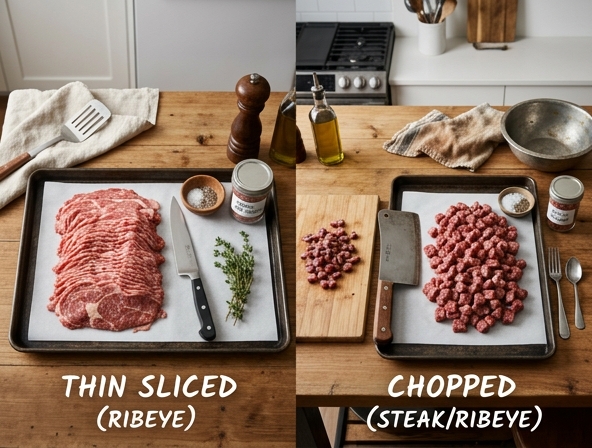
| Method | Technique Description | Technical Outcome |
|---|---|---|
| Thin Shaving (Frozen) | Utilizing frozen ribeye to achieve precise, ultra-thin slices. | Superior: Produces the most tender, professional-grade mouthfeel and consistent texture. |
| Knife Chopping | Hand-cutting or chopping the meat into smaller pieces. | Inconsistent: More prone to uneven textures and dryness compared to shaving. |
| Critical Variables | Focus on specific cut selection and fat content. | Essential: These factors are the foundation of success regardless of the mechanical method used. |
Thin Sliced vs. Chopped: The Anatomy of a Superior Philly Cheesesteak
In the culinary world, few sandwiches evoke as much passion-and heated debate-as the authentic Philadelphia Cheesesteak. While arguments over cheese (Provolone versus Cheez Whiz) or the inclusion of peppers are common, there is a more fundamental technical divide that separates the casual cook from the true sandwich artisan: the preparation of the meat. Should the steak be kept in distinct, paper-thin ribbons, or should it be vigorously chopped into a uniform, seasoned crumble? Both methods claim the soul of the Philly experience, but they yield vastly different results in terms of texture, fat rendering, and flavor distribution.
The Case for Thin Sliced: Texture and Elegance
For purists, the thin-sliced method is the gold standard. This technique aims to maintain the integrity of the muscle fibers. When you slice a high-quality ribeye against the grain into translucent ribbons, you preserve the natural "bite" of the steak. As the ribbons hit the scorching heat of a flat-top griddle, they sear quickly, creating a beautiful contrast between the crisp, caramelized edges and the tender, juicy interior.
The thin-sliced method allows the diner to experience the quality of the beef. Each mouthful is an interplay of texture, where the ribbon of meat remains distinct from the softened onions and the melted cheese. It feels less like a fast-food assembly and more like a gourmet preparation. When done correctly, these ribbons tangle together on the roll, creating a structural web that holds the juices rather than letting them drain away.
The Case for Chopped: Consistency and Emulsification
On the opposite side of the spectrum lies the "chopped" school of thought. This technique is often associated with the high-volume, iconic shops of South Philly, where the speed of the griddle is paramount. In this method, the meat is sliced thin, laid out, and then aggressively worked with heavy-duty metal spatulas. The cook cuts through the meat repeatedly while it cooks, turning it into a finer, more uniform consistency.
The primary advantage of chopping is the creation of a meat-and-aromatic emulsion. By chopping the meat alongside the grilled onions, you ensure that every single bite is identical. The fat from the steak renders more thoroughly, coating the onions and blending with the cheese to create a rich, savory "gravy" that permeates the entire sandwich. If you find that sliced meat can sometimes be difficult to chew or results in "pull-away" strands that make the sandwich messy, the chopped method solves this by breaking down those long fibers.
The Science of Prep: The Freezer Hack
Regardless of whether you choose to slice or chop, the secret to a superior cheesesteak lies in the initial preparation. The key is temperature. Trying to hand-slice a room-temperature ribeye is an exercise in futility; the meat will shift and deform, resulting in thick, uneven pieces.
The professional technique-which should be adopted by every home cook-is to partially freeze the steak. Place your ribeye in the freezer for about 45 to 60 minutes. You want the meat to be firm to the touch but not a solid block of ice. This allows you to use a razor-sharp chef's knife or a mandoline to shave the beef into paper-thin layers with surgical precision. If you are going for the "chopped" style, this uniform slicing is still necessary before you hit the grill; chopping thick, uneven chunks will only lead to uneven cooking, where some pieces are burnt and others are barely seared.
Heat Management and the Griddle
The preparation doesn't end at the cutting board. The cooking process is where these two styles diverge further. A sliced cheesesteak requires a "low-touch" approach. Lay your ribbons down, let them develop a deep, dark brown crust (the Maillard reaction), flip once, and then pile them up. If you poke at them too much, you break the ribbons and transition into "chopped" territory against your will.
The chopped style, conversely, is a high-energy process. Use a heavy, flat-edged spatula. Once the meat hits the griddle, wait for that initial sear, then begin the rhythmic chopping motion. The goal is to incorporate the aromatics (usually diced white onions) directly into the beef. This is also the stage where the cheese is introduced. If using Whiz or a cheese blend, you fold it into the chopped meat so that every morsel is coated, creating a creamy, cohesive filling that clings to the roll.
Finding Your Preference
So, which is superior? The answer often lies in the "delivery system"-the roll. If you are using a soft, airy roll like an authentic Amoroso, the chopped method is often superior because it creates a soft, consistent texture that matches the bread. If you are using a slightly crustier roll, the thin-sliced ribbons provide a structural contrast that keeps the sandwich interesting.
Ultimately, a superior Philly cheesesteak is less about a rigid rulebook and more about mastering the fundamentals: high-quality marbled ribeye, proper temperature control during slicing, and the courage to manage the heat of the griddle. Whether you preserve the integrity of the steak ribbons or chop them into a savory, emulsified masterpiece, the result should always be a sandwich that is greater than the sum of its parts-juicy, salty, aromatic, and undeniably indulgent.
If you are a beginner, start with the chopped method. It is more forgiving, ensures thorough cooking, and guarantees that every bite is packed with flavor. Once you have mastered the art of the chop, experiment with thin-sliced ribbons to appreciate the nuanced texture of the beef. In the end, the best cheesesteak is the one prepared with intent, respect for the ingredients, and a healthy appreciation for the messy, delicious chaos that defines the quintessential Philadelphia experience.
Disclaimer:
The information provided on Eateryn is for general educational and informational purposes only and is not intended as medical, nutritional, or healthcare advice. It should not be used to diagnose, treat, cure, or prevent any disease or medical condition.
Always consult a qualified physician, registered dietitian, or other certified healthcare professional before making changes to your diet, exercise routine, or lifestyle, or regarding any medical questions or concerns you may have. Never disregard or delay seeking professional medical advice because of something you have read on this website.