
Thin Crust vs Deep Dish for Pizza - Which Style Wins the Flavor War
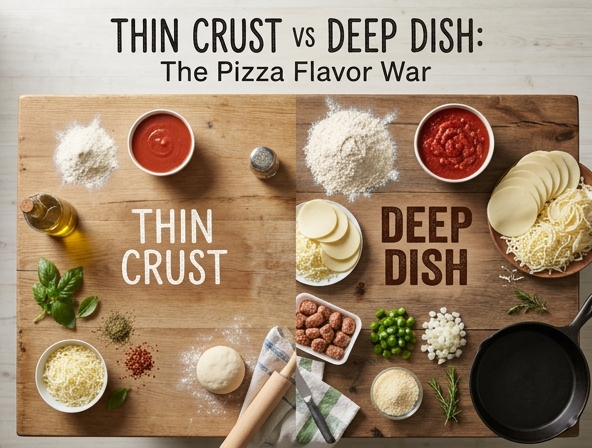
Thin Crust vs. Deep Dish: The Flavor War
Diners often struggle to resolve the polarizing divide between Chicago Deep Dish and New York Thin Crust. While standard delivery chains prioritize convenience, artisanal establishments demand a choice of culinary integrity. Success lies in balancing dough-to-topping ratios. Whether you favor the buttery, structural heft of Chicago styles or the foldable, crisp elegance of a New York slice, this analysis explores the technical nuances of these regional staples to ensure your next order perfectly satisfies your palate.
| Pizza Style | Key Characteristics | Culinary Experience |
|---|---|---|
| Chicago Deep Dish | Buttery, structural heft, dense construction. | Ideal for those seeking a substantial, indulgent, and hearty meal. |
| New York Thin Crust | Foldable, crisp, elegant, and lighter. | Perfect for those who prefer a classic, portable, and balanced eating experience. |
| The Core Principle | Focus on dough-to-topping ratios. | Success depends on balancing regional ingredients to satisfy specific palate preferences. |
Thin Crust vs. Deep Dish: The Ultimate Pizza Flavor War
Few culinary debates ignite as much passion, regional pride, and outright hostility as the battle between thin crust and deep dish pizza. To some, pizza is a vehicle for high-quality, blistered dough-a delicate canvas where the ingredients are meant to shine in a balanced, singular harmony. To others, pizza is an event, an architectural feat of engineering that requires a knife, a fork, and an appetite for a hearty, cheese-laden feast. As we dive into this gastronomic divide, we find that both styles represent distinct philosophies on what "good food" really means.
The Case for Thin Crust: The Purist's Philosophy
Thin crust pizza, ranging from the rustic, charred Neapolitan pie to the iconic, foldable New York slice, is often described as the "purist's" choice. The central philosophy here is balance. When the dough is stretched paper-thin, the focus shifts squarely onto the quality of the raw ingredients. You can taste the quality of the San Marzano tomatoes, the fragrance of the fresh basil, and the subtle, milky sweetness of high-end mozzarella.
The beauty of thin crust lies in its texture. A well-executed thin crust provides a satisfying "crack" upon the first bite, followed by a chewy, airy center. In the hands of a master pizzaiolo, the crust becomes a flavor component of its own-imparted with smoke from a wood-fired oven, providing a charred, bitter contrast to the acidic brightness of the tomato sauce. It is, by design, a lighter meal. It doesn't weigh you down; it invites you to eat an entire pie without feeling as though you've consumed a concrete block.
- Structural Integrity: The classic "New York fold" allows for effortless consumption on the go, making it the ultimate street food.
- Ingredient Focus: With less dough to mask flavors, the quality of your toppings (pepperoni, sausage, vegetables) is magnified.
- The Char Factor: The high-heat, short-cook environment creates a complex flavor profile that simply cannot be replicated in a deeper pan.
The Case for Deep Dish: The Chicago Indulgence
While thin crust is a study in subtlety, Chicago-style deep dish is an exercise in excess. Born in the mid-20th century, deep dish was created to turn pizza into a main course. It is not so much a "pie" as it is an upside-down casserole, designed to withstand the long baking time required to melt a significant amount of cheese and cook a generous portion of toppings.
The crust of a deep dish pizza is fundamentally different-often enriched with butter or cornmeal, it resembles a shortbread or a savory biscuit more than traditional bread. This creates a sturdy, golden-brown foundation capable of holding a literal pool of mozzarella and a thick layer of chunky tomato sauce. The "inverted" architecture-cheese on the bottom, sauce on top-is a brilliant masterstroke that prevents the cheese from burning during the extended cook time. Eating a deep dish pizza is a communal event; it is a warm, comforting, and deeply satisfying experience that demands a slower pace of life.
- The "Hearty" Factor: It is designed to be satiating. One or two slices of deep dish can effectively replace an entire meal.
- Textural Contrast: The contrast between the crunchy, buttery crust edge and the molten, gooey center is a textural rollercoaster that is hard to beat.
- The Comfort Index: When the weather turns cold, the sheer density of a deep dish pizza offers a level of comfort that thin crust rarely achieves.
The Technical Showdown: Texture, Flavor, and Experience
When comparing the two, we have to look at the "Dining Context." Thin crust is nimble. It is social. It is the food of the busy city street, the quick lunch, and the late-night snack. It rewards the casual diner who wants a quick burst of flavor. It is a dish that relies on the "char-to-cheese" ratio, where the crust's bitterness balances the richness of the dairy.
Conversely, deep dish is the food of the dining table. It requires patience-deep dish pizzas often take 30 to 45 minutes to bake. It is a dish of endurance, designed to be enjoyed slowly while engaged in conversation. The flavor profile is centered on the slow-cooked, caramelized tomato sauce and the rich, buttery notes of the crust. It is a heavier experience, certainly, but one that rewards the eater with a complex layering of flavors that develop as you work your way through the slice.
The Verdict: Is There a Winner?
So, which style wins the flavor war? If you define "flavor" as the subtle nuance of high-quality ingredients dancing in harmony, thin crust takes the crown. The ability to taste the fermentation of the dough and the freshness of the sauce makes it a superior culinary achievement in the eyes of many food critics and traditionalists.
However, if you define "flavor" as a bold, indulgent, and deeply comforting experience that hits all the right notes of salt, fat, and texture, deep dish is the undisputed champion. It is an engineering marvel that manages to make pizza feel like a warm hug on a cold night.
Ultimately, the "war" is a false dichotomy. Pizza, in its infinite variety, is a celebration of human ingenuity. We have traveled from the humble focaccia-like roots of Italy to the towering, cheese-filled pans of the American Midwest. To choose one is not necessarily to reject the other; it is simply to recognize that there is a time for the quick, crisp snap of a thin crust, and a time for the slow, indulgent comfort of a deep dish. The real winner of the flavor war is the person who keeps an open mind-and an empty stomach-for both.
Whether you are a devotee of the New York fold or a crusader for the Chicago deep dish, one thing remains clear: pizza is the world's most versatile food. It has the power to bring people together, spark heated debate, and satisfy the deepest cravings of the human spirit. So, the next time you find yourself standing before a pizza menu, don't worry about which one is "better." Just pick the one that matches your mood, grab a napkin, and enjoy the slice.
Disclaimer:
The information provided on Eateryn is for general educational and informational purposes only and is not intended as medical, nutritional, or healthcare advice. It should not be used to diagnose, treat, cure, or prevent any disease or medical condition.
Always consult a qualified physician, registered dietitian, or other certified healthcare professional before making changes to your diet, exercise routine, or lifestyle, or regarding any medical questions or concerns you may have. Never disregard or delay seeking professional medical advice because of something you have read on this website.