
Tapioca vs Cornstarch for Apple Pie - Selecting the Best Thickening Agent
Perfecting Your Apple Pie Filling
We have all encountered the frustration of a soggy, watery apple pie crust. While traditional thickeners like flour and cornstarch are standard, they often fall short in achieving consistent viscosity. Understanding the nuance of tapioca starch provides a game-changing solution for that signature glossy, set filling. However, results vary significantly based on fruit moisture and acidity. This comparison explores how precise starch selection-from tapioca to cornstarch-ensures a professional-grade finish for your next masterpiece.
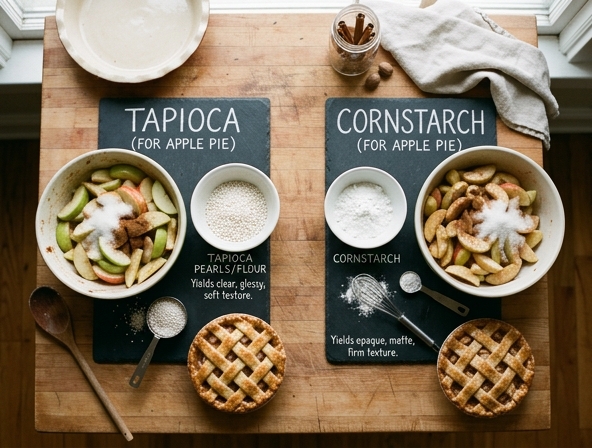
| Thickening Agent | Characteristics | Key Performance Notes |
|---|---|---|
| Cornstarch | Standard, widely used thickener. | Often leads to inconsistent viscosity; prone to watery fillings. |
| Tapioca Starch | Game-changer for apple pie. | Produces a professional, glossy, and well-set filling. |
| Critical Factors | Variable moisture and acidity. | Performance varies based on the specific type of apples used. |
The Great Debate: Tapioca vs. Cornstarch for the Perfect Apple Pie
Every baker, whether amateur or professional, has faced the heartbreak of a "soupy" apple pie. You pull a golden, beautiful crust out of the oven, only to slice into it and find the fruit swimming in a thin, watery syrup that compromises the integrity of your bottom crust. The secret to a bakery-quality pie-one where the filling holds its shape and the crust remains crisp-lies entirely in your choice of thickening agent. But when it comes to the two titans of the baking aisle, tapioca and cornstarch, which one truly reigns supreme?
Understanding the Science of Starch
Before choosing, it is helpful to understand what these thickeners actually do. Starch gelatinization occurs when starch granules are heated in the presence of water. As they heat up, they swell, rupture, and form a network that traps liquid, turning thin fruit juices into a lush, spoonable gel. However, not all starches behave the same way under the stresses of a pie oven: long baking times, acidic fruit, and the cooling process.
Cornstarch: The Pantry Workhorse
Cornstarch is the most common thickener found in household pantries. Derived from the endosperm of the corn kernel, it is pure starch, making it an incredibly efficient thickening agent.
The Pros of Cornstarch:
- Clarity: Cornstarch produces a beautiful, translucent finish. It doesn't cloud the natural color of your Granny Smith or Honeycrisp apples, allowing the fruit to look vibrant and appealing.
- Neutral Flavor: It has virtually no flavor, meaning it won't interfere with the delicate balance of cinnamon, nutmeg, or brown sugar in your spice blend.
- Availability: It is universally accessible and inexpensive.
The Cons of Cornstarch:
- Low Tolerance for Acid: If your apples are particularly tart, the acid can cause the cornstarch gel to break down during long baking times, leading to that dreaded runny filling.
- Texture Sensitivity: Cornstarch needs to be brought to a full boil to activate properly. In a pie, this happens slowly, but if the pie is over-mixed or reheated too often, the filling can lose its set.
- Opaque Finish: While clear, it can sometimes turn slightly milky or chalky if not perfectly incorporated.
Tapioca: The Baker's Secret Weapon
Tapioca starch, derived from the cassava root, is frequently cited by professional bakers as the superior choice for fruit pies. Specifically, "Instant" or "Minute" tapioca is the gold standard for home baking.
The Pros of Tapioca:
- Superior Stability: Tapioca is incredibly stable. It remains thick and glossy even if the pie is frozen, thawed, and reheated. This makes it the champion for "make-ahead" pies.
- Glossy Sheen: Unlike cornstarch, which can look slightly flat, tapioca provides a high-shine, glossy finish that makes the fruit look succulent and inviting.
- High Tolerance for Acid: Tapioca is much more forgiving when working with tart fruits, making it a reliable choice for Granny Smith apple pies.
The Cons of Tapioca:
- Texture Concerns: If not used correctly (specifically, if you use large pearl tapioca instead of "instant" or "powdered" tapioca), you might end up with small, chewy, gelatinous beads in your pie. Always ensure you are using finely ground instant tapioca.
- Resting Time: Tapioca performs best if allowed to sit in the fruit mixture for at least 15–30 minutes before the pie goes into the oven. This allows the granules to hydrate fully.
Comparative Analysis
| Feature | Cornstarch | Instant Tapioca |
|---|---|---|
| Appearance | Clear, semi-translucent | Glossy, jewel-like |
| Acid Tolerance | Low | High |
| Freezer Friendly | Fair | Excellent |
| Best Use | Cream pies/Custards | Fruit pies |
Which One Should You Choose?
The choice ultimately depends on your goal. If you are making a traditional apple pie that you intend to serve warm the same day, cornstarch is a perfectly capable tool. Just ensure your filling is bubbling vigorously in the oven-that bubble is the visual signal that the cornstarch has reached the temperature necessary to set.
However, if you want a pie that looks like it belongs in a magazine-with a deep, glossy shine-or if you are preparing a pie to freeze for the holidays, instant tapioca is the clear winner. Its ability to maintain its structure under varying temperatures and its aesthetic finish make it the more professional, albeit slightly more expensive, choice.
Pro-Tips for Success
No matter which thickener you choose, follow these three rules to ensure success:
- Don't Skimp on the Thicker: A common mistake is using too little thickener. For a standard 9-inch apple pie, use at least 3 tablespoons of cornstarch or 4 tablespoons of instant tapioca.
- Let it Bubble: The center of the pie must bubble for at least 5–10 minutes to ensure the thickener has fully activated. Don't pull the pie out just because the crust is brown; use foil to cover the edges if the crust gets too dark while the center finishes.
- The Cooling Factor: Never slice a fresh apple pie immediately. The starch network needs to cool down to fully "set." Waiting at least 3–4 hours after baking (or overnight) will result in a clean slice every time.
In the final analysis, both starches are excellent, but they serve different functions. Experiment with both, and you will eventually find your own rhythm in the kitchen. Whether you choose the reliable neutrality of cornstarch or the resilient gloss of tapioca, the key to a perfect apple pie is confidence in your chemistry-so preheat that oven, gather your ingredients, and bake with the assurance that your filling will be nothing short of perfect.
Disclaimer:
The information provided on Eateryn is for general educational and informational purposes only and is not intended as medical, nutritional, or healthcare advice. It should not be used to diagnose, treat, cure, or prevent any disease or medical condition.
Always consult a qualified physician, registered dietitian, or other certified healthcare professional before making changes to your diet, exercise routine, or lifestyle, or regarding any medical questions or concerns you may have. Never disregard or delay seeking professional medical advice because of something you have read on this website.