
Tabasco vs Black Pepper for Clam Chowder - Choosing The Best Spicy Finish
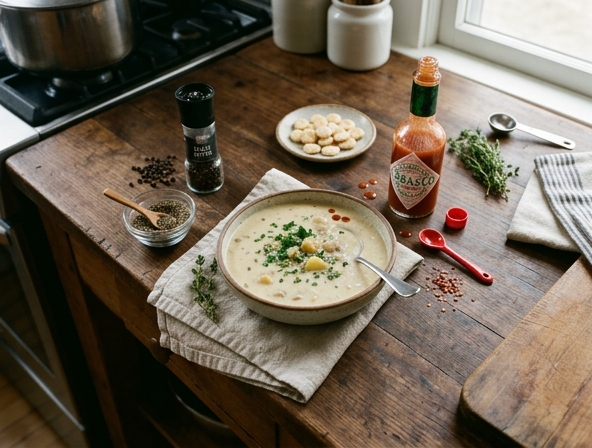
Achieving the perfect heat balance in a rich, creamy clam chowder is a common challenge for many chefs. While traditionalists frequently rely on cracked black pepper for a reliable, woody depth, this approach often masks the dish's subtle salinity. Conversely, Tabasco provides a vibrant, vinegar-based acidity that effectively cuts through heavy cream. Note that balance remains critical; over-seasoning risks obscuring delicate shellfish flavors. From bistro standards to refined coastal interpretations, this analysis evaluates your optimal finish.
| Seasoning Option | Flavor Profile | Culinary Impact | Key Consideration |
|---|---|---|---|
| Black Pepper | Woody, earthy depth | Provides a traditional, reliable finish | Use carefully; risk of masking the dish's subtle salinity. |
| Tabasco | Vibrant, vinegar-based acidity | Cuts through heavy, rich creaminess | Use in moderation to prevent obscuring delicate shellfish flavors. |
The Great Debate: Finding the Perfect Heat for Your Chowder
There is perhaps no dish as iconic to the American coastal experience as a steaming bowl of clam chowder. Whether you are leaning toward the ivory, velvety richness of a New England classic, the tomato-driven tang of a Manhattan variant, or the translucent, briny simplicity of a Rhode Island broth, one thing remains consistent: the necessity of a "finishing spice."
Chowder is, by definition, a heavy dish. It is a study in fats-heavy cream, rendered pork fat, or the natural lipids of the bivalves themselves. To prevent these layers of richness from becoming cloying, the palate requires a sharp, corrective counterpoint. Enter the age-old culinary rivalry: the earthy, grinding pungency of freshly cracked black pepper versus the sharp, vinegar-forward acidity of Tabasco sauce.
The Science of Piperine: The Case for Black Pepper
Black pepper is the quintessential companion to dairy. When we speak of black pepper in a culinary context, we are discussing the alkaloid piperine. Unlike the capsaicin found in chili peppers, which triggers a burning sensation, piperine operates on a more nuanced frequency. It offers a dull, warming tingle that sits at the back of the throat rather than exploding on the tongue.
For a New England Clam Chowder, black pepper is arguably the superior choice. The goal of a white chowder is to highlight the sweetness of the clams and the earthiness of the potatoes. Because black pepper shares an earthy profile, it integrates into the base rather than sitting on top of it. A generous crack of tellicherry peppercorns adds a woody depth that complements the thyme, bay leaf, and celery base notes of the broth. It preserves the integrity of the dairy, ensuring that the pepper acts as a background hum rather than a soloist.
The Vinegar Edge: Why Tabasco Changes the Game
If black pepper is the bass line, Tabasco is the percussion. Tabasco sauce is not merely a vehicle for capsaicin; it is a complex condiment defined by its acidity. Made from fermented tabasco peppers, distilled vinegar, and salt, it brings a bright, sharp snap that black pepper simply cannot replicate.
In the culinary world, acidity is the "reset button" for the palate. If you are eating a bowl of chowder, every spoonful is a coating of fat. Eventually, your taste buds become saturated, and the dish starts to taste "flat." A few drops of Tabasco cut through that fat, elevating the briny ocean notes of the clams and making the flavors pop. This is why Tabasco is so frequently paired with seafood-it mimics the traditional squeeze of lemon that accompanies most shellfish.
Furthermore, if you are venturing into a Manhattan Clam Chowder, black pepper often gets lost in the tomato acidity. Tabasco, however, bridges the gap between the vegetable acidity of the tomatoes and the saline punch of the clams, creating a more cohesive, aggressive flavor profile.
Regionality and Tradition
Context is king. If you were served a traditional, high-end bowl of cream-based chowder at an upscale bistro, it would almost certainly be accompanied by a pepper mill. To dash Tabasco into a delicate, cream-based soup can, in the eyes of a traditionalist, be seen as an affront to the chef's work. The vinegar can slightly destabilize a fragile cream sauce if added in excess, or at the very least, mask the delicate aromatics of the clam.
Conversely, in more casual, "shack-style" dining, Tabasco is often considered a staple condiment sitting right next to the oyster crackers. In these settings, the chowder is often bolder, thicker, and perhaps more heavy-handed with the salt pork. Here, the Tabasco is not an insult; it is a necessity to cut through the salt and the rendered fats. It turns the bowl into an interactive experience, where the diner balances the heat and acid to their specific liking.
The "Third Way": Finding the Balance
Is it possible to enjoy both? Many seasoned chowder enthusiasts have moved beyond the binary choice. The most sophisticated bowls often start with a base of white pepper during the cooking process-which provides a cleaner, sharper heat that doesn't show up as black flecks-followed by a garnish of cracked black pepper at the table for aromatic complexity.
But for those who crave that "zing," adding Tabasco is best done with a light hand. Rather than dousing the surface, a "stray-drop" technique is advised-a drop on one side of the bowl to be mixed in as you go, allowing the diner to compare the "pure" bites with the "spiked" ones.
Final Verdict: Which Should You Choose?
The choice between Tabasco and black pepper ultimately depends on the identity of your chowder and the state of your palate:
- Choose Black Pepper if: You are serving a refined, cream-based soup where you want to highlight the freshness of the clams, the quality of the butter, and the delicate herb profile. It is the sophisticated, "integrated" choice.
- Choose Tabasco if: You are looking for a lively, aggressive bowl that cuts through fat. It is the perfect choice for a Manhattan-style red chowder or a very heavy, salt-pork-laden New England chowder where the fat content requires an acidic lift to keep the dish from feeling sluggish.
Ultimately, a bowl of clam chowder is a humble dish of the people. It is meant to be eaten with crusty bread, a bit of grit, and a personal touch. Whether you are a purist who reaches for the pepper mill or a rebel who insists on a dash of vinegar-heat, the "best" finish is the one that makes you reach for your spoon for just one more bite. Don't be afraid to experiment-the ocean is deep, and the perfect bowl of chowder is whatever you make it to be.
Disclaimer:
The information provided on Eateryn is for general educational and informational purposes only and is not intended as medical, nutritional, or healthcare advice. It should not be used to diagnose, treat, cure, or prevent any disease or medical condition.
Always consult a qualified physician, registered dietitian, or other certified healthcare professional before making changes to your diet, exercise routine, or lifestyle, or regarding any medical questions or concerns you may have. Never disregard or delay seeking professional medical advice because of something you have read on this website.