
Stuffed Crust vs Standard Crust for Pizza - The Case for Extra Cheesy Edges
Stuffed Crust vs. Standard Crust: The Case for Extra Cheesy Edges
Many diners leave standard pizza crusts unfinished, viewing them as flavorless filler. While conventional dough serves as a basic foundation, stuffed crust elevates the edge into a primary, indulgent component. This addition transforms waste into value, provided the dough maintains proper moisture and the cheese achieves an ideal melt. Successful implementations, like mozzarella-stuffed edges, demonstrate superior quality. The following evaluation explores the technical balance of texture, operational cost-efficiency, and overall diner satisfaction between these two methods.
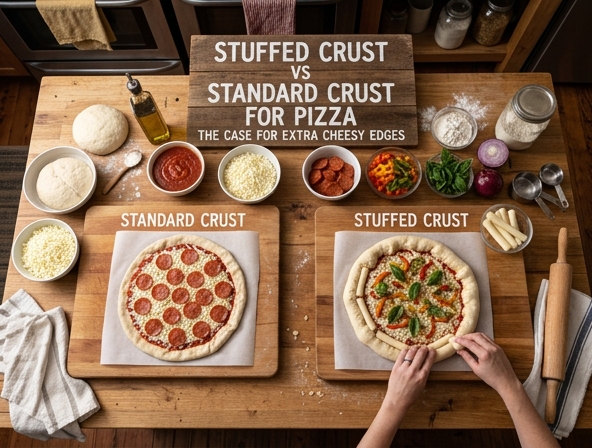
| Aspect | Standard Crust | Stuffed Crust |
|---|---|---|
| Core Definition | Basic dough foundation | Dough edge filled with cheese |
| Diner Perception | Often viewed as flavorless filler | Indulgent, primary component of the meal |
| Value Proposition | High rate of abandonment (waste) | Transforms crust into a high-value, edible item |
| Technical Needs | Minimal | Requires careful dough moisture and proper cheese melt |
| Overall Impact | Functional base | Elevated quality and satisfaction |
Stuffed Crust vs. Standard Crust: The Great Pizza Dough Dilemma
The pizza box opens, the steam rises, and for a brief, glorious moment, the world stops. Whether you are at a crowded party, a quiet movie night, or a late-night study session, the reveal of a pizza is a universal moment of joy. But beneath that layer of bubbling mozzarella and spicy pepperoni lies one of the most polarizing debates in culinary history: the choice between a classic, standard crust and the indulgent, cheese-laden wonder that is the stuffed crust.
To the uninitiated, it might seem like a simple preference for more dairy. To the pizza purist, it represents a battle between artisanal integrity and modern excess. As we dive into the anatomy of the crust, we find that both options offer distinct experiences, each serving a different mood, appetite, and palate.
The Case for the Standard Crust: The Purist's Canvas
For those who prioritize the harmony of ingredients, the standard crust is not just a base-it is the foundation upon which the pizza's soul is built. A well-executed standard crust, particularly those modeled after Neapolitan or New York-style traditions, is a testament to the science of baking.
The Art of the "Cornicione"
In the world of professional pizza making, the rim of the crust is known as the cornicione. A properly fermented, hand-stretched dough, when hit with the high heat of a brick oven, creates a texture that is impossibly difficult to replicate: a charred, blistered exterior that gives way to a chewy, airy interior. This is the "standard" experience at its best. It provides a neutral, slightly nutty backdrop that highlights the quality of the tomato sauce and the creaminess of the fresh mozzarella on top.
Structural Integrity
There is also the matter of physics. A standard crust is engineered to hold the weight of toppings without folding under pressure. When you pick up a slice, the crust acts as a handle. Its primary job is to provide the perfect ratio of chew-to-crunch. By keeping the edges free of heavy cheese, the baker ensures that the dough can rise properly and achieve that signature "oven spring." For those who enjoy dipping their crust into garlic butter or marinara, the standard crust acts as the perfect vessel-a crispy sponge designed to soak up flavor.
The Case for Stuffed Crust: The Hedonistic Upgrade
If the standard crust is a minimalist painting, the stuffed crust is a maximalist masterpiece. Popularized in the 1990s and turned into a global phenomenon, the stuffed crust was born from the realization that, in the world of pizza, "more" is often better.
The "Bonus" Experience
The beauty of the stuffed crust lies in the surprise. It transforms the often-discarded "handle" of the pizza into a destination rather than a chore. By rolling the outer edge of the dough over a ring of mozzarella string cheese, pizzerias essentially added an appetizer to the end of the main course. It is an act of culinary generosity. The melty, elastic pull of the cheese inside the crust provides a textural contrast-a soft, creamy contrast to the crisp outer shell-that is undeniably satisfying.
Psychology and Comfort
There is an undeniable psychological component to stuffed crust. It represents comfort food taken to its logical extreme. When you order stuffed crust, you are signaling a desire for an experience that is fun, indulgent, and unapologetically rich. It turns the final bite into the climax of the meal, ensuring that even the most "crust-averse" diners finish their entire slice.
The Culinary Chemistry: How They Differ
Beyond taste, the production methods differ significantly. Stuffed crust requires a higher level of moisture control. Because the dough is folded over cheese, the steam trapped inside can sometimes lead to a slightly denser texture compared to a standard crust. To compensate, many chains use a more robust, slightly sweet dough that can withstand the additional weight and the longer baking time required for the inner cheese to reach the optimal "melt-point."
Standard crusts, by contrast, rely on the beauty of hydration and fermentation. The focus is on the yeast, the protein content of the flour, and the timing of the rise. It is a more technical approach to dough-making, where the goal is to create as many air pockets as possible (the "crumb") without sacrificing strength.
Which One Should You Choose?
The choice ultimately depends on the occasion. Here is a guide to help you navigate the menu:
- Choose Standard Crust when: You are eating an artisanal pie with high-quality, specialty toppings like prosciutto, arugula, or hot honey. You want the crust to provide a structural balance to gourmet flavors.
- Choose Stuffed Crust when: You are hosting a casual gathering, feeding a group of hungry teenagers, or simply craving the ultimate "cheat meal." It is the perfect choice for high-volume, classic topping pizzas like pepperoni or sausage, where the goal is maximum satisfaction.
- The "Midnight Snack" Rule: If you are planning to have leftovers, keep in mind that standard crusts hold up better in a toaster oven the next day. Stuffed crusts are delicious, but the cheese inside can become a bit rubbery if reheated improperly.
The Final Verdict
Are we meant to choose one forever? Absolutely not. The beauty of pizza is its versatility. Just as we rotate between light summer salads and heavy winter stews, our pizza preferences should be allowed to shift with our moods.
The standard crust remains the undisputed king of technique and tradition, a respectful nod to the history of a dish that started as simple peasant food. The stuffed crust, however, is a victory for innovation and the "what if" spirit of the modern era. Whether you value the airy crunch of a perfectly fermented dough or the molten, cheesy surprise of a stuffed rim, both satisfy the same primal urge: the desire for dough, sauce, cheese, and the happiness that follows the first bite.
Next time you find yourself clicking "order," don't feel guilty about the extra cheese. Whether you go for the classic or the stuffed, you are participating in a delicious, never-ending conversation about what pizza can be. After all, the best crust is the one you're eating right now.
Disclaimer:
The information provided on Eateryn is for general educational and informational purposes only and is not intended as medical, nutritional, or healthcare advice. It should not be used to diagnose, treat, cure, or prevent any disease or medical condition.
Always consult a qualified physician, registered dietitian, or other certified healthcare professional before making changes to your diet, exercise routine, or lifestyle, or regarding any medical questions or concerns you may have. Never disregard or delay seeking professional medical advice because of something you have read on this website.