
Stovetop vs Baked for Macaroni and Cheese - Choosing The Ultimate Cooking Method
Deciding between stovetop and baked macaroni and cheese often leaves cooks torn between immediacy and tradition. While both rely on a standard béchamel foundation, their thermal pathways grant distinct culinary results. Note that superior technique-not just quality cheese-dictates success, as improper heat control ruins even premium ingredients. Stovetop excels in velvety, pourable emulsions, while baking provides essential textural contrast through a toasted crust. This guide explores these methods to help you achieve your preferred consistency.
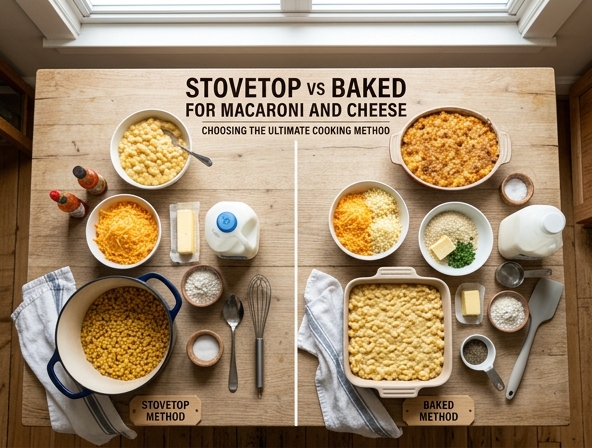
| Feature | Stovetop Mac & Cheese | Baked Mac & Cheese |
|---|---|---|
| Core Base | Béchamel Sauce | Béchamel Sauce |
| Final Texture | Velvety and pourable | Textural contrast with a toasted crust |
| Main Advantage | Immediacy and speed | Traditional presentation and crunch |
| Success Factor | Precise heat control | Precise heat control |
Stovetop vs. Baked: Choosing the Ultimate Cooking Method for Macaroni and Cheese
Few dishes command as much reverence and provoke as much heated debate in the culinary world as macaroni and cheese. It is the ultimate comfort food-a simple combination of pasta and molten cheese that transcends cultures, socioeconomic backgrounds, and generations. Yet, within this universal love lies a fundamental schism: the stovetop method versus the baked method. Are you a purist for the velvety, immediate gratification of a stovetop mornay, or do you belong to the camp of the crusty, deep-dish casserole? Understanding the strengths and chemistry behind each approach is the first step toward mastering the ultimate bowl.
The Stovetop Method: The Temple of Texture
The stovetop method is all about the pursuit of the perfect emulsion. When executed correctly, stovetop macaroni and cheese is the definition of "creamy." Because the pasta is tossed directly into a cheese sauce and served immediately, the moisture content remains high, and the cheese maintains its elastic, fluid state. There is no risk of the cheese proteins "tightening up" or the pasta drying out in a hot oven.
The Pros of Stovetop
- Speed: In under 20 minutes, you can have a gourmet meal ready. It is the ultimate weeknight savior.
- Consistency: You have absolute control over the texture. If the sauce is too thick, a splash of pasta water or cream fixes it instantly.
- Velvety Mouthfeel: By controlling the heat, you can ensure the cheese emulsion remains stable, resulting in a luxurious, silky coating on every noodle.
The Cons of Stovetop
- Lack of Structural Integrity: Stovetop mac and cheese doesn't "set." It is a fluid dish that can feel messy or lack the rustic appeal of a casserole.
- No Textural Variety: Unless you add toppings later, it is a one-note texture. It lacks the contrast of a crispy top versus a tender middle.
The Baked Method: The Art of the Crust
If stovetop mac and cheese is about the interior, baked mac and cheese is about the exterior. Baking allows for the Maillard reaction-the browning of amino acids and sugars that creates complex, nutty flavors. When you bake macaroni and cheese, you are creating a casserole. The pasta absorbs the sauce as it sits in the oven, swelling slightly and becoming more integrated with the dairy.
The Pros of Baked
- The Crust Factor: The golden, buttery breadcrumb topping is often the highlight of the dish. The contrast between the crunchy surface and the creamy interior is arguably the greatest experience in comfort food.
- Complexity of Flavor: Baking allows the ingredients to meld. The cheese sauce interacts with the pasta on a deeper level, often resulting in a more robust, "settled" flavor profile.
- Presentation: A bubbling, golden-brown casserole dish brought to the center of the table offers an aesthetic appeal that a saucepan simply cannot match.
The Cons of Baked
- Risk of Drying Out: If the sauce isn't loose enough going into the oven, the pasta will absorb all the moisture, leaving you with a dry, clumped mess.
- Time Investment: You have to boil the pasta, make the sauce, assemble the dish, and wait for the oven to work its magic. It is an investment, not a quick fix.
The Science of the Sauce
Regardless of your cooking method, the secret to the perfect mac and cheese lies in the sauce. Both methods typically begin with a béchamel-a roux of butter and flour whisked with milk. From there, you introduce the cheese to create a mornay.
The danger in both methods is "breaking" the emulsion. If the heat is too high, the cheese proteins coagulate, releasing their fat and leaving you with a grainy, oily sauce. For the stovetop, it is vital to remove the pan from the heat before adding your shredded cheese. For the oven, you must ensure the sauce is sufficiently rich (using heavy cream or evaporated milk) to withstand the evaporation that occurs during baking.
The "Hybrid" Solution: The Best of Both Worlds
Why choose one when you can harness the strengths of both? The professional approach, often favored by chefs who want a luxurious texture with a stunning crust, is the hybrid method.
- Prepare the stovetop sauce: Create your perfect, velvety mornay on the stove. Undercook your pasta by about two minutes.
- Combine: Fold the pasta into the sauce until every noodle is heavily coated, ensuring the mixture is slightly wetter than you think it needs to be.
- The Broil Finish: Transfer the mixture into a baking dish, top with a mixture of panko, parmesan, and melted butter, and place it under a high broiler for just 3–5 minutes.
This method provides the structural stability and silky interior of the stovetop method, while delivering the high-impact, crunchy crust of the baked method. It eliminates the risk of drying out the pasta while ensuring the finished dish looks and tastes like a labor of love.
Decision Matrix: When to Choose Which?
| Scenario | Recommended Method |
|---|---|
| Quick Tuesday night dinner | Stovetop |
| Holiday gathering or potluck | Baked |
| You want the ultimate "comfort" experience | Hybrid |
| You have picky eaters who dislike breadcrumbs | Stovetop |
Conclusion: The Ultimate Method is Yours
Ultimately, the "ultimate" cooking method for macaroni and cheese is the one that satisfies your specific cravings. If you crave the nostalgic, tight-knit, sliceable casserole of a Southern Sunday dinner, keep your oven preheated. If you crave a restaurant-quality, ultra-creamy, spoonable dish that feels like pure indulgence, stick to the stovetop.
However, once you move beyond the binary choice of one or the other, you open the door to culinary experimentation. Whether you use a stovetop-first approach or a hybrid method, the key remains quality ingredients: freshly grated cheese (never the pre-shredded stuff, which is coated in anti-caking agents), high-quality butter, and a pasta shape that holds sauce effectively-like cavatappi or campanelle. Master your sauce, pick your texture, and you will never need a recipe again.
Disclaimer:
The information provided on Eateryn is for general educational and informational purposes only and is not intended as medical, nutritional, or healthcare advice. It should not be used to diagnose, treat, cure, or prevent any disease or medical condition.
Always consult a qualified physician, registered dietitian, or other certified healthcare professional before making changes to your diet, exercise routine, or lifestyle, or regarding any medical questions or concerns you may have. Never disregard or delay seeking professional medical advice because of something you have read on this website.