
Stove Top vs Slow Cooker for Clam Chowder - Choosing The Best Cooking Method
Many home cooks struggle to balance flavor depth with the convenience required for a perfect clam chowder. While traditional recipes favor the stovetop, modern alternatives leverage the slow cooker for ease. Each method grants distinct advantages: one yields superior texture, the other unmatched time-efficiency. Though heat management remains critical, professional standards like Jasper White's stovetop technique contrast sharply with popular set-and-forget convenience. We will evaluate these approaches to help you identify your optimal culinary path.
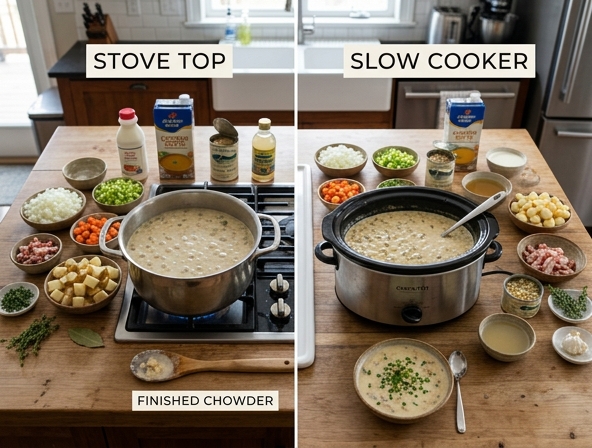
| Cooking Method | Primary Advantage | Best Suited For |
|---|---|---|
| Stove Top | Superior texture and precise heat management. | Traditionalists aiming for professional-grade, depth-focused results. |
| Slow Cooker | Unmatched time-efficiency and "set-and-forget" convenience. | Busy home cooks prioritizing ease without sacrificing a hearty meal. |
Stove Top vs. Slow Cooker: Choosing the Best Method for Your Clam Chowder
Clam chowder is more than just a soup; it is a culinary institution. Whether you lean toward the creamy, white-base New England style or the tomato-forward Manhattan version, the method you choose to prepare it will fundamentally change the character of the final dish. When deciding between the traditional stove top method and the modern convenience of a slow cooker, home cooks often find themselves at a crossroads. Does the slow infusion of flavors in a crockpot outweigh the precise texture control offered by a heavy-bottomed pot on the range? Let's dive deep into the culinary mechanics of both.
The Case for the Stove Top: The Purist's Approach
For generations, the stove top has been the standard for clam chowder preparation. This method is rooted in the "classic" technique, which prioritizes the integrity of ingredients and the precision of the emulsion.
1. Superior Control Over Texture
One of the biggest advantages of the stove top is the ability to monitor the consistency of your chowder in real-time. A good clam chowder relies on a perfectly cooked base-usually a roux made of rendered bacon fat or butter and flour. On the stove, you can toast the flour, whisk in the stock, and slowly incorporate the cream, ensuring it never boils over or separates. This manual control allows you to adjust the thickness on the fly, adding more liquid if it becomes too dense or simmering it longer if it needs reduction.
2. Sautéing Aromatics
Flavor starts with the foundation. On the stove, you have the ability to properly render bacon or salt pork, sauté onions, leeks, and celery until they are translucent and sweet. You can deglaze the pan to pick up the fond, which adds layers of umami that a slow cooker simply cannot replicate without a separate sautéing step. The heat of the burner creates a Maillard reaction that imparts a depth of flavor that is essential to an authentic chowder.
3. Protecting the Clams
Clams are delicate proteins. If cooked too long or at too high a temperature, they transform from tender, briny morsels into rubbery, unappetizing bits. Stove top cooking allows you to add your clams at the very end of the process, ensuring they are heated through without being overcooked.
The Case for the Slow Cooker: The Convenience Factor
The slow cooker, or Crock-Pot, has become a staple in many households for its "set and forget" appeal. For busy families or those planning a weekend gathering, the slow cooker offers a way to have a comforting meal waiting at the end of the day.
1. Hands-Off Flavor Development
The primary draw of a slow cooker is the marriage of flavors. Over several hours, the spices, clam juice, potatoes, and aromatics meld into a unified, deeply seasoned broth. If you are using dried herbs, a slow cooker is excellent at extracting their oils, creating a soup that feels "aged" and well-integrated.
2. Simplicity and Efficiency
When you have a house full of guests or a busy work schedule, the ability to dump ingredients into a pot and walk away is invaluable. The slow cooker minimizes active kitchen time, making it an excellent option for casual hosting. However, this ease of use comes with a caveat: you must be prepared to adjust your recipe techniques to avoid common pitfalls.
The Critical Differences: Where the Methods Diverge
To choose the right method, you must understand the potential failures inherent in each approach.
The Dairy Dilemma
Cream and milk are notorious for "breaking" or curdling under high, sustained heat. In a slow cooker, leaving a heavy cream-based soup on "Low" for eight hours can lead to a grainy, oily texture. If you choose the slow cooker method, you should always add the dairy components-heavy cream or half-and-half-in the final 30 to 45 minutes of cooking. On the stove top, you manage the heat more effectively, which prevents this separation from occurring in the first place.
The Potato Predicament
Potatoes are the backbone of clam chowder. You want them tender, but not disintegrated. In a slow cooker, potatoes can easily turn into mush if they aren't cut into large, uniform chunks. On the stove, you can test them with a fork periodically, pulling the pot off the heat the exact second they hit the perfect texture.
Verdict: Which Method Wins?
Choose the Stove Top if:
- You prioritize a perfect, velvety texture and want absolute control over your roux.
- You are using fresh, high-quality clams that require minimal cooking time.
- You enjoy the culinary process of sautéing aromatics and building a base from scratch.
- You want a restaurant-quality finish that highlights the individual components of the soup.
Choose the Slow Cooker if:
- You have limited time and need a "hands-off" meal solution.
- You are using canned clams or a recipe that benefits from a long, slow infusion of vegetable flavors.
- You are serving a crowd and want the soup to stay at a perfect, warm serving temperature throughout the meal.
- You are willing to adjust the process by adding dairy and clams at the end of the cooking cycle.
Final Culinary Advice
Ultimately, the "best" method is the one that fits your lifestyle. If you are a purist who views chowder-making as a Sunday ritual, the stove top is your home. If you are looking to maximize comfort with minimal effort, the slow cooker is your best friend-just remember to respect the ingredients by adding the cream and the clams late in the game. Regardless of the vessel, the secret to a great clam chowder isn't just in the heat source; it's in the quality of the clam juice, the freshness of the cream, and the patience of the cook.
Whether you choose the traditional heavy pot or the modern ceramic insert, keep your seasoning subtle, focus on the texture of your potatoes, and always, always serve with a side of warm, crusty sourdough bread.
Disclaimer:
The information provided on Eateryn is for general educational and informational purposes only and is not intended as medical, nutritional, or healthcare advice. It should not be used to diagnose, treat, cure, or prevent any disease or medical condition.
Always consult a qualified physician, registered dietitian, or other certified healthcare professional before making changes to your diet, exercise routine, or lifestyle, or regarding any medical questions or concerns you may have. Never disregard or delay seeking professional medical advice because of something you have read on this website.