
Steamed vs Grilled for Hot Dog - Texture Matters Most
Choosing the ideal preparation method for a hot dog is surprisingly complex. While many home cooks rely on standard boiling, these methods often overlook the importance of texture. Understanding the nuances between steaming and grilling allows you to master the sensory profile of your meal.
Note that neither technique is superior; success depends entirely on your desired outcome. From the crisp snap of a backyard grilled frank to the tender consistency of deli-style steaming, this guide evaluates how texture defines your experience.
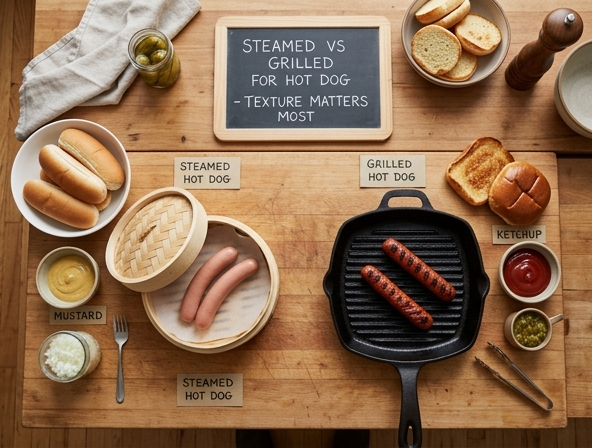
| Preparation Method | Texture Profile | Best For |
|---|---|---|
| Steaming | Tender, consistent, and uniform. | Deli-style meals where a soft bite is preferred. |
| Grilling | Crisp, firm exterior with a distinct "snap." | Classic backyard cookouts and flavor depth. |
| Summary | No method is objectively superior; the choice depends entirely on your desired sensory experience. | |
Steamed vs. Grilled: Why Texture is the Ultimate Arbiter of Hot Dog Perfection
The hot dog is perhaps the most democratic food in the American culinary canon. It is equally at home at a high-end gourmet pop-up as it is at a rain-soaked Little League game. Yet, for all its simplicity, the hot dog remains the subject of intense, often irrational debate. While the argument over toppings-ketchup versus mustard, chili versus kraut-is well-trodden ground, the true connoisseur knows that the soul of the hot dog doesn't lie in the condiments. It lies in the preparation method.
When you strip away the onions and the relish, you are left with two primary schools of thought: the Steamed and the Grilled. This is not merely a question of heat; it is a question of texture, mouthfeel, and the physics of the casing. To understand which method truly reigns supreme, we must dive into the sensory experience of each.
The Case for the Steamed Dog: A Study in Tenderness
The steamed hot dog is a masterclass in uniformity. Often associated with the classic New York City street cart or the "all-the-way" aesthetic of regional diners, steaming produces a frankfurter that is consistent from end to end. When you steam a hot dog, you are gently introducing moisture into the casing. This process prevents the skin from toughening, resulting in a product that is soft, pliable, and incredibly tender.
For purists, the steamed dog is the only way to experience the subtle nuances of the meat blend. Without the intense, bitter char of a grill, the salt, garlic, and smoke-the hallmarks of a high-quality frankfurter-are allowed to shine. Because the exterior skin remains delicate, the steamed dog offers a seamless transition between the bun and the meat. There is no resistance, no "snap" to overcome; instead, you get a pillowy, unified bite that feels comforting and nostalgic.
Furthermore, steaming is the ultimate "low-maintenance" preparation. It preserves the integrity of the casing, ensuring that juices are held within the meat rather than lost to the flames of a grill. If your hot dog philosophy prioritizes harmony and ease of consumption, the steamed method is your clear winner.
The Grilled Dog: A Symphony of Texture and Char
Conversely, the grilled hot dog is an exercise in contrast. If the steamed dog is a soft, melodic ballad, the grilled dog is a percussive rock anthem. When a frankfurter hits the iron grates of a grill, the Maillard reaction takes over. Sugars and amino acids begin to brown and caramelize, creating a complex, savory crust that adds depth and flavor that a steamer simply cannot replicate.
Texture is the defining characteristic of the grilled dog. The exterior becomes firm and sometimes blistered, providing a structural integrity that holds up well against heavy toppings. When you bite into a properly grilled hot dog-especially one with a natural casing-you are met with a distinct "snap." This resistance, followed by the sudden release of hot, seasoned juices, is arguably the pinnacle of the hot dog experience for many.
Grilling also introduces a subtle smokiness, whether from the charcoal itself or the rendering of the fat as it drips onto the heat source. This creates a bold, charred profile that cuts through rich toppings like chili or cheddar cheese. If you believe that a hot dog should be a sensory adventure, complete with a satisfying crunch and a complex flavor profile, the grill is your only path forward.
The Role of the Casing: An Essential Variable
One cannot discuss the steamed vs. grilled debate without addressing the casing. The "natural casing" hot dog, typically encased in sheep intestine, is designed for the snap. When grilled, this casing tightens and chars, creating that iconic resistance. When steamed, it becomes snappy but tender, a hybrid experience that many find to be the "Goldilocks" zone of hot dog texture.
Skinless hot dogs, by contrast, behave differently. Lacking the structural support of a natural casing, skinless dogs are significantly more prone to splitting when grilled. They tend to perform better in the steamer, where they can maintain their structural dignity without bursting open like a poorly managed sausage. If you are serving skinless franks, steaming is almost always the more dignified choice.
The Bun Factor: The Unsung Hero
The method of preparation also dictates the destiny of the bun. A steamed hot dog pairs beautifully with a bun that has been briefly held in the steam tray alongside it. This turns the bun into a soft, hot, absorbent vessel that hugs the dog. The result is a cohesive unit where bread and meat are practically one.
A grilled hot dog demands a bun with a little more backbone-perhaps lightly toasted on the grill alongside the meat. The contrast between the crunchy, charred skin of the dog and the toasted, buttery interior of a lightly grilled bun creates a layered experience that delights the palate.
Conclusion: The Verdict is Yours
Ultimately, the "better" method is entirely dependent on the context of the meal. Are you looking for the nostalgic, pillowy comfort of a city-style street snack? Then the steamer is your best friend. Are you aiming for a backyard BBQ experience, where texture, char, and bold flavors take center stage? Fire up the grill.
Texture is subjective, but its impact on our enjoyment of food is absolute. Whether you prefer the tender, uniform softness of the steamed frank or the structural integrity and charred resistance of the grilled dog, the true success of the dish lies in how you balance the meat, the bun, and the method. So, the next time you find yourself at the stove, don't just reach for the first pot or grate you see. Consider the texture you crave, and prepare your hot dog accordingly. After all, the perfect bite is just a few degrees of heat away.
Disclaimer:
The information provided on Eateryn is for general educational and informational purposes only and is not intended as medical, nutritional, or healthcare advice. It should not be used to diagnose, treat, cure, or prevent any disease or medical condition.
Always consult a qualified physician, registered dietitian, or other certified healthcare professional before making changes to your diet, exercise routine, or lifestyle, or regarding any medical questions or concerns you may have. Never disregard or delay seeking professional medical advice because of something you have read on this website.