
Spicy vs Mild Salsa for Tacos - Catering to Your Personal Heat Tolerance
Optimizing Salsa Selection for Diverse Palates
Selecting the right salsa often leaves hosts uncertain about effectively accommodating varied guest preferences. While standard mild options provide a safe baseline, they frequently lack the complexity required to elevate a taco. Strategic heat management transforms the dining experience. Please note: individual tolerance is highly subjective, making acidity balance essential for success. Whether opting for a sharp Habanero or a creamy Tomatillo Verde, selecting the proper profile defines the meal. This guide examines strategies for harmonizing heat.
| Topic | Key Summary |
|---|---|
| Core Challenge | Balancing guest heat preferences while maintaining flavor complexity in taco catering. |
| The Role of Mild Salsa | Acts as a safe, accessible baseline but often lacks the depth needed to elevate a dish. |
| Heat Management | Success relies on understanding subjective heat tolerances and maintaining proper acidity balance. |
| Strategic Selection | Choosing diverse profiles-ranging from sharp (Habanero) to creamy (Tomatillo Verde)-is essential for a high-quality dining experience. |
Spicy vs. Mild Salsa for Tacos: Catering to Your Personal Heat Tolerance
The taco is perhaps one of the most versatile culinary canvases in existence. Whether you are dealing with charred carne asada, succulent carnitas, or fresh, flaky fish, the base protein is only half the battle. The true soul of the taco lies in the toppings, and at the very heart of that experience sits the salsa. But therein lies a debate that has divided dinner tables for generations: should your taco be a cooling, flavor-forward journey, or a fiery, endorphin-rushing adventure?
The Anatomy of the Salsa Debate
Choosing between mild and spicy salsa isn't just about how much you can handle; it is about how you want to experience the flavor profile of your meal. Salsa serves as the bridge between the tortilla and the filling, acting as both a lubricant and an aromatic enhancer. When you reach for that jar-or freshly blended bowl-of salsa, you are essentially making a choice about how you want the palate to react.
To understand which lane you should choose, we first have to look at the science of spice. The heat we experience in spicy salsa comes from capsaicin, a chemical compound found in chili peppers that binds to the pain receptors on our tongues. While some view this as "pain," others view it as a thrill. Mild salsas, conversely, rely on the raw, vibrant flavors of the garden-tomatoes, onions, cilantro, and citrus-to do the heavy lifting.
The Case for Mild: Flavor Over Fire
There is a persistent myth that "mild" means "boring." This couldn't be further from the truth. A well-crafted mild salsa, such as a fresh Pico de Gallo or a mild salsa verde, offers a complexity that is often overshadowed when the palate is overwhelmed by capsaicin.
Why choose mild?
- Highlighting Delicate Ingredients: If you are eating fish tacos or lightly seasoned chicken, a spicy salsa can act as a blunt instrument, obliterating the subtle flavors of the protein. Mild salsa allows the freshness of the lime, the crispness of the onion, and the earthiness of the cilantro to shine through.
- Texture Appreciation: When the heat doesn't cause your mouth to go numb, you are more likely to notice the textures-the crunch of a finely diced white onion or the pulpy, refreshing bite of a perfectly ripe Roma tomato.
- All-Day Comfort: Mild salsas are generally easier on the stomach, making them the superior choice for a casual lunch where you don't want to spend the afternoon dealing with heartburn or a burning throat.
The Case for Spicy: Embracing the Burn
For many, a taco without a kick is simply a sandwich in a tortilla. Spicy salsas are not just about pain; they are about the chemical rush. When you consume capsaicin, your brain reacts to the perceived "threat" by releasing endorphins, the body's natural feel-good chemicals. This is why many people find themselves "addicted" to spicy food.
Why choose spicy?
- Cutting Through Fat: Spicy salsas (especially those made with roasted habaneros or serranos) are the perfect accompaniment to fatty, rich meats like pork belly or chorizo. The heat acts as a palate cleanser, cutting through the grease and resetting your taste buds for the next bite.
- Depth of Complexity: Spicy salsas often incorporate dried chilies like chipotle (smoked jalapeño) or morita. These peppers bring smoky, chocolatey, or fruity undertones that mild fresh salsas simply cannot replicate.
- The "Challenge" Factor: There is a communal, bonding element to sharing spicy food. If you are dining with friends, the shared experience of tackling a "ghost pepper" or "scorpion" salsa can be a memorable part of the meal.
Finding Your Sweet Spot: How to Test Your Tolerance
If you aren't sure where you land on the spectrum, it is best to treat salsa consumption as an experiment. Start by identifying the specific peppers used in the salsa:
- Jalapeño: The entry-level spice. If you can handle a jalapeño, you are ready for most "medium" restaurant salsas.
- Serrano: These pack a bit more punch than jalapeños and offer a brighter, grassier flavor. If a salsa is labeled "spicy," it likely uses serranos.
- Habanero/Scotch Bonnet: These are for the brave. They offer a unique, fruity floral flavor profile, but the heat is intense and lingers long after the taco is gone.
Don't be afraid to perform a "salsa test" at a local taco shop. Order a side of both their mildest and spiciest offerings. Start by putting a tiny drop of the spicy salsa on a corner of your taco. If it's too much, balance it out immediately with a spoonful of the mild variety. In the world of tacos, there is no rule stating you cannot mix and match.
Hosting: The "Salsa Station" Strategy
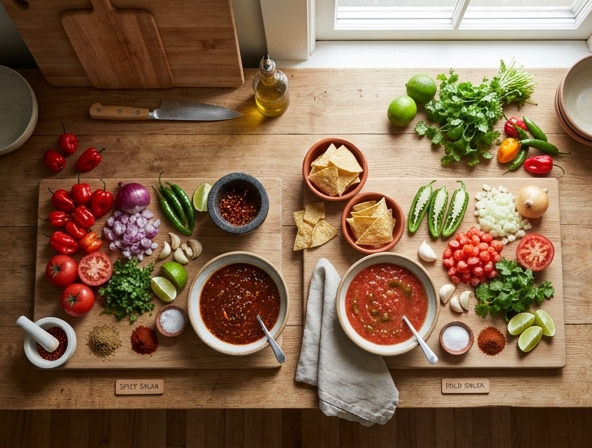
If you are hosting a taco night at home, the best way to cater to varying heat tolerances is to stop trying to choose one salsa for everyone. Instead, create a "Salsa Station."
Provide three distinct options:
- The Fresh Classic: A mild Pico de Gallo or a mild salsa roja.
- The Balanced Medium: A Salsa Verde made with tomatillos and mild green chiles.
- The Heat Seeker: A roasted salsa made with serranos or habaneros.
By providing a spectrum, you empower your guests to curate their own experience. Someone who loves heat can load up their taco with the spicy blend, while someone with a lower tolerance can enjoy their meal without fear of discomfort. Adding a dollop of sour cream or a slice of avocado to the table also serves as a "safety net" for those who accidentally take a bite that is a little too hot to handle.
The Final Verdict
Ultimately, the choice between spicy and mild salsa is a personal one, and it can change depending on your mood, your company, and, of course, the taco in question. Don't feel pressured to prove your toughness by opting for a salsa that makes you sweat, and conversely, don't miss out on the incredible smoky depths of spicy salsas just because you're afraid of a little heat.
Tacos are meant to be fun, messy, and delicious. Whether you cool your palate with a mild, tomato-based salsa or ignite your senses with a fiery habanero blend, as long as you are enjoying the bite, you've made the right choice. So, the next time you hold that tortilla in your hand, don't overthink it-go with your gut, embrace the heat (or the cooling relief), and enjoy every single bite.
Disclaimer:
The information provided on Eateryn is for general educational and informational purposes only and is not intended as medical, nutritional, or healthcare advice. It should not be used to diagnose, treat, cure, or prevent any disease or medical condition.
Always consult a qualified physician, registered dietitian, or other certified healthcare professional before making changes to your diet, exercise routine, or lifestyle, or regarding any medical questions or concerns you may have. Never disregard or delay seeking professional medical advice because of something you have read on this website.