
Spicy vs Mild for Philly Cheesesteak - Adjusting The Flavor Intensity
Spicy vs. Mild: Customizing Your Cheesesteak
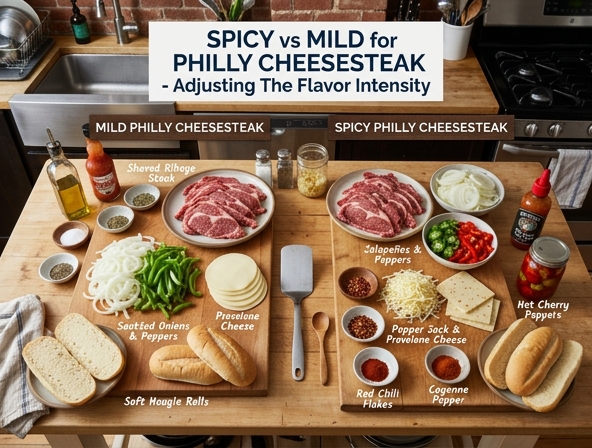
Achieving the perfect balance between savory depth and heat is a common challenge for cheesesteak purists. While traditional recipes emphasize mild, classic flavors through provolone or whiz, modern palates often demand greater complexity. By strategically incorporating spice, you transform a standard sandwich into a curated culinary experience. Note that heat must complement, rather than mask, the quality ribeye. From charred long hots to signature sriracha aiolis, this guide outlines methods to calibrate intensity for your perfect cheesesteak.
| Feature | Details |
|---|---|
| Core Topic | Balancing flavor intensity in Philly Cheesesteaks |
| Traditional Approach | Focuses on mild, classic profiles using Provolone or Cheese Whiz. |
| Modern Adaptation | Incorporates heat to add complexity and create a unique culinary experience. |
| Golden Rule | Heat must complement-not mask-the quality of the ribeye beef. |
| Suggested Add-ins | Charred long hots, sriracha aioli, and other heat-forward ingredients. |
Spicy vs. Mild for Philly Cheesesteak: Adjusting The Flavor Intensity
The Philly cheesesteak is more than just a sandwich; it is a culinary institution. With its roots firmly planted in the bustling streets of South Philadelphia, the traditional recipe-thinly sliced ribeye, melted cheese, and sautéed onions on a crusty roll-is a masterclass in simplicity. However, in the modern culinary landscape, there is a recurring debate that divides lunchrooms and taverns alike: the pursuit of the classic mild profile versus the demand for a spicy, heat-forward kick. Adjusting the flavor intensity of a cheesesteak is a delicate art, and understanding how to balance these elements without losing the soul of the sandwich is the mark of a true home chef or pitmaster.
The Case for "Mild": Respecting the Foundation
For purists, the "mild" cheesesteak is the gold standard. When you use high-quality, well-marbled ribeye, the goal is to let the natural sweetness of the caramelized onions and the savory depth of the rendered beef fat take center stage. In a mild configuration, the cheese-whether it is a sharp Provolone, a mild American, or the iconic Cheez Whiz-acts as a binder and a salt source, not a distraction.
The beauty of a mild cheesesteak lies in its harmony. When the ingredients are kept simple, you can taste the "toasting" of the hoagie roll, the slight chew of the beef, and the silky texture of the cheese. Adding spice isn't always about "improvement"; sometimes, it's about acknowledging that the dish is already perfect in its foundational state. If you opt for mild, the focus shifts to texture and ingredient quality rather than aggressive seasoning.
The Evolution of Heat: Why We Crave the Kick
Conversely, the rise of "spicy" variations speaks to the contemporary palate's obsession with heat. Heat-specifically capsaicin-has a unique way of interacting with fats. Since a cheesesteak is essentially a fatty, indulgent meal, adding spice provides a necessary "cut." The heat slices through the heavy mouthfeel of the cheese and the oil of the beef, waking up the taste buds and preventing palate fatigue halfway through the sandwich.
Incorporating spice isn't just about dumping hot sauce on your meal; it is about choosing the right medium for heat that complements the beef rather than masking it. There is a vast spectrum of heat, ranging from mild zesty tang to "fry-your-senses" intensity.
Methods for Elevating the Heat
If you want to experiment with a spicy cheesesteak, consider these three distinct tiers of intensity:
1. The Tangy Kick (The "Cherry Pepper" Approach)
This is arguably the most authentic way to spice up a Philly. Pickled cherry peppers or "long hots" (Italian frying peppers) are standard accompaniments in Philadelphia. These provide a vinegar-forward, bright heat. The acidity of the pickles balances the heavy fat of the ribeye, making the sandwich feel lighter while delivering a moderate, manageable heat.
2. The Savory Heat (The "Spiced Onion" Method)
Instead of adding a condiment at the end, infuse the flavor during the cooking process. As you sauté your onions, toss in a teaspoon of red pepper flakes or finely diced fresh jalapeños. By sautéing the peppers with the onions, the heat permeates the beef as it cooks. This ensures that every bite has a consistent, mild-to-medium heat profile that feels like it belongs in the recipe rather than being added as an afterthought.
3. The Modern Inferno (Sauces and Dry Rubs)
For those who love extreme spice, the sky is the limit. However, the biggest mistake is drowning the bread. A soggy hoagie roll is the death of a cheesesteak. If you are using liquid hot sauces-like a fermented habanero sauce or a sriracha-infused mayo-apply them sparingly to the bread or mix them into the cheese *before* melting it onto the meat. This keeps the heat contained and prevents the structural integrity of the roll from failing.
Balancing the Act: The Importance of the "Canvas"
Regardless of whether you lean mild or spicy, the bread is the canvas. A truly great cheesesteak requires a roll that can withstand moisture without disintegrating. When you add spice, you are often adding oils or vinegars. Always toast your roll lightly before assembly; this creates a moisture barrier. Whether you are adding jalapeños or keeping it traditional, a crisp interior texture is mandatory.
Finding Your Personal "Goldilocks" Zone
The beauty of making a cheesesteak at home is the ability to customize. The "Goldilocks" zone-the perfect balance-often involves using a blend of cheeses and a carefully measured amount of heat. Try combining mild white American cheese with a dash of pickled jalapeños. The American cheese provides that creamy, emulsified texture that holds the meat together, while the peppers provide the spark.
Ultimately, there is no wrong way to eat a cheesesteak. Whether you stick to the historical integrity of a mild, onion-forward classic or push the boundaries with fiery chilies and bold sauces, the key is balance. Start slow. Add heat in layers, taste as you go, and remember that the goal is to enhance the beef, not bury it under an avalanche of capsaicin. A great cheesesteak should satisfy you, leaving you ready for the next bite rather than reaching for a glass of milk to survive the last one.
So, the next time you fire up the flat-top or the cast-iron skillet, ask yourself: are you looking for the comforting, savory embrace of the classic, or the invigorating, high-octane thrill of the spicy? Both paths lead to a delicious meal, but the journey-and the flavor profile-is entirely up to you.
Disclaimer:
The information provided on Eateryn is for general educational and informational purposes only and is not intended as medical, nutritional, or healthcare advice. It should not be used to diagnose, treat, cure, or prevent any disease or medical condition.
Always consult a qualified physician, registered dietitian, or other certified healthcare professional before making changes to your diet, exercise routine, or lifestyle, or regarding any medical questions or concerns you may have. Never disregard or delay seeking professional medical advice because of something you have read on this website.