
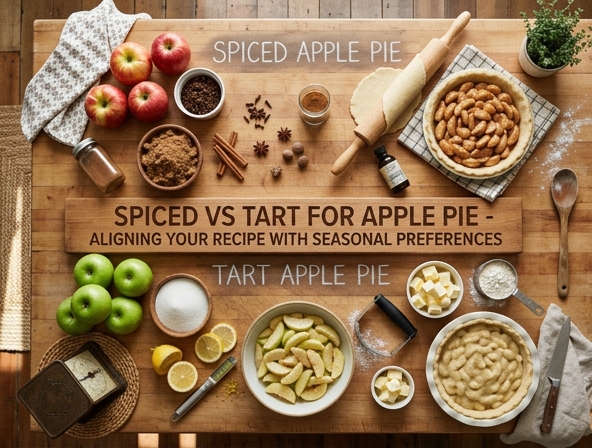
Spiced vs Tart for Apple Pie - Aligning Your Recipe With Seasonal Preferences
Bakers frequently struggle to navigate the delicate balance between a warm, spiced profile and a bright, tart finish in apple pie. While tradition often dictates heavy spice blends, evolving seasonal preferences now demand a more nuanced approach. Mastering this balance is essential for superior flavor depth. Remember, acidity should enhance, not mask, your spice selection. By combining tart Granny Smiths with balanced Honeycrisp apples, you achieve ideal texture. The following sections will guide your flavor profiling and recipe optimization.
| Category | Key Insight |
|---|---|
| The Core Challenge | Balancing traditional warm spice profiles with a bright, tart finish for a nuanced flavor profile. |
| Flavor Philosophy | Acidity should be used to enhance spices rather than masking or overpowering them. |
| Recommended Apples | A blend of Granny Smith (for tartness) and Honeycrisp (for structural balance and texture). |
| Goal | To optimize recipes for seasonal preferences while achieving superior flavor depth. |
The Great Apple Dilemma: Spiced vs. Tart
There is perhaps no dessert more synonymous with the passage of time than the apple pie. Yet, for all its classic status, the humble apple pie is a battleground of preference, a culinary tug-of-war between two distinct schools of thought: the deeply spiced, molasses-rich profiles of deep winter and the bright, crisp, citrus-forward tarts of the early harvest. Choosing between these isn't just a matter of taste; it is an act of aligning your baking with the seasonal rhythm of the calendar.
The Philosophy of the Spiced Pie
The "Spiced" apple pie is the quintessential comfort food. It is designed for the darkest, coldest months of the year-the period from late November through February. When the air outside is biting, our palates naturally gravitate toward what psychologists call "thermal warmth" in food. Spices like cinnamon, nutmeg, ground cloves, allspice, and ginger do more than just add flavor; they act as aromatics that stimulate our senses in a way that feels inherently warming.
In a heavily spiced pie, the goal is alchemy. The spices should mellow the apples until they become almost indistinguishable from one another, creating a unified, jammy filling that melts on the tongue. This style calls for a generous hand with the pantry staples. A "spiced" pie often pairs best with a dark sugar-muscovado or dark brown sugar-which introduces a hint of molasses, grounding the acidity of the fruit in deep, earthy caramel notes. It is a pie meant to be served warm, with a heavy dollop of thick, unsweetened whipped cream to cut through the density.
The Case for the Tart Revolution
Conversely, the "Tart" apple pie is a celebration of the fruit itself. This approach is rooted in the early harvest-the transition from late summer to early autumn. At this time of year, we are not looking for the density of a heavy winter dessert; we are looking for the brightness of the orchard. A tart pie is a vibrant experience; it is designed to wake up the palate rather than soothe it.
To achieve this, the baker must restrain the spice cupboard. Cinnamon is used as a whisper, not a shout, and often replaced by more nuanced aromatics like lemon zest, fresh ginger, or even a splash of apple cider vinegar. The tart pie relies on the inherent acidity of the apples-typically Granny Smith, Northern Spy, or Pink Lady-to provide the structure. The sugar here is usually white or light cane sugar, used sparingly enough to allow the natural floral notes of the apple to bloom during the bake. When executed well, a tart pie is crisp, refreshing, and surprisingly light, making it the perfect palate cleanser after a rich Thanksgiving or Harvest dinner.
Selecting Your Canvas: Apple Varieties Matter
Your choice between spiced or tart must begin at the produce market. The apple you choose is the skeleton of your pie, and you cannot force a square peg into a round hole.
- For the Spiced Pie: Look for apples with a sturdy structure and a balanced sweetness, like Braeburn, Fuji, or Jonathan. These apples hold their shape under long, slow baking, allowing the spices to penetrate without turning the filling into applesauce.
- For the Tart Pie: You need high-acid apples that retain their "bite." Granny Smith is the gold standard here, but consider blending in a few Honeycrisp for a textural contrast. These varieties offer the sharp, acidic punch necessary to stand up against a lighter sugar profile.
Aligning with the Season
As the year progresses, your recipe should evolve alongside the orchard. In September, when the harvest is fresh and the fruit is vibrant, lean into the tart profile. The natural acidity of the apples is at its peak, and a lighter pie mirrors the optimism of the early autumn season. As November turns to December and the apples have spent time in storage-losing some of their internal moisture and acidity-that is the moment to transition toward the spiced profile. The spice adds the complexity that the fruit may have lost during storage, keeping the dessert relevant even when the harvest is months behind us.
The Hybrid Approach: Finding the Middle Path
For many, the ideal pie lies somewhere in the middle. If you find yourself unable to choose, consider the "Bridging" method. This involves using a tart base of Granny Smith apples, but macerating them with a complex, spice-forward syrup. By tossing the apples in a mixture of brown sugar, cinnamon, and a significant amount of lemon juice or cider, you create a filling that hits the palate with an initial blast of brightness, followed by a long, warm, spicy finish.
This hybrid approach requires careful attention to the thickener. Because you are introducing both acidity and sugar, the fruit will release more liquid. Use a combination of flour and cornstarch-or even a small amount of tapioca-to ensure that the pie doesn't become soupy, as this is the primary enemy of the balanced pie.
Conclusion: Baking with Intent
Whether you choose the dark, aromatic allure of a spice-laden pie or the bright, crisp profile of a fruit-forward tart, the key to a successful bake is intentionality. Don't simply default to the recipe you've used for years. Ask yourself what the season is telling you. Ask yourself what your guests need at this moment in the year: a warm, nostalgic hug on a plate, or a refreshing, sharp reminder of the orchard's bounty? When you align your recipe with the season, you aren't just following instructions; you are capturing the spirit of the time, one slice at a time.
Disclaimer:
The information provided on Eateryn is for general educational and informational purposes only and is not intended as medical, nutritional, or healthcare advice. It should not be used to diagnose, treat, cure, or prevent any disease or medical condition.
Always consult a qualified physician, registered dietitian, or other certified healthcare professional before making changes to your diet, exercise routine, or lifestyle, or regarding any medical questions or concerns you may have. Never disregard or delay seeking professional medical advice because of something you have read on this website.