
Sourdough vs Yeast for Bagel - Assessing the fermentation method
Achieving the signature chewy crust and airy crumb remains a common hurdle for bagel artisans. While commercial yeast provides rapid, predictable output, it often lacks the flavor depth of natural fermentation. Conversely, sourdough unlocks superior profile complexity and improved digestibility. Note that sourdough requires precise temperature control to ensure consistent results. By contrasting the structural reliability of yeast with the sensory superiority of sourdough, this guide evaluates which fermentation method best aligns with your specific production and quality objectives.
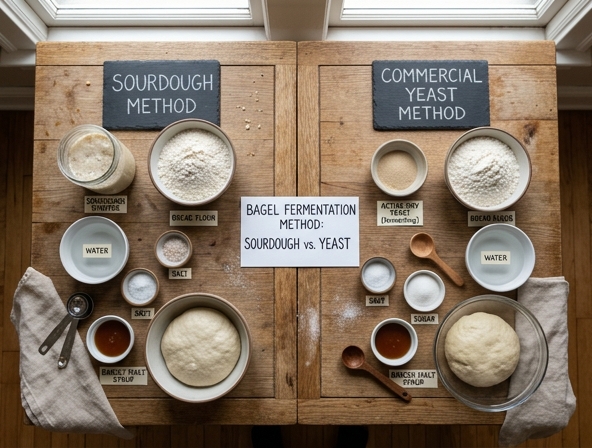
| Feature | Commercial Yeast | Sourdough |
|---|---|---|
| Fermentation Speed | Rapid and predictable | Slower (Natural fermentation) |
| Flavor Profile | Standard | Superior complexity |
| Digestibility | Standard | Improved |
| Process Demands | High reliability; low effort | Requires precise temperature control |
| Primary Goal | Efficiency and output | Flavor and quality refinement |
Sourdough vs. Yeast: Assessing the Fermentation Method for the Perfect Bagel
The bagel is a paradox of culinary simplicity: flour, water, salt, a touch of sweetener, and a malt-infused boil. Yet, for all its structural austerity, the bagel is arguably one of the most technical breads to master. At the heart of this challenge lies the fermentation method. Whether you are a home baker refining your craft or a professional seeking to optimize your production, the choice between commercial yeast and a wild-yeast sourdough starter is the single most significant decision you will make in your process.
The Case for Commercial Yeast: Reliability and Reach
Commercial yeast (Saccharomyces cerevisiae) has been the gold standard for bagel production for decades, particularly in the high-volume shops of New York and Montreal. Its primary advantage is predictability. In a professional setting where consistency is paramount, commercial yeast acts as a reliable engine. It provides a vigorous, predictable rise that allows bakers to adhere to strict production schedules.
When using commercial yeast for bagels, the process typically leans heavily on a cold-retardation phase. By keeping the dough at a low temperature for 12 to 24 hours, the yeast activity slows down, allowing the enzymes to break down starches into sugars without over-proofing the gluten structure. This method yields a clean, sweet, and mild flavor profile. The "bagel-y" characteristics-the distinct chew and the glossy crust-are largely preserved because the commercial yeast provides a consistent gas structure that holds up well during the kettle-boiling process.
The Sourdough Paradigm: Complexity and Depth
In contrast, the sourdough method-or using a wild-yeast levain-introduces a biological ecosystem into your dough. Sourdough is not merely a leavening agent; it is a complex culture of lactobacilli and wild yeasts. When you transition to a sourdough bagel, you are trading "speed and control" for "depth and character."
The primary benefit of sourdough in bagels is the secondary fermentation products: organic acids, specifically acetic and lactic acids. These acids do more than add a "tang." They fundamentally alter the gluten network. By slightly lowering the pH of the dough, sourdough helps to condition the proteins, often resulting in a more nuanced chew. Furthermore, the long fermentation times required by sourdough allow for a more thorough breakdown of phytic acid, potentially making the bagel easier to digest and increasing the bioavailability of nutrients.
Assessing the Texture and The Boil
One of the most frequent arguments against sourdough bagels is the fear that they will be too soft or lose the iconic "bite" that a yeast-risen bagel provides. It is true that a poorly managed sourdough ferment can lead to a slack dough, but this is a technical issue rather than a failure of the starter itself.
The secret to success with either method lies in the boil. The boil gelatinizes the starches on the surface, creating that taut, shiny skin that protects the interior crumb. Because sourdough creates a more acidic environment, the crust often caramelizes more deeply and rapidly in the oven compared to a standard yeast bagel. This results in a deeper color and a more robust, toasted flavor profile that perfectly complements the sourdough's subtle sourness.
Comparative Analysis: Key Considerations
1. Time Management
- Yeast: Requires shorter prep time, but still benefits from a 12-hour cold retard. It is easier to "rescue" if your schedule slips.
- Sourdough: Requires a rigorous feeding schedule for the levain and generally demands a longer bulk fermentation to ensure the culture is active enough to lift the dense bagel dough.
2. Flavor Profiles
- Yeast: Neutral, clean, and classic. It allows toppings like poppy seeds, garlic, and onion to take center stage.
- Sourdough: Complex, earthy, and aromatic. It adds a "gourmet" quality that stands up well even when eaten plain.
3. Consistency and Skill
- Yeast: Higher consistency across different batches. Ideal for beginners or high-volume commercial environments.
- Sourdough: Subject to environmental variables like temperature and humidity. It requires a more intuitive baker who understands how to "read" the dough.
The Verdict: Is One Inherently Better?
The debate between sourdough and yeast is not one of superiority, but of intent. If your goal is to recreate a classic, nostalgic New York-style bagel with a consistent, mild profile, commercial yeast is your strongest ally. Its reliability allows you to focus on the nuances of shaping and the specifics of the boil time.
However, if your ambition is to elevate the bagel from a breakfast staple to an artisanal bread-one that highlights the grain's natural profile and offers a superior digestive experience-sourdough is the clear winner. The sourdough bagel is a loaf with a story; it requires patience, but it rewards the baker with a depth of flavor that is simply unattainable through commercial yeast alone.
Ultimately, the best method is the one that aligns with your environment and your palate. Many professional artisan bakeries have begun using a "hybrid" approach: a small amount of commercial yeast to provide the lift, combined with a sourdough levain to provide the flavor complexity. This bridge between two worlds represents the current cutting edge of modern bagel making, proving that you don't necessarily have to choose one over the other to achieve the perfect bake.
Disclaimer:
The information provided on Eateryn is for general educational and informational purposes only and is not intended as medical, nutritional, or healthcare advice. It should not be used to diagnose, treat, cure, or prevent any disease or medical condition.
Always consult a qualified physician, registered dietitian, or other certified healthcare professional before making changes to your diet, exercise routine, or lifestyle, or regarding any medical questions or concerns you may have. Never disregard or delay seeking professional medical advice because of something you have read on this website.