
Sourdough vs Brioche for Grilled Cheese Sandwich - Determining The Ideal Base
Many home cooks struggle to elevate a grilled cheese beyond a mundane, basic lunch. While standard white bread acts as the ubiquitous default, achieving the ultimate melt requires more culinary intent. Selecting the ideal foundation is the key to a superior gourmet experience. Please note, flavor outcomes depend heavily on your specific cheese pairing. Whether choosing the tangy, structured sourdough or the rich, buttery brioche, this analysis explores how each base dictates your final crust and texture.
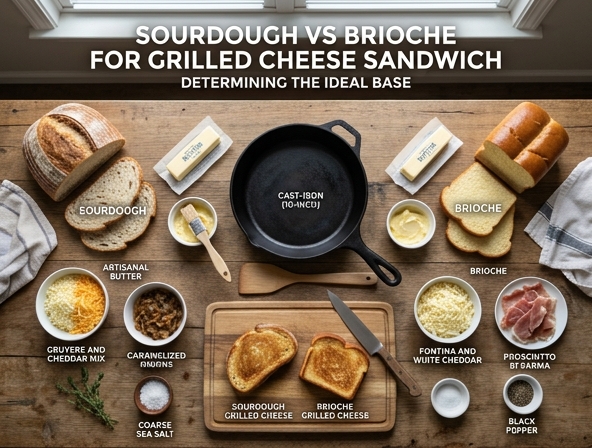
| Bread Type | Flavor/Texture Profile | Culinary Impact |
|---|---|---|
| Sourdough | Tangy and structured | Provides a sturdy base and a superior crunchy crust. |
| Brioche | Rich and buttery | Adds a decadent, gourmet flavor profile to the sandwich. |
| Note: The final outcome is heavily influenced by your specific choice of cheese. | ||
The Great Grilled Cheese Debate: Sourdough vs. Brioche
The grilled cheese sandwich is more than the sum of its parts; it is an exercise in culinary balance. While the choice of cheese often receives the spotlight, the true foundation-the vehicle for that molten, golden interior-is the bread. Among the pantheon of sandwich loaves, two titans stand above the rest: the rustic, fermented complexity of Sourdough and the pillowy, indulgent richness of Brioche. But which one wears the crown for the ultimate grilled cheese?
The Case for Sourdough: The Architect's Choice
Sourdough is often considered the "purist's" choice for a grilled cheese. Its appeal lies primarily in its structural integrity and its flavor profile, which acts as a necessary counterweight to the fat-heavy nature of melted cheese.
Texture and Structure: A high-quality sourdough boasts a robust, open crumb and a sturdy crust. When grilled, these bread fibers do not collapse under the weight of the cheese. The crust provides a "crunch" that is audible and satisfying, offering a tactile contrast to the gooey interior. This structural superiority makes sourdough the ideal choice for heavy-duty fillings-think sharp aged cheddar, thick slices of tomato, or caramelized onions.
The Tang Factor: The lactic acid produced during the natural fermentation process gives sourdough its signature tang. In a grilled cheese, this acidity is not just a flavor note; it is a functional tool. Cheese is essentially fat and salt; the sourdough's acidity cuts through that richness, preventing palate fatigue and making every bite feel as fresh as the first. It turns a greasy sandwich into a sophisticated meal.
The Case for Brioche: The Hedonist's Delight
If sourdough is the architect, brioche is the artist. This French, egg-enriched bread is built for indulgence, and it transforms the grilled cheese from a lunchtime staple into a decadent affair.
Richness and Browning: Because brioche is loaded with butter and eggs, it possesses a naturally sweet, nutty undertone that pairs beautifully with milder or creamier cheeses like Havarti, Fontina, or Brie. Furthermore, the high sugar and fat content in the dough facilitate a rapid Maillard reaction. Brioche browns more quickly and evenly than sourdough, resulting in a caramelized, golden-brown surface that feels almost like a delicate pastry.
The "Cloud" Effect: Eating a grilled cheese on brioche is a sensory experience defined by softness. There is very little resistance when you bite into it. For those who prioritize the "cheese pull" and the seamless integration of bread and dairy, brioche offers a velvet-like canvas that cradles the melting cheese rather than standing up to it.
The Science of the Melt: Matching Bread to Cheese
The success of your sandwich depends heavily on the marriage of your chosen bread to your chosen cheese.
- Sourdough Pairings: Best for high-impact flavors. Use sharp cheddar, Gruyère, or a funky blue cheese. The bread needs to hold its own against pungent, salty profiles.
- Brioche Pairings: Best for creamy, mild flavors. Pair with Taleggio, young Gouda, or even a hint of fig jam or pear. The bread acts as a luxurious vessel that elevates the subtler notes of the cheese.
Preparation: Mastering the Heat
Regardless of your choice, the preparation method is the final arbiter of quality. For sourdough, a "low and slow" approach is mandatory. Because the bread is dense, you need time for the heat to penetrate the center and melt the cheese without burning the exterior. Use a heavy cast-iron skillet and a weight (a bacon press or another heavy pan) to ensure uniform contact.
For brioche, watch the temperature closely. The sugar content means it burns significantly faster than standard bread. A medium-low heat is sufficient. Because the bread is already rich with butter, you may be tempted to use less fat in the pan, but do not skimp-the butter is essential for that signature fry-pan crisp that prevents the brioche from becoming soggy.
The Verdict: Determining the Ideal Base
There is no singular "better" bread, but there is a "better" bread for the occasion. If you are preparing a lunch sandwich intended to be paired with a bright, acidic tomato soup, Sourdough is the undisputed champion. Its structure handles the dunking, and its tang balances the acidity of the soup perfectly.
If you are crafting a gourmet appetizer or a late-night treat, perhaps elevated with truffled cheese or caramelized mushrooms, Brioche is the superior vessel. It offers a luxurious, melt-in-the-mouth experience that feels more like a culinary event than a standard sandwich.
| Feature | Sourdough | Brioche |
|---|---|---|
| Flavor | Tangy, rustic, complex | Sweet, buttery, rich |
| Texture | Crunchy crust, chewy crumb | Soft, pillowy, delicate |
| Best Cheese | Sharp, Aged, Funky | Creamy, Mild, Nutty |
| Ideal Context | Lunch, with soup | Dinner, gourmet, indulgent |
Ultimately, the perfect grilled cheese is a reflection of the chef's intent. Do you seek the crisp, bold satisfaction of a hearty crust, or the golden, buttery embrace of a French-style loaf? Perhaps the true answer lies in keeping both loaves stocked in your kitchen, ready for whatever the cravings of the day might dictate.
Disclaimer:
The information provided on Eateryn is for general educational and informational purposes only and is not intended as medical, nutritional, or healthcare advice. It should not be used to diagnose, treat, cure, or prevent any disease or medical condition.
Always consult a qualified physician, registered dietitian, or other certified healthcare professional before making changes to your diet, exercise routine, or lifestyle, or regarding any medical questions or concerns you may have. Never disregard or delay seeking professional medical advice because of something you have read on this website.