
Smoker vs Conventional Oven For Meatloaf - Comparing Intense Smoke Versus Heat
Many home cooks struggle to achieve a flavorful, moist meatloaf, often settling for bland results from standard ovens. While conventional baking is the industry standard for consistent heat, pitmasters are increasingly utilizing smokers for depth. This comparison grants you the technical insight needed to balance smoke profiles with texture. Note that results require strict temperature management rather than just equipment choice. Whether producing hickory-infused beef or oven-seared glazes, this guide explores the essential trade-offs between methods.
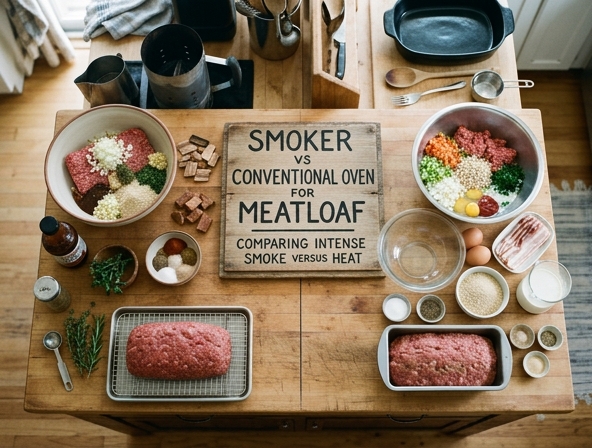
| Comparison Factor | Conventional Oven | Smoker |
|---|---|---|
| Core Advantage | Industry standard for consistent, reliable heat. | Adds complex depth and intense smoke profiles. |
| Flavor Profile | Often neutral; risks being bland without additives. | Infused with smoke (e.g., hickory); robust character. |
| Technical Focus | Predictability and ease of use. | Requires strict temperature management. |
| Key Takeaway | Success is determined by temperature control techniques rather than the equipment choice alone. | |
Smoker vs. Conventional Oven For Meatloaf: Comparing Intense Smoke Versus Heat
Meatloaf is arguably the ultimate comfort food-a nostalgic blend of ground proteins, aromatic vegetables, binders, and seasonings that, when executed correctly, yields a moist, savory slice of heaven. For generations, the conventional oven has been the default vessel for this culinary staple. However, as the backyard barbecue movement has matured, pitmasters have turned their eyes toward the meatloaf, transforming this humble diner dish into a smoky, wood-fired masterpiece. But is the extra effort of a smoker truly worth it, or does the simplicity of the oven reign supreme?
The Conventional Oven: The Standard of Reliability
The conventional oven operates on a principle of dry, ambient heat. When you bake a meatloaf in a loaf pan, you are essentially creating a self-contained environment where moisture is trapped as the protein fibers tighten.
The Advantages:
- Consistency: Ovens offer precise temperature control. Whether you set it to 350°F (175°C), you know exactly how the heat will penetrate the mass.
- Structural Integrity: Using a loaf pan in an oven allows you to add more liquid-like milk-soaked breadcrumbs or extra ketchup-without the fear of the loaf losing its shape. The pan acts as a cradle.
- Convenience: An oven-baked meatloaf is a "set it and forget it" meal. It's perfect for busy weeknights when you don't have the time to manage a fire or monitor smoke levels.
The result of an oven-baked loaf is a uniform, soft texture that mimics the comfort of home cooking. The exterior typically develops a crust only where the glaze caramelizes, leaving the rest of the surface soft and steam-cooked.
The Smoker: Adding Depth Through Complexity
Moving a meatloaf to the smoker is an exercise in transformation. Instead of merely heating the meat, you are infusing it with layers of flavor created by combusting hardwoods like hickory, cherry, or pecan.
The Advantages:
- The "Bark": Unlike an oven, a smoker creates a "bark"-a dark, flavorful, spice-crusted exterior. In a smoker, the entire surface of the meat is exposed to heat and smoke, resulting in a more complex mouthfeel.
- Flavor Infusion: Smoke particles are complex. A meatloaf has a high fat content (especially if you mix beef with pork), and fat is an incredible sponge for smoke. This adds a depth of flavor that a conventional oven simply cannot replicate.
- Presentation: A free-form smoked meatloaf looks artisanal. It feels like a project, an event, and a centerpiece worthy of a backyard gathering.
Direct Comparison: The Science of Texture and Flavor
When comparing the two, we must look at how each cooking method interacts with the chemistry of the meat. Meatloaf relies on a balance of fat and moisture to prevent it from turning into a dense puck.
In the oven, the juices stay largely within the loaf. If you use a pan, the meatloaf essentially braises in its own rendered fat and the liquid from your binders. This produces a very moist, tender, and uniform bite.
In the smoker, the meatloaf is usually placed directly on the grates. This allows the heat to hit all sides, but it also allows some of the moisture and fat to escape. To compensate, a smoked meatloaf often benefits from being wrapped in a thin lattice of bacon. The bacon protects the surface, bastes the meat as it renders, and adds an extra layer of savory depth to complement the wood smoke.
The Verdict: Which Method Wins?
The choice between the smoker and the oven comes down to your priorities for the specific meal.
Choose the Oven If:
You are looking for the classic, soft-textured meatloaf that pairs perfectly with mashed potatoes and gravy. It is the best choice if you are feeding a family on a tight schedule or if you prefer a subtle, non-smoky flavor profile that highlights the herbs and the sweetness of the glaze.
Choose the Smoker If:
You want to elevate the dish into an experience. The smoker is ideal for a Saturday afternoon when you have the time to prep, tend to the fire, and experiment with different wood pairings. Use a mix of fruit woods (like apple or cherry) for a sweeter, gentler smoke, or go with hickory for a bolder, more aggressive flavor profile. Don't forget to glaze the meatloaf during the last 30 minutes of the cook to create a sticky, caramelized finish that seals in the smoke.
Key Tips for Success
- Internal Temperature is King: Regardless of the method, the meatloaf is done when the center reaches 160°F (71°C). Use a digital probe thermometer-never guess.
- Resting: Both oven and smoked meatloaf must rest for at least 15 minutes before slicing. This allows the proteins to relax and the juices to redistribute, ensuring every slice holds together perfectly.
- The Binder Matters: Whether smoking or baking, don't skimp on the breadcrumbs or the egg. A smoker is particularly unforgiving of a loose meat mixture, so ensure your binding agent is well-integrated to help it survive the trip to the grill grate.
In conclusion, the oven is the guardian of tradition, providing consistency and comfort. The smoker is the innovator, offering a bold new frontier for a classic recipe. Why not try both? You might find that once you've experienced the nuance of a hickory-smoked meatloaf, you'll never go back to the standard loaf pan again.
Disclaimer:
The information provided on Eateryn is for general educational and informational purposes only and is not intended as medical, nutritional, or healthcare advice. It should not be used to diagnose, treat, cure, or prevent any disease or medical condition.
Always consult a qualified physician, registered dietitian, or other certified healthcare professional before making changes to your diet, exercise routine, or lifestyle, or regarding any medical questions or concerns you may have. Never disregard or delay seeking professional medical advice because of something you have read on this website.