
Slow Cooker vs Oven for Macaroni and Cheese - Managing Texture During Preparation
Achieving the perfect mac and cheese texture often results in either mushy, overcooked noodles or dry, separated sauces. While stovetop roux and traditional oven-baking remain the culinary standards, moisture management is the primary challenge. Mastering these methods grants you total control over final viscosity. Note that the critical stipulation for success lies in pasta timing; keeping noodles strictly al dente prevents structural degradation. This guide evaluates both slow cooker and oven techniques to ensure consistent, creamy results.
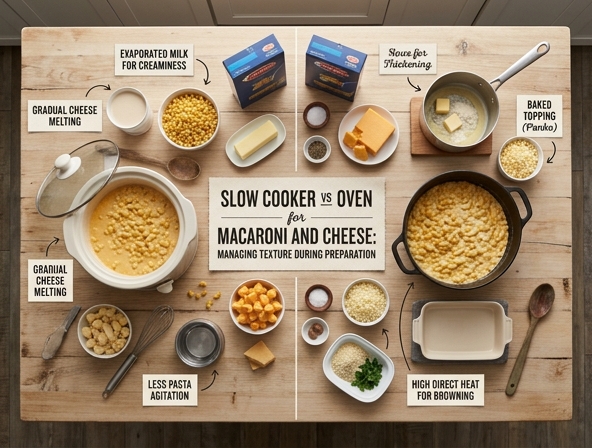
| Aspect | Key Insights |
|---|---|
| Primary Challenge | Avoiding mushy, overcooked noodles and preventing dry or separated sauce. |
| Core Strategy | Effective moisture management to maintain proper viscosity. |
| Crucial Technique | Cook pasta al dente to prevent structural degradation during the cooking process. |
| Objective | Achieving a consistently creamy texture in both slow cooker and oven preparations. |
Slow Cooker vs. Oven for Macaroni and Cheese: Managing Texture During Preparation
Macaroni and cheese is the undisputed heavyweight champion of comfort food. While the core ingredients-pasta, fat, and cheese-remain constant, the method of delivery is subject to intense culinary debate. For home cooks, the choice often boils down to two distinct approaches: the traditional oven-baked casserole and the modern, convenient slow-cooked version. Each method produces a vastly different eating experience, primarily dictated by how it manages moisture, heat distribution, and starch gelatinization. Understanding the science behind these textures is the key to mastering your next batch.
The Oven Method: Crafting the Crispy-Creamy Contrast
The oven-baked approach is widely considered the "gold standard" for those who prize structural integrity. When you bake macaroni and cheese, you are essentially leveraging the Maillard reaction and the power of convection to create a distinct textural hierarchy: a crispy, golden-brown top layer giving way to a velvety, cohesive interior.
The Science of the Bake
In an oven, heat surrounds the dish from all sides. As the water in the sauce evaporates, the proteins in the cheese undergo a mild roasting process. To achieve the perfect texture here, the base must be a thick, stable Mornay sauce-a béchamel (butter, flour, milk) enriched with cheese. This structure prevents the sauce from breaking down into an oily mess during the 30 to 45 minutes of exposure to high, dry heat.
Managing Texture in the Oven
- The Pasta Par-boil: Always undercook your pasta by 1-2 minutes less than the "al dente" instructions on the package. The pasta will absorb the excess moisture from the sauce while it sits in the oven, preventing a mushy final result.
- The Topping Strategy: If you crave that signature crust, avoid over-mixing your topping. A mix of panko breadcrumbs, melted butter, and aged Parmesan creates a structural barrier that protects the creamy layer beneath from becoming overly dehydrated.
- The Resting Phase: This is the most overlooked step. Removing the dish from the oven and letting it sit for 10 minutes allows the starches to firm up. If you cut into it immediately, the sauce will run; wait, and you will be rewarded with a clean, satisfying slice.
The Slow Cooker Method: Achieving Velvety Emulsion
The slow cooker approach is the antithesis of the oven bake. It is less about creating structural crusts and more about maintaining a perfectly fluid, spoonable emulsion for hours on end. The challenge here is not moisture loss, but rather moisture management and starch degradation.
The Slow Cooker Texture Hurdle
The primary enemy of slow-cooker mac and cheese is the "mush factor." Because the pasta remains submerged in liquid for three to four hours, it is constantly absorbing water, leading to a potential breakdown of the noodle's cell structure. Furthermore, if the temperature gets too high, the cheese proteins can coagulate, turning a creamy sauce into a grainy, oil-slicked disaster.
Managing Texture in the Slow Cooker
- The Pasta Strategy: Many slow cooker recipes suggest throwing dry noodles directly into the pot with milk. For better texture, try cooking the pasta separately and folding it into the cheese sauce during the final 30 minutes. If you must cook in the pot, increase your liquid-to-pasta ratio and monitor closely.
- The Shred Factor: Never use pre-shredded cheese from a bag for slow cooking. Pre-shredded cheese is coated in potato starch or cellulose to prevent clumping. In a slow cooker, this anti-caking agent ruins the melt, leading to a chalky texture. Shred your cheese blocks by hand to ensure a smooth, uniform melt.
- The Dairy Buffer: Use evaporated milk instead of standard whole milk. The reduced water content and stabilized proteins in evaporated milk offer a buffer against the heat, keeping the cheese emulsion stable and glossy even after hours of slow cooking.
Comparison Summary: Choosing Your Texture
| Feature | Oven Baked | Slow Cooker |
|---|---|---|
| Primary Texture | Structured, casserole-like, crispy top. | Loose, creamy, uniform consistency. |
| Pasta Integrity | Firm, slightly chewy. | Very soft, absorbent. |
| Best For | Dinner parties and holiday feasts. | Buffets, tailgating, and "hands-off" convenience. |
Conclusion: The Hybrid Approach
If you find yourself torn between the two, you can adopt a hybrid strategy to capture the best of both worlds. Prepare the creamy, cheesy base in a slow cooker to maintain that perfect, silky emulsion without the fear of burning. Once the consistency is perfectly lush, transfer the mixture into an oven-safe casserole dish, sprinkle your panko-parmesan topping over the top, and slide it under a broiler for 3 to 5 minutes.
This method gives you the luxurious, molten interior of the slow-cooker technique while simultaneously providing the crave-worthy, crispy gratin topping of the traditional oven bake. By understanding the mechanical differences between these two cooking environments, you stop guessing and start engineering the perfect texture every single time, regardless of which appliance you reach for.
Disclaimer:
The information provided on Eateryn is for general educational and informational purposes only and is not intended as medical, nutritional, or healthcare advice. It should not be used to diagnose, treat, cure, or prevent any disease or medical condition.
Always consult a qualified physician, registered dietitian, or other certified healthcare professional before making changes to your diet, exercise routine, or lifestyle, or regarding any medical questions or concerns you may have. Never disregard or delay seeking professional medical advice because of something you have read on this website.