
Slow Cooked vs Grilled Meat for Tacos - Depth of Smoky Flavor Comparison
Achieving the perfect taco often involves a difficult trade-off between melt-in-the-mouth tenderness and bold, aromatic char. While traditional slow-braised recipes have long been the industry standard for texture, high-heat grilling remains unmatched for surface-level smoke. Mastering the chemical interaction of heat application transforms a simple dish into an elite culinary experience. This evaluation explores the technical nuances between succulent slow-cooked brisket and flame-kissed carne asada. We will now analyze how these distinct methods fundamentally redefine flavor depth.
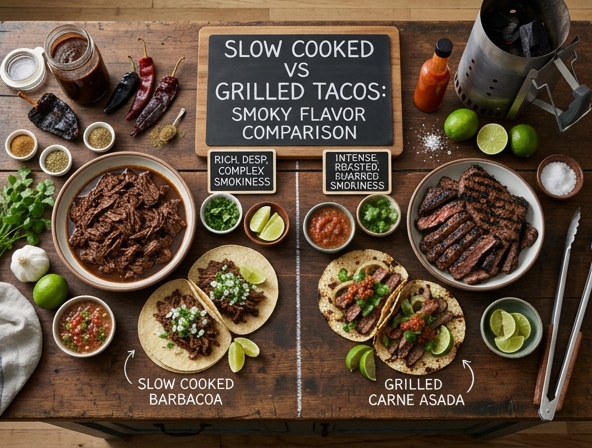
| Cooking Method | Key Benefit | Texture/Finish | Flavor Profile |
|---|---|---|---|
| Slow-Cooked | Superior tenderness | Melt-in-the-mouth, succulent | Deep, braised richness |
| Grilled | High-heat intensity | Flame-kissed, charred surface | Bold, aromatic, smoky |
The Soul of the Taco: Slow Cooked vs. Grilled Meat
For the taco aficionado, the debate is as old as the street taco itself: does true flavor depth come from the patient, rhythmic breakdown of fibers in a slow cooker, or from the violent, volatile interaction of flame and fat on a charcoal grill? While both methods result in a delicious handheld meal, they represent fundamentally different philosophies of smoke, texture, and culinary identity. To understand which approach dominates the smoky flavor profile, we must peel back the layers of heat, chemistry, and tradition.
The Slow Cooked Method: The Art of Infusion
Slow cooking-whether via a traditional Dutch oven, a crockpot, or a low-temperature smoker-is an exercise in patience. When we talk about slow-cooked taco fillings like Barbacoa or Carnitas, we are prioritizing the breakdown of connective tissues. Collagen, the tough protein that binds muscle fibers, melts into succulent gelatin over hours of gentle, moist heat.
The Smoky Element in Slow Cooking: In a classic braise, "smoke" is often an auxiliary player rather than the protagonist. Because slow cooking typically happens in a closed environment, the smoke doesn't have the opportunity to permeate the meat through airflow as it does on a grill. However, if one uses a smoker or incorporates smoked ingredients, the flavor becomes deeply integrated. Because the meat is cooked for such a long duration, the smoky notes from a spice rub (like smoked paprika or chipotle morita) or liquid smoke penetrate deep into the fibers, resulting in a pervasive, "from-the-inside-out" smoky experience.
The Grilled Method: The Science of the Maillard Reaction
Contrast this with the grilling approach-the domain of the Carne Asada. Here, we are talking about extreme heat, direct flame, and the Maillard reaction. When a steak hits a searing hot grate, the surface proteins and sugars undergo a rapid transformation, creating a complex, caramelized crust that a slow cooker could never dream of producing.
The Smoky Element in Grilling: The smoke in a grilled taco is an external, volatile event. As fat renders and drips onto the coals below, it creates a cloud of vaporized fat and combustion products that rush back up to coat the meat. This is "surface smoke." It provides that sharp, aggressive, authentic char that defines the street-style taco. The smoky flavor here is punchy, immediate, and highlights the contrast between the crispy, charred exterior and the juicy, tender interior of the meat.
Depth of Flavor: A Comparative Breakdown
To truly decide which method reigns supreme, we must look at how the smoke actually interacts with the palate:
- Integration vs. Contrast: Slow-cooked meat offers an integrated flavor profile. The smoke is part of the meat's DNA. Grilled meat offers contrast; the smoky char is a distinct layer that sits on top of the savory, iron-rich protein.
- The Fat Factor: Grilling benefits from the "flare-up" effect. When meat juices hit charcoal, they create a specific woody, charred aroma that settles into the nooks and crannies of thin-sliced beef. Slow cooking keeps the fat suspended in the braising liquid, creating a rich, unctuous sauce that carries flavor through moisture rather than combustion.
- Complexity vs. Intensity: Slow cooking allows for more complex layering of aromatics (garlic, onion, chiles, cumin) that meld with the meat over time. Grilling relies on the intensity of the sear and the smoke to do the heavy lifting.
The Verdict: Choosing Your Weapon
The choice between slow cooking and grilling isn't about which is "better"-it is about what you want your taco to say. If you are looking for the comforting, falling-apart texture of a taco that feels like a warm hug, slow cooking is the clear winner. By using wood-smoked meats before putting them into a braise, you can achieve a depth of smoky flavor that is sophisticated and mellow.
However, if you crave that rustic, high-energy experience of a street-side taco truck-where the smell of burning mesquite wood and searing fat fills the air-grilling is essential. The smoky depth of a grilled taco is about vitality and the raw, elemental beauty of fire.
Pro-Tips for Maximum Smoke
Can you bridge the gap? Absolutely. For the slow cooker, try searing your meat hard on a pan before it goes into the pot to gain some of that Maillard char. Add a teaspoon of high-quality liquid smoke or ground chipotle powder to mimic the flavor of a wood-fired pit. For the grill, ensure you are using real lump charcoal rather than briquettes to avoid chemical aftertastes, and add wood chunks (pecan or oak) to the fire to enhance the intensity of that smoky, aromatic kiss.
Ultimately, the taco is a blank canvas. Whether you choose the long, slow journey or the flash-fire intensity of the grate, the goal remains the same: a perfect balance of protein, heat, and that elusive, ghost-like whisper of smoke that makes a taco truly unforgettable.
Disclaimer:
The information provided on Eateryn is for general educational and informational purposes only and is not intended as medical, nutritional, or healthcare advice. It should not be used to diagnose, treat, cure, or prevent any disease or medical condition.
Always consult a qualified physician, registered dietitian, or other certified healthcare professional before making changes to your diet, exercise routine, or lifestyle, or regarding any medical questions or concerns you may have. Never disregard or delay seeking professional medical advice because of something you have read on this website.