
Sliced Cheese vs Grated Cheese for Grilled Cheese Sandwich - Improving Melting Mechanics
Struggling with unevenly melted centers in your grilled cheese is a common culinary frustration. While many home cooks rely on standard deli slices, this often leaves bread charred before the core achieves the ideal consistency. Grating your own cheese increases surface area, significantly accelerating melting. Note that pre-shredded varieties contain starches that impede texture; professional chefs prioritize freshly grated blocks for superior results. This analysis evaluates these mechanical differences to help you optimize your next sandwich.
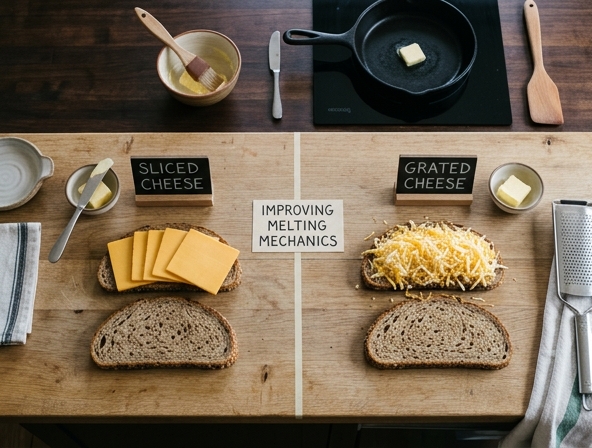
| Aspect | Sliced Cheese | Freshly Grated Cheese |
|---|---|---|
| Surface Area | Low | High |
| Melting Efficiency | Slow; often results in burnt bread before the core melts. | Fast; promotes even, consistent melting throughout the sandwich. |
| Preparation Note | Convenient but lacks thermal efficiency. | Avoid pre-shredded bags (due to anti-caking starches); use fresh blocks. |
| Verdict | Common, but prone to structural/cooking issues. | Professional choice for superior texture and melting. |
The Melt Manifesto: Sliced vs. Grated Cheese for the Ultimate Grilled Cheese
The grilled cheese sandwich is a masterclass in simplicity, yet it remains the subject of intense culinary debate. At its core, it is a binary system: bread and cheese, transformed by heat. However, the mechanism of that transformation-specifically how the cheese melts-is where the line between a mediocre lunch and a transcendental experience is drawn. For years, home cooks have been divided into two camps: the "slicers" and the "graters." To truly master the grilled cheese, we must move beyond preference and look at the physical chemistry of dairy, heat distribution, and the role of surface area.
The Physics of the Melt: Casein and Fat
To understand why the form of your cheese matters, you must first understand what happens when cheese hits the pan. Cheese is essentially a solid emulsion of fat and water, held together by a protein matrix called casein. When you apply heat, the fat begins to soften, and the casein proteins relax, allowing the cheese to transition from a solid lattice to a viscous, flowing liquid.
The "meltability" of a cheese depends on its moisture content, its age, and the presence of emulsifying salts. When you manipulate the physical structure of the cheese-by slicing it or grating it-you are effectively changing how quickly heat can penetrate the matrix and how the proteins reorganize once liquefied.
The Sliced Advantage: Uniformity and Integrity
The argument for sliced cheese is built on the concept of uniform density. When you place a single, thick slice of cheese between two pieces of bread, you are creating a concentrated layer of fat and protein that maintains its structural integrity as it warms.
- Controlled Heat Distribution: Because a slice provides a continuous surface, the heat from the pan is transferred evenly across the entire sandwich. There are no gaps, meaning every bite offers a consistent ratio of cheese to bread.
- The "American" Factor: Processed cheese slices, such as high-quality American cheese, contain sodium citrate. This chemical stabilizer prevents the cheese from separating into a pool of oil and clumpy protein, ensuring that signature "gooey" consistency that natural cheeses struggle to replicate without help.
However, the downside of the slice is the barrier to entry for the heat. A thick slice takes longer to melt through its core. If you aren't careful, the bread will burn before the center of the cheese reaches its ideal temperature, leading to a "cold spot" in the middle of your sandwich.
The Case for Grated: Surface Area and Blendability
Grating cheese is, from a scientific perspective, a method of maximizing surface area. By breaking a solid block of cheese into thousands of tiny shards, you allow heat to attack the protein matrix from every conceivable angle simultaneously. This results in an incredibly fast melt, which is ideal if you are using high-melting-point cheeses like aged Cheddar, Gruyère, or Comté.
The "Anti-Caking" Problem: There is a critical warning for those who grate: store-bought, pre-grated cheese is almost always coated in cellulose or potato starch to prevent clumping. These powders are hydrophobic; they actively resist melting. If you want the advantages of grated cheese-the speed, the even distribution, the ability to create a complex house-blend-you must grate your cheese fresh from the block. The difference in texture is not subtle; the starch in pre-grated bags often leaves a grainy, sandy mouthfeel that ruins the silkiness of a premium melt.
Optimizing the Melting Mechanics
If the goal is the perfect grilled cheese, you are looking for a state of "fluidity without separation." Here is how to manipulate your cheese format to achieve it:
1. The Hybrid Approach
The best grilled cheese sandwiches often utilize both formats. By placing a thin slice of a high-melt cheese (like American or Havarti) on the bread and layering a mound of freshly grated, flavor-forward cheese (like sharp white cheddar) in the center, you achieve the best of both worlds. The slice acts as a structural anchor, while the grated cheese fills the voids, creating a dense, molten core that doesn't leak out the sides.
2. Managing Moisture
If you are using hard, aged cheeses, they are inherently lower in moisture and higher in protein. These cheeses are prone to "breaking" (separating into oil and rubbery curds). To fix this, mix your grated, aged cheese with a little bit of grated high-moisture cheese (like Monterey Jack). The moisture from the Jack helps keep the aged proteins suspended in the fat, preventing the dreaded oil slick.
3. The Grate-Size Factor
The size of your grater matters. A box grater's large shred is superior to a fine microplane shred. Fine shreds melt so quickly that they can lose their "stretch," becoming a sauce rather than a gooey layer. A medium-to-large shred preserves enough of the protein structure to maintain that desirable, long-strand "pull" when you take a bite.
Conclusion: It's About the Goal, Not the Tool
Whether you choose to slice or grate ultimately depends on the cheese you have selected. If you are aiming for the classic, nostalgic experience, a high-quality slice is hard to beat for its consistency and ease. If you are aiming for a complex, gourmet flavor profile using artisan blocks, grating is essential to ensuring that your high-quality ingredients don't end up burned on the outside and firm on the inside.
The secret is no longer a mystery. It is a matter of surface area, moisture content, and the judicious use of stabilizers. By understanding how your cheese reacts to the pan, you stop being a cook who just "makes a sandwich" and start being an engineer of flavor and texture. Choose your cheese, pick your grater (or your knife), and prepare for a melt that reaches the edge of the crust.
Disclaimer:
The information provided on Eateryn is for general educational and informational purposes only and is not intended as medical, nutritional, or healthcare advice. It should not be used to diagnose, treat, cure, or prevent any disease or medical condition.
Always consult a qualified physician, registered dietitian, or other certified healthcare professional before making changes to your diet, exercise routine, or lifestyle, or regarding any medical questions or concerns you may have. Never disregard or delay seeking professional medical advice because of something you have read on this website.