
Skinned vs Skinless Chicken for Fried Chicken - Affecting The Rendering Process
Achieving the perfect, uniform crispiness in fried chicken often remains a challenge for professional kitchens. While standard frying methods focus primarily on oil temperature, the nuances of fat rendering are frequently underestimated. Masterful rendering provides a competitive edge, ensuring superior texture and moisture retention. Please note: skin presence fundamentally alters heat penetration and moisture release patterns. As seen in industry-standard practices, managing these variables is critical. This analysis explores how skinned versus skinless chicken impacts your final output.
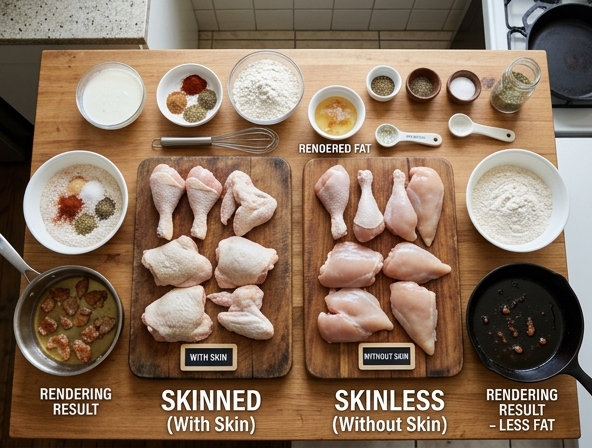
| Comparison Factor | Skinned Chicken | Skinless Chicken |
|---|---|---|
| Rendering Process | Fat from the skin renders into the meat, adding flavor and insulation. | Lacks surface fat, leading to faster moisture loss and different rendering dynamics. |
| Heat Penetration | The skin acts as a barrier, slowing and regulating heat transfer. | Direct exposure to oil, resulting in faster and more uniform heat penetration. |
| Moisture Retention | Higher; the skin helps seal in natural juices during the frying process. | Lower; requires more precise temperature control to prevent the meat from drying out. |
| Final Texture | Targeting a complex, crispy exterior with a moist interior. | Uniform, though potentially less traditional, texture focused on lean meat crisping. |
The Science of the Fry: Skinned vs. Skinless Chicken and the Rendering Process
In the world of culinary arts, few dishes command as much reverence and debate as fried chicken. While discussions often center on breading techniques, oil temperatures, or the ideal seasoning blend, there is a fundamental structural decision that dictates the outcome of the final product: whether to keep the skin on or remove it entirely. This choice is not merely a matter of preference or calorie counting; it is a profound exploration of the thermodynamics of fat rendering and moisture retention.
Understanding the Physics of Fat Rendering
At the heart of the "skin-on" advantage is the process of fat rendering. Chicken skin is composed of subcutaneous adipose tissue-a layer of fat stored beneath the outer dermis. When heat is applied during the frying process, this fat undergoes a phase change from a solid or semi-solid state to a liquid oil. This is known as rendering.
When you fry a piece of skin-on chicken, that adipose layer acts as a self-basting mechanism. As the surface temperature of the skin rises, the fat liquifies and moves downward, effectively basting the meat from the inside out. This internal browning and fat distribution are crucial for flavor development, as fat is a primary carrier of flavor compounds. Furthermore, the rendering fat helps create a unique interface between the meat and the breading, often resulting in a more cohesive, crunchy crust.
The Case for Skin-On: Flavor and Insulation
The presence of skin provides an essential thermal barrier. During the violent process of deep-frying, the exterior of the chicken is subjected to extreme heat-typically between 325°F and 375°F. Skin acts as a protective shield, preventing the meat directly beneath it from overcooking or dehydrating too rapidly. By the time the Maillard reaction has turned the breading into a golden-brown masterpiece, the meat beneath the skin remains succulent and tender.
From a sensory perspective, the rendered fat within the skin provides a mouthfeel that is impossible to replicate with skinless poultry. This "juiciness" is often confused with water content; however, it is largely the richness of the rendered chicken fat mingling with the juices of the meat. When done correctly, the skin achieves a shatteringly crisp texture that provides a sharp contrast to the tender protein, a hallmark of high-quality fried chicken.
The Challenges of Skinless Chicken
Removing the skin transforms the frying process from a self-sufficient event into a high-stakes management task. Without the subcutaneous fat layer to render and baste the meat, skinless chicken is significantly more prone to becoming dry and stringy. The lack of a lipid barrier means the hot oil has more direct access to the muscle fibers, which can cause the proteins to tighten and expel moisture too aggressively.
However, skinless chicken is not without its culinary merits. For those aiming for a leaner profile or a cleaner flavor, skinless chicken allows the spice rub and the batter to adhere directly to the meat. There is no "slippage" factor-where the crust separates from the chicken because the skin became too greasy or loose during the fry. Consequently, skinless fried chicken often exhibits a more uniform, integrated crust, though it requires meticulous preparation to ensure the interior does not desiccate.
Bridging the Gap: Compensatory Techniques
If you choose to use skinless chicken, you must compensate for the loss of internal fat rendering. This is typically achieved through three primary methods:
- Brining: Soaking the chicken in a saltwater solution (or buttermilk) denatures the proteins slightly, allowing them to retain more moisture during the high-heat cooking process. This acts as a buffer against the dryness caused by the lack of skin.
- Controlled Temperature: Skinless chicken demands precision. Frying at a slightly lower temperature for a longer duration can prevent the exterior from burning before the interior reaches the desired temperature.
- Enriching the Breading: Adding fats such as melted butter, lard, or even egg yolk to the coating can mimic the richness lost by the absence of chicken skin, providing that necessary "fatty" finish on the palate.
The Role of the Crust Interface
A major friction point in frying is the "crust-separation" phenomenon. In skin-on chicken, the rendered fat can sometimes create a barrier that prevents the batter from bonding perfectly to the meat, leading to "slippage." The skin essentially acts as a slick surface that wants to slide away from the flesh once it reaches a certain temperature. Chefs combat this by scoring the skin or using a two-stage dredging process that ensures a mechanical lock between the batter and the skin.
Conversely, skinless chicken offers an excellent surface for adhesion. Because the proteins are exposed, the flour or batter can fuse directly to the meat surface, resulting in a product where the crust and the protein feel like a singular unit. The trade-off, however, remains the structural moisture loss that the skin would have otherwise mitigated.
Conclusion: Which Approach Wins?
There is no universal victor; the choice between skinned and skinless depends on the desired outcome. For the quintessential, decadent, and juicy fried chicken that defined the dish's historical popularity, skin-on is the superior choice. The thermodynamics of internal fat rendering provide a texture and depth of flavor that is fundamentally tied to the animal's natural anatomy.
However, for specialized applications-such as tenders, chicken strips, or health-conscious renditions-skinless chicken is a viable medium, provided the chef understands the need for external moisture management. By replacing the natural fat rendering of the skin with rigorous brining and careful temperature control, one can create a delicious product that highlights the meat itself rather than the rich, fatty complexity of the skin. Ultimately, the best fried chicken is one where the cook understands the limitations of their ingredients and modifies their technique to master the render.
Disclaimer:
The information provided on Eateryn is for general educational and informational purposes only and is not intended as medical, nutritional, or healthcare advice. It should not be used to diagnose, treat, cure, or prevent any disease or medical condition.
Always consult a qualified physician, registered dietitian, or other certified healthcare professional before making changes to your diet, exercise routine, or lifestyle, or regarding any medical questions or concerns you may have. Never disregard or delay seeking professional medical advice because of something you have read on this website.