
Single Vs. Double Patty For Burger - Determining The Perfect Ratio
Ever feel indecisive standing before a menu, torn between a classic single and a decadent double? While most eateries offer these standard configurations, the choice is ultimately about culinary physics. Mastering your optimal patty-to-bun ratio guarantees the perfect flavor profile. Note, however, that beef quality dictates distinct cooking techniques to maintain structural integrity. From brisket-blend singles to crispy smash-style doubles, each provides a unique experience. This guide evaluates these ratios to help you secure the ideal bite.
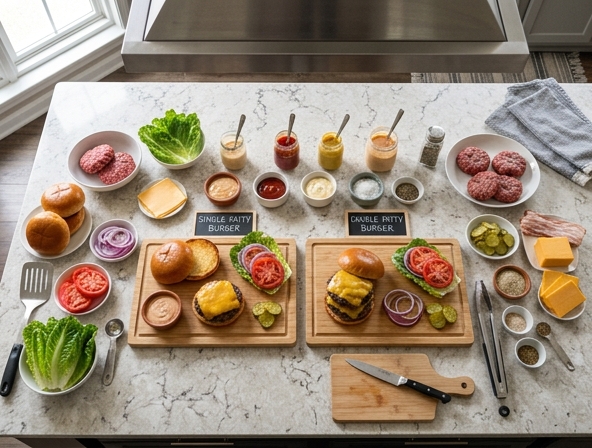
| Aspect | Summary Detail |
|---|---|
| Decision Factor | Choosing between single and double patties depends on personal preference and culinary physics. |
| Key Ratio | The patty-to-bun ratio is the primary variable for achieving a balanced flavor profile. |
| Technical Focus | Beef quality dictates the specific cooking technique required to maintain structural integrity. |
| Common Styles | Brisket-blend singles vs. crispy, smash-style doubles. |
| Overall Goal | Mastering these variables ensures the ideal, high-quality bite. |
Single Vs. Double Patty: Determining The Perfect Ratio
To the uninitiated, a burger is merely a simple construction: meat, bread, and perhaps a garnish or two. But to the culinary enthusiast, the burger is an exercise in architectural balance and chemical precision. At the heart of the most heated debates in burger culture lies a single, pivotal question: Should you go with the single patty or the double?
The Purist's Philosophy: The Case for the Single Patty
The argument for the single patty is often rooted in the concept of "meat purity." When you serve a thick, single-patty burger-typically weighing in at six to eight ounces-you are prioritizing the integrity of the protein. A thick patty allows for a distinct gradient of doneness, ideally moving from a deeply seared, caramelized crust to a succulent, medium-rare center.
In this format, the meat is the protagonist. The bun and toppings serve as supporting actors, meant only to highlight the quality of the grind, the fat content, and the seasoning of the beef. For a high-end, dry-aged beef blend, a single patty is often the superior choice because it allows the diner to actually taste the nuances of the aging process and the specific characteristics of the muscle cuts used.
However, the single patty comes with a structural risk. If the patty is too thick, it can be difficult to manage. The ratio of meat-to-bun can become skewed, leading to a "meat-heavy" mouthful that lacks the textural interplay provided by the toasted bread, the snap of the lettuce, and the acidity of the pickles.
The Texture Enthusiast: Why Two is Often Better than One
The "Double" is not just about having more meat; it is a tactical choice designed to maximize the Maillard reaction. The Maillard reaction is the chemical process that creates flavor when amino acids and reducing sugars are browned at high temperatures. By using two thinner patties instead of one thick one, you effectively double the surface area available for browning.
When you bite into a double-patty burger, you are greeted with a "crust-to-interior" ratio that a single patty simply cannot replicate. Each patty provides its own set of caramelized edges, which add a savory, nutty depth to every bite. Furthermore, the double-patty configuration allows for the "melt-factor"-that quintessential burger experience where a slice of cheese is nestled between two patties, ensuring it melts evenly and acts as a savory adhesive, holding the structure together.
Beyond the chemistry, there is the matter of ergonomics. Two thinner patties are easier to cook through consistently without drying out. They provide a more stable structure, ensuring that the juices from the meat distribute more evenly across the bun, preventing the dreaded "soggy bottom" while maintaining a consistent flavor profile from the first bite to the last.
The Science of the Ratio
The secret to a perfect burger isn't just the meat; it's the "Bun-to-Bite" ratio. Culinary professionals often suggest that the meat should never overwhelm the bread. If the burger is too heavy, the bread loses its role as a vessel and becomes a mere obstacle. If it is too light, the burger feels insubstantial.
For a standard brioche or potato bun, a double-patty configuration-where each patty is roughly 3 to 4 ounces-tends to sit in the "Goldilocks zone." It provides enough weight to feel like a hearty meal, but the total height remains manageable, allowing the diner to compress the burger just enough to taste meat, bun, cheese, and sauce in a single harmonious bite.
The "Smash" Revolution
One cannot discuss the single vs. double debate without addressing the rise of the "Smash Burger." In the smash-burger style, the patty is pressed aggressively onto a hot griddle. This technique creates an ultra-thin, intensely crispy patty. Because these patties are so thin, a single patty would be entirely insufficient. The smash-burger aesthetic is almost exclusively a "double" or "triple" game. The thinness ensures that the burger is never tough, but rather a lacey, crispy, flavorful delight that is designed to be eaten in multiples.
When to Choose Which?
The decision ultimately boils down to the setting and the intent:
- Choose the Single if you are working with premium, high-quality ground beef where the goal is to showcase the flavor of the meat itself. It is the sophisticated, steakhouse approach to the burger.
- Choose the Double if you are chasing the classic "diner-style" experience. If you crave texture, extra cheese, and that perfect, consistent bite of caramelized crust, the double is the undisputed champion.
Conclusion: The Architecture of Satisfaction
There is no universal rule that dictates a winner. A burger is a personal journey. The single-patty burger offers a focused, meat-forward experience, while the double-patty offers a balanced, textural playground. Whether you prefer the succulent center of a thick patty or the crusty, cheesy interplay of two smaller ones, the "perfect" ratio is ultimately the one that brings you the most joy.
Next time you find yourself at the grill or the counter, don't just order the biggest option on the menu. Consider the bread, the sear, and the distribution of flavor. After all, the best burger is the one where the meat and the bun exist not as two separate entities, but as one perfectly crafted, unified bite.
Disclaimer:
The information provided on Eateryn is for general educational and informational purposes only and is not intended as medical, nutritional, or healthcare advice. It should not be used to diagnose, treat, cure, or prevent any disease or medical condition.
Always consult a qualified physician, registered dietitian, or other certified healthcare professional before making changes to your diet, exercise routine, or lifestyle, or regarding any medical questions or concerns you may have. Never disregard or delay seeking professional medical advice because of something you have read on this website.