
Sharp Cheddar vs Gruyere for Grilled Cheese Sandwich - Choosing The Best Melt
Achieving the perfect grilled cheese is a common struggle, as standard options like American or mozzarella often lack nuanced flavor. True excellence requires a balance of melt and complexity. Combining sharp cheddar with Gruyere bridges this gap, offering both depth and a superior pull. Note that cheddar's oil content and Gruyere's melting point necessitate proper preparation. While cheddar provides bold intensity, Gruyere delivers a nutty, refined texture. This guide compares these profiles to elevate your sandwich.
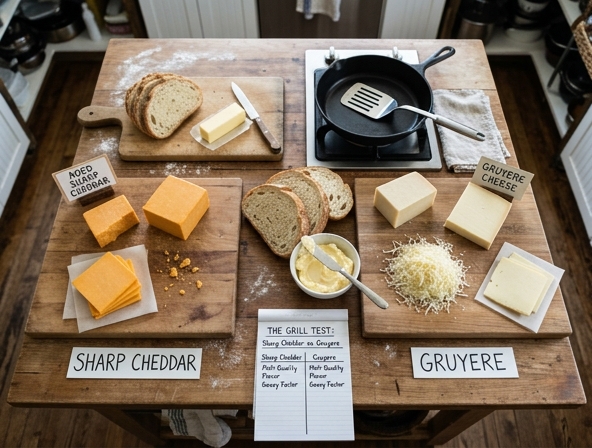
| Cheese Type | Flavor Profile | Melting Characteristics | Primary Benefit |
|---|---|---|---|
| Sharp Cheddar | Bold and intense | Higher oil content | Provides deep, nuanced flavor |
| Gruyere | Nutty and refined | Superior melting point | Delivers excellent texture and "pull" |
| Combined | Balanced | Optimal | Achieves the perfect grilled cheese |
The Ultimate Grilled Cheese Duel: Sharp Cheddar vs. Gruyère
The grilled cheese sandwich is perhaps the ultimate masterclass in culinary minimalism. With only three primary components-bread, fat, and cheese-there is nowhere for an inferior ingredient to hide. While the choice of bread is crucial and the fat (be it salted butter or mayonnaise) provides the golden exterior, the cheese remains the soul of the operation. Among the countless varieties available to the home cook, two titans consistently rise to the top: Sharp Cheddar and Gruyère. But which one truly deserves to be the centerpiece of your next comfort-food masterpiece?
The Case for Sharp Cheddar: The Classic Powerhouse
Sharp Cheddar is the undisputed heavyweight champion of the American kitchen. It is reliable, nostalgic, and packed with a flavor profile that stands up to even the crustiest, most robust sourdough. When we talk about "sharp" cheddar, we are usually referring to an aged block, often aged for 12 to 24 months. During this time, the proteins break down, the moisture content decreases, and those delightful little tyrosine crystals begin to form, providing an occasional, satisfying crunch.
Flavor Profile: Cheddar brings a bright, acidic tang to the party. It is punchy and unapologetic. Because it is so savory, it provides a perfect contrast to the slight sweetness of toasted bread. If you are looking for a sandwich that "tastes like home," cheddar is the ingredient that provides that sensory anchor.
The Melting Challenge: However, cheddar has a reputation for being a "stubborn" melter. Because it is an aged cheese, it has less moisture and a higher protein-to-fat ratio. If you use a high-quality, long-aged vintage cheddar, you might find that it becomes oily or grainier rather than silky when melted. To combat this, experienced grilled cheese artisans recommend grating your cheddar fresh from the block rather than using pre-shredded varieties, which are coated in anti-caking agents like potato starch that inhibit a smooth melt.
The Case for Gruyère: The Sophisticated Alpine Specialist
If Cheddar is the neighborhood favorite, Gruyère is the sophisticated, world-traveling cousin. Originating from the Swiss Alps, Gruyère is a pressed, cooked-curd cheese that is famed for its incredible melting capabilities. It is a staple of traditional fondue for a reason: when heated, it transforms into a decadent, velvety liquid that coats the bread with unmatched elegance.
Flavor Profile: Gruyère offers a complexity that cheddar lacks. It is deeply nutty, earthy, and possesses a subtle sweetness that lingers on the palate. It is less "sharp" than cheddar, but significantly more nuanced. It provides a gourmet experience that feels slightly elevated, making it perfect for pairing with caramelized onions, thinly sliced pears, or a smear of Dijon mustard.
The Melting Experience: Gruyère is a technical dream. Its moisture content and fat structure allow it to melt into a homogenous, stringy, and luxurious goo. There is no separation, no oiliness-just pure, gooey comfort. It provides that coveted "cheese pull" that makes for the perfect food photography shot, something cheddar often struggles to replicate on its own.
The Comparative Breakdown: What Are You Looking For?
- For Intensity: Go with a Sharp Cheddar. If you want a sandwich that hits you with a blast of flavor and pairs perfectly with a bowl of tomato soup, the acidic punch of the cheddar is unmatched.
- For Texture: Choose Gruyère. If you prioritize the tactile experience-the stretch, the creaminess, and the mouthfeel-Gruyère is far superior.
- For Complexity: Gruyère brings floral and nutty notes that make the sandwich feel like a main course rather than just a snack.
The Secret Strategy: The 50/50 Blend
Why choose at all? The most professional grilled cheese sandwiches in the world often rely on a "hero/sidekick" approach. By blending Sharp Cheddar and Gruyère in a 50/50 ratio, you get the best of both worlds. The Gruyère acts as the emulsifier, ensuring that the entire interior of the sandwich melts into a perfectly smooth, creamy texture, while the Sharp Cheddar provides that bold, acidic "bite" that keeps the sandwich from feeling too rich or one-dimensional.
When you combine them, the Gruyère's nuttiness mellows the sharpness of the cheddar, while the cheddar prevents the Gruyère from feeling too mild. It is a synergy that creates a flavor profile greater than the sum of its parts.
Pro-Tips for the Perfect Melt
Regardless of your cheese choice, the technique is where the battle is won or lost:
- Grate, Don't Slice: Grating your cheese ensures it heats evenly. Slices often create cold spots in the middle of the sandwich.
- Room Temperature is Key: Take your cheese out of the refrigerator 15 minutes before cooking. Cold cheese takes longer to melt, which means your bread will burn before the interior reaches the desired gooey consistency.
- Low and Slow: Use a medium-low heat. If your pan is too hot, the bread will scorch before the proteins in the cheese have had time to reach their optimal melting point.
- The Mayo Hack: Spread mayonnaise on the outside of your bread instead of butter. Mayonnaise has a higher smoke point and a higher sugar content, leading to a perfectly golden, crispy, and even crust that is far superior to butter-only toasted bread.
The Verdict
Choosing between Sharp Cheddar and Gruyère is ultimately a matter of intention. If you are chasing a nostalgic comfort experience, reach for the sharpest cheddar you can find. If you want a decadent, silky, and gourmet sandwich that focuses on texture and complexity, Gruyère is your winner. But for those who demand the best of both worlds, the blend is not just a suggestion-it is the gold standard. The next time you find yourself standing in front of the cheese counter, don't agonize over the choice. Buy both, blend them, and elevate your grilled cheese game to professional heights.
Disclaimer:
The information provided on Eateryn is for general educational and informational purposes only and is not intended as medical, nutritional, or healthcare advice. It should not be used to diagnose, treat, cure, or prevent any disease or medical condition.
Always consult a qualified physician, registered dietitian, or other certified healthcare professional before making changes to your diet, exercise routine, or lifestyle, or regarding any medical questions or concerns you may have. Never disregard or delay seeking professional medical advice because of something you have read on this website.