
Salted vs Unsalted Butter for Grilled Cheese Sandwich - Balancing Flavor Profiles
Many home cooks struggle to achieve the perfect grilled cheese, often finding the flavor profile underwhelming or distractingly salty. While standard fats like oil provide reliable browning, butter remains the culinary gold standard. Mastering the distinction between salted and unsalted varieties is essential for flavor optimization. Be aware that salted butter's moisture content can influence crust crispness. Whether enhancing mild cheddar or balancing rich gruyère, your choice dictates the outcome. This guide evaluates how to best balance these profiles.
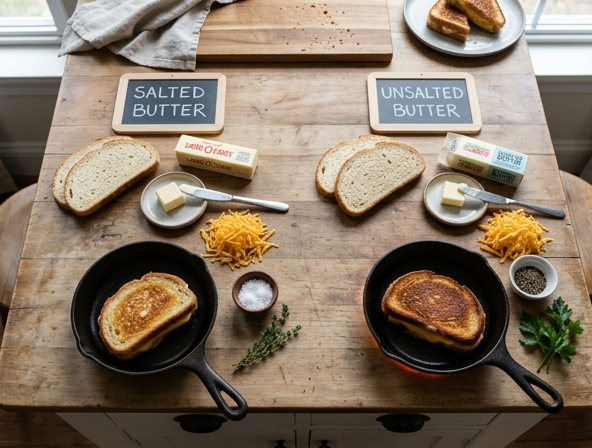
| Comparison Factor | Salted Butter | Unsalted Butter |
|---|---|---|
| Flavor Profile | Adds an extra layer of salinity; enhances savory notes. | Neutral; allows the natural flavor of the cheese to remain the focus. |
| Crust Texture | Higher moisture content may slightly impede maximum crispness. | Better suited for achieving a golden, perfectly crisp crust. |
| Best Pairing | Effective for balancing mild cheeses like cheddar. | Ideal for rich, complex cheeses like gruyère. |
| Overall Utility | Use when you want to boost the overall seasoning of the sandwich. | Use for total control over the sandwich's salt levels. |
The Golden Dilemma: Salted vs. Unsalted Butter for the Perfect Grilled Cheese
There is perhaps no dish more deceptively simple than the grilled cheese sandwich. It is a fundamental building block of comfort food: bread, fat, and cheese, brought together by the transformative power of heat. Yet, despite its simplicity, the debate surrounding its preparation is fierce, technical, and deeply personal. At the heart of this debate lies a singular, pivotal question: Should you use salted or unsalted butter to achieve that quintessential golden-brown, crispy exterior?
The Chemistry of the Crust
To understand the impact of butter, one must first understand what happens to a grilled cheese in the pan. We are not merely melting butter; we are initiating the Maillard reaction, a chemical process between amino acids and reducing sugars that gives browned food its distinctive flavor and color. Butter consists of three main components: milk fat, water, and milk solids. As the butter melts, the water evaporates, leaving behind the fat and the milk solids. Those solids are what brown and toast, contributing to the nutty, savory aroma that defines a great sandwich.
When you add salt into that equation-either through the butter or by seasoning the bread-you aren't just changing the salinity; you are slightly altering the way moisture is drawn out of the bread. This can subtly affect the texture of the crust, making it crisper, but also potentially more susceptible to burning if the heat is too high.
The Case for Salted Butter: The Convenience Factor
For many home cooks, salted butter is the default for a simple reason: convenience. It is already seasoned, and when you spread a layer of salted butter onto the crust of your sourdough or country white bread, you are creating a savory, punchy barrier that hits the palate the moment you take a bite.
The Pros:
- Immediate Flavor Enhancement: Salt is a flavor enhancer. By salting the outside of the bread, you create a "flavor first" experience that primes your taste buds for the rich, gooey cheese waiting inside.
- Consistency: If you are someone who prefers a reliable, standard profile for your weekday lunch, salted butter ensures that every grilled cheese has that consistent, savory zing without the need for extra seasoning steps.
The Cons:
- Loss of Control: When you use salted butter, you are at the mercy of the manufacturer's sodium levels. This can lead to an overly salty sandwich, especially if the cheese you have chosen-like an aged sharp cheddar or a pecorino-is already high in sodium.
The Case for Unsalted Butter: The Connoisseur's Choice
Culinary professionals and precision-focused cooks almost exclusively favor unsalted butter. In the kitchen, unsalted butter is the "blank canvas." By choosing to use unsalted butter, you retain total control over the seasoning of the sandwich from start to finish.
The Pros:
- Salt Balance: The primary argument for unsalted butter is the ability to calibrate the saltiness of the bread to match the specific cheese. If you are using a delicate, creamy Fontina or a mild Muenster, you don't want the bread to overpower the subtle nuances of the cheese. Unsalted butter allows the flavor of the bread and the cheese to shine without competing with aggressive saltiness.
- Browning Integrity: Some argue that the lack of added salt leads to a more uniform browning process of the milk solids, allowing for a cleaner, toastier flavor profile that isn't masked by sodium crystals.
The Cons:
- The Extra Step: Using unsalted butter usually means you'll want to finish the sandwich with a light pinch of finishing salt or sea salt on the outside of the crust once it comes off the pan. It adds a step, but for many, it is a rewarding one.
Pairing Butter with Your Cheese Selection
The choice between salted and unsalted should be dictated by your choice of cheese. Grilled cheese is an exercise in balance. If you are constructing a "grown-up" grilled cheese using a bold, pungent Blue cheese or a sharp, crystalline Gruyère, the cheese itself brings a massive amount of salt to the table. In this instance, unsalted butter is almost mandatory to prevent the sandwich from becoming a sodium bomb.
Conversely, if you are making a classic, nostalgic sandwich using American cheese or mild Monterey Jack, these cheeses are notoriously mild. They benefit significantly from the "pop" of salted butter on the exterior. The salt on the crust acts as a bridge, elevating the mild cheese and making the overall experience feel more substantial.
Elevating the Technique: Beyond the Basics
Regardless of whether you choose salted or unsalted, the technique of applying the fat is just as important as the type of fat itself. Many enthusiasts have moved away from spreading butter on the bread, opting instead to melt a generous knob of butter directly into the pan. This allows the milk solids to begin browning before the bread ever touches the surface, resulting in a more deeply caramelized, nutty crust.
Another popular technique is the "mayo-sear." Replacing some or all of the butter with high-quality mayonnaise on the outside of the bread leads to a crispier, tangier crust that is structurally superior. If you are a devotee of butter, consider a "hybrid" approach: use a light schmear of unsalted butter for flavor, combined with a thin layer of mayonnaise to ensure the perfect, even golden-brown finish.
Final Verdict: The Balancing Act
So, which should you reach for? The answer lies in your goal for the sandwich. If you are in a rush and aiming for that classic, nostalgic flavor, salted butter is a perfectly acceptable and delicious choice. However, if you are treating your grilled cheese as a culinary project-selecting artisanal breads and specific, complex cheeses-reach for the unsalted butter.
Treat your unsalted butter as a medium for control. By seasoning the bread yourself with a light dusting of flaky sea salt *after* the sandwich is toasted, you achieve a level of precision that salted butter simply cannot provide. The salt remains as a crystalline crunch on the exterior, rather than melting into the bread, providing a texture and flavor profile that feels deliberate and refined.
At the end of the day, the best grilled cheese is the one that brings you the most joy. Whether you are a purist with a stick of unsalted butter or a fan of the salted shortcut, the secret is not just in the ingredients, but in the patience to cook low and slow, allowing the fat and the heat to marry the bread and cheese into a perfect, golden union.
Disclaimer:
The information provided on Eateryn is for general educational and informational purposes only and is not intended as medical, nutritional, or healthcare advice. It should not be used to diagnose, treat, cure, or prevent any disease or medical condition.
Always consult a qualified physician, registered dietitian, or other certified healthcare professional before making changes to your diet, exercise routine, or lifestyle, or regarding any medical questions or concerns you may have. Never disregard or delay seeking professional medical advice because of something you have read on this website.