
Salsa Verde vs Salsa Roja for Tacos - Balancing Acidity and Heat
Selecting the ideal taco topping often feels like a guessing game, as many generic, mass-produced sauces fail to complement complex proteins. While standard options provide heat, they frequently overlook critical flavor harmony. Mastering the balance between salsa verde's bright acidity and salsa roja's earthy spice is essential; for instance, verde naturally elevates rich pork carnitas, while roja accentuates charred carne asada. This guide explores foundational pairing principles, ensuring you achieve the perfect acidic and thermal equilibrium.
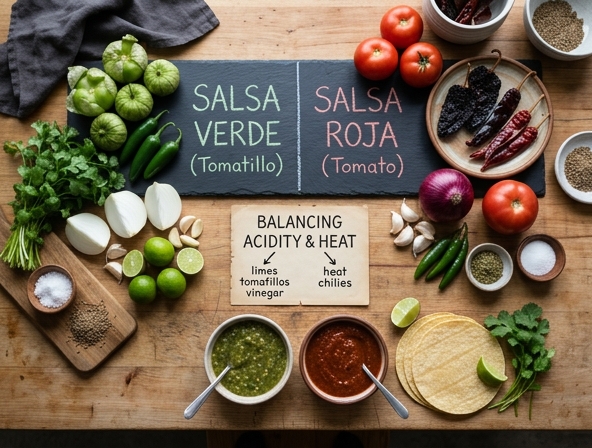
| Salsa Type | Flavor Profile | Ideal Pairing | Purpose |
|---|---|---|---|
| Salsa Verde | Bright acidity | Rich pork carnitas | Elevate flavor harmony |
| Salsa Roja | Earthy spice | Charred carne asada | Achieve thermal equilibrium |
The Great Debate: Salsa Verde vs. Salsa Roja in Taco Craft
In the world of authentic street tacos, the tortilla is the canvas and the protein is the structure, but the salsa is the soul. It is the defining element that transforms a collection of simple ingredients into a symphonic experience. Among the vast array of Mexican salsas, two titans stand above the rest: Salsa Verde and Salsa Roja. While both serve the fundamental purpose of adding moisture and flavor, they represent two distinct philosophies of balancing acidity and heat. Understanding these profiles is not just about personal preference; it is about culinary strategy.
The Anatomy of Salsa Verde: The Art of Brightness
Salsa Verde is the vibrant, tangy counterpoint to the richness of a taco. Its primary component is the tomatillo (Physalis philadelphica), a fruit often mistaken for a green tomato but which belongs to the nightshade family. Unlike the common red tomato, the tomatillo is encased in a papery husk and possesses a higher pectin content and a sharp, citrus-forward acidity.
When you bite into a taco topped with Salsa Verde, you are experiencing a deliberate "cut" through fat. The acidity of the tomatillo acts much like a squeeze of fresh lime juice, brightening the palate and preparing it for the next bite. Typically blended with serrano peppers or jalapeños, raw onion, cilantro, and garlic, the heat in a Salsa Verde is often sharp and immediate-a "green" heat that sits at the front of the tongue.
When to Choose Verde:
- Carnitas: The fatty, slow-cooked pork belly and shoulder need the aggressive acid of tomatillos to balance the heaviness of the rendered lard.
- Chicharrón: The texture of crispy pork skin paired with the bright, acidic punch of a verde salsa is a classic pairing that prevents the palate from becoming overwhelmed by the oil.
- Vegetarian Tacos: Often lighter, vegetable-based tacos benefit from the herbal, verdant notes of cilantro and tomatillo.
The Anatomy of Salsa Roja: The Depth of Earthiness
If Salsa Verde is a sharp high note, Salsa Roja is the deep, grounding bass line. At its heart, a classic Salsa Roja relies on the red tomato, which provides a sweeter, more savory base. However, the true complexity of a quality Roja often comes from the inclusion of dried chiles-such as Arbol, Guajillo, or Morita-that have been toasted and rehydrated.
The heat profile of a Salsa Roja is fundamentally different. It is generally more "bottom-heavy," lingering in the back of the throat with an earthy, smoky undertone. Roasting the tomatoes, onions, and garlic until they are charred adds a layer of carbonized sweetness that complements the complexity of red meats.
When to Choose Roja:
- Carne Asada: The charred, beefy profile of skirt or flank steak craves the smokiness of a roasted red salsa.
- Barbacoa: The slow-cooked, complex, and sometimes gamey nature of lamb or beef barbacoa requires the depth and "darker" heat profile of a roja.
- Al Pastor: While some prefer verde, many connoisseurs argue that the adobo-marinated pork of Al Pastor, with its sweet pineapple notes, pairs perfectly with a spicy, smoky salsa roja to ground the sweetness.
The Balancing Act: Acidity vs. Heat
The secret to a world-class salsa is not just the quality of the peppers; it is the calibration of the acidity-to-heat ratio. In culinary science, acidity (the tomatillo or vinegar) is used to balance the pH and cut through fat, while capsaicin (the heat) stimulates the sensory receptors to create an endorphin-fueled "excitement" in the dish.
To adjust Salsa Verde: If your verde feels too one-dimensionally sour, reduce the amount of lime and increase the ratio of roasted garlic or avocado (to add creamy body). If it lacks heat, incorporate the seeds of the serrano peppers. Remember: raw serranos provide a grassier, sharper heat, while roasted serranos provide a deeper, more rounded burn.
To adjust Salsa Roja: If your roja tastes flat, the solution is usually char. Charring the tomatoes on a dry comal (griddle) until the skins blister is essential for unlocking the sugars and creating a smoky complexity. If the heat is overpowering the flavor, add a touch of white onion or even a splash of orange juice-the natural sugars will mellow the capsaicin without losing the underlying complexity.
The "Taco Philosophy" of Application
How you apply the salsa is as important as the salsa itself. A professional taco maker understands the geometry of the tortilla. Salsas should be applied in a thin, controlled line or a light drizzle, ensuring that every bite gets a bit of the salsa-protein interplay without turning the tortilla into a soggy mess.
The "Verde vs. Roja" debate ultimately comes down to what you are trying to accomplish with the bite. Are you trying to cut through a rich, fatty cut of meat? Reach for the Verde. Are you trying to elevate a protein that has been grilled, smoked, or spice-rubbed? Reach for the Roja.
Conclusion: Respect the Craft
Ultimately, there is no "winner" in the battle between Salsa Verde and Salsa Roja. They are two different tools in the taquero's toolkit. The hallmark of a true taco aficionado is the ability to recognize which salsa will enhance the specific qualities of the meat being served. By mastering the balance of acidity and heat, you stop simply "eating tacos" and start experiencing them as a deliberate, crafted culinary performance. Whether you prefer the sharp, zesty sting of a green tomatillo or the dark, smoldering depths of a roasted red chile, the best salsa is the one that forces you to pause, appreciate the balance, and immediately reach for another.
Disclaimer:
The information provided on Eateryn is for general educational and informational purposes only and is not intended as medical, nutritional, or healthcare advice. It should not be used to diagnose, treat, cure, or prevent any disease or medical condition.
Always consult a qualified physician, registered dietitian, or other certified healthcare professional before making changes to your diet, exercise routine, or lifestyle, or regarding any medical questions or concerns you may have. Never disregard or delay seeking professional medical advice because of something you have read on this website.