
Ribeye vs Sirloin for Philly Cheesesteak - Achieving The Ultimate Meat Texture
Achieving the authentic Philly cheesesteak texture is a common challenge, as many home cooks struggle with dry, chewy meat. While standard sirloin is frequently utilized, it often lacks the intramuscular fat required for a truly succulent result. Ribeye provides superior marbling, which is the key to an ideal mouthfeel. Note that precise, paper-thin slicing is non-negotiable for success. Iconic institutions like Pat's prove that fat content is paramount. We evaluate both cuts below to elevate your craft.
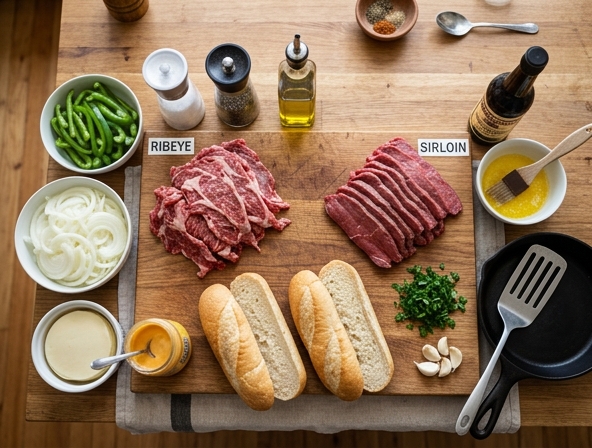
| Feature | Ribeye | Sirloin |
|---|---|---|
| Marbling/Fat | High intramuscular fat content | Generally lean with less fat |
| Texture | Succulent and tender | Prone to being dry and chewy |
| Suitability | Highly recommended for authentic results | Commonly used but often lacks ideal mouthfeel |
| Pro-Tip: Regardless of the cut chosen, slicing the meat paper-thin is a non-negotiable step for achieving the iconic Philly cheesesteak texture. | ||
Ribeye vs. Sirloin for Philly Cheesesteak: Achieving the Ultimate Meat Texture
In the world of comfort food, few things are as iconic, fiercely debated, and deeply satisfying as the Philly cheesesteak. It is a dish that relies on simplicity: paper-thin slices of seared beef, melted cheese, and a soft, crusty roll. Yet, within that simplicity lies a massive variable that can elevate a sandwich from "passable" to "legendary." That variable is the cut of meat. When home cooks and culinary enthusiasts face the inevitable choice at the butcher's counter, the battle usually comes down to two heavyweights: Ribeye and Sirloin.
The Case for Ribeye: The Gold Standard of Tenderness
Ask any seasoned cheesesteak purist in Philadelphia what meat goes into the perfect sandwich, and they will almost universally point to the ribeye. There is a scientific reason for this, and it begins with marbling.
Ribeye is a cut taken from the rib section of the cow, an area that does not perform heavy physical labor. Consequently, the muscle remains tender, and-more importantly-it is laced with beautiful, intramuscular fat. This marbling is the secret weapon for the ultimate cheesesteak texture. When you flash-sear ribeye at the high temperatures required for a cheesesteak, that fat renders down into a liquid gold that bastes the meat as it cooks. It provides a velvety, melt-in-your-mouth quality that cannot be replicated by leaner cuts.
Furthermore, the beefy, savory profile of the ribeye is robust enough to stand up to the competing flavors of sautéed onions and gooey provolone or Cheez Whiz. If your goal is to replicate the rich, buttery texture of a high-end cheesesteak, the ribeye is your non-negotiable choice.
The Case for Sirloin: The Lean Alternative
While ribeye is the king of flavor, sirloin is often the pragmatic choice. Taken from the rear of the animal, sirloin is leaner and denser. For those who are calorie-conscious or simply prefer a "meatier" bite without the significant fat pockets found in a ribeye, top sirloin is a viable candidate.
However, the challenge with sirloin is the texture. Because it lacks the heavy marbling of a ribeye, it is much more susceptible to becoming tough or "chewy" if handled incorrectly. In a sandwich where the meat is sliced thin, that chewiness can become distracting, making the act of eating the sandwich feel like a chore rather than a delight. To succeed with sirloin, you must rely on advanced preparation techniques-such as extreme thinness and perfect cutting-to compensate for the lack of internal fat.
The Science of Texture: Why It Matters
Why do we obsess over the texture of the meat? A Philly cheesesteak is a study in structural integrity. You want the meat to be soft enough that you can bite through it without pulling the entire contents out of the roll. If the meat is too tough (a common pitfall of improperly prepared sirloin), you end up with "the tug"-where one bite leaves you pulling on a piece of rubbery beef while the bread disintegrates in your hand.
The perfect cheesesteak texture is achieved when the meat is shaved so thinly that it curls and crisps at the edges when hitting the griddle, while the interior of the slice remains tender and juicy. The fat must provide a "lubricating" mouthfeel that carries the salt and savory notes across your palate. This is why the fat-to-meat ratio of ribeye is structurally superior; it acts as an insurance policy against dry, leathery beef.
Pro-Tips for Mastering the Slice
Regardless of whether you choose ribeye or sirloin, your preparation technique is just as important as the cut itself. To achieve the ultimate texture, follow these professional standards:
- The Freezer Method: Never attempt to slice fresh, room-temperature meat. It is nearly impossible to get the paper-thin consistency needed. Instead, place your steak in the freezer for 45 to 60 minutes until it is firm but not frozen solid. This allows you to shave off translucent, uniform slices with ease.
- Cutting Against the Grain: Always identify the direction the muscle fibers are running and cut perpendicular to them. By shortening the muscle fibers, you ensure that the meat isn't stringy. This is especially crucial if you choose to use sirloin.
- Don't Over-Season: High-quality ribeye has an intense natural flavor. Use only kosher salt and perhaps a hint of cracked black pepper. Let the beef be the star of the show; don't mask it with heavy marinades or rubs.
- High Heat, Fast Cook: The griddle or cast-iron skillet should be smoking hot. You aren't "cooking" the meat in the slow-roasting sense; you are flash-searing it. If the meat stays on the heat too long, it loses its moisture and toughens up regardless of the cut.
The Verdict: Which Should You Choose?
If you are aiming for an authentic, restaurant-quality Philly cheesesteak, the ribeye is the clear winner. Its inherent marbling creates a depth of flavor and a tender texture that is difficult to match. The way the fat renders into the meat creates an effortless, luxurious experience that defines what a cheesesteak should be.
That said, don't write off sirloin entirely. If you are on a budget or looking for a leaner meal, sirloin can absolutely be part of a fantastic sandwich, provided you are disciplined with your slicing and avoid overcooking it. If you choose sirloin, consider adding a small amount of beef tallow or high-quality butter to the griddle to make up for the lack of internal marbling.
Ultimately, the "ultimate" texture is a marriage of ingredient choice and technique. Whether you go with the rich, indulgent ribeye or the steady, lean sirloin, remember that the goal is a sandwich that melts on the tongue, balanced perfectly by the chew of a fresh roll and the tang of melted cheese. Take your time with the prep, keep your knife sharp, and don't be afraid to experiment until you find the texture that suits your personal taste best.
Disclaimer:
The information provided on Eateryn is for general educational and informational purposes only and is not intended as medical, nutritional, or healthcare advice. It should not be used to diagnose, treat, cure, or prevent any disease or medical condition.
Always consult a qualified physician, registered dietitian, or other certified healthcare professional before making changes to your diet, exercise routine, or lifestyle, or regarding any medical questions or concerns you may have. Never disregard or delay seeking professional medical advice because of something you have read on this website.