
Restaurant vs Street Style for Tacos - Differences in Preparation Techniques
Many operators struggle to differentiate between authentic street-style tacos and upscale restaurant interpretations. While standard preparation prioritizes efficiency, true culinary success requires mastering specific methodologies. By understanding these distinctions, you can curate a menu that offers a compelling, tailored guest experience. Please note that both approaches demand rigorous respect for traditional flavor profiles, whether executing charred Al Pastor or sous-vide braised short rib. This guide examines essential preparation techniques to align your taco strategy with your brand's vision.
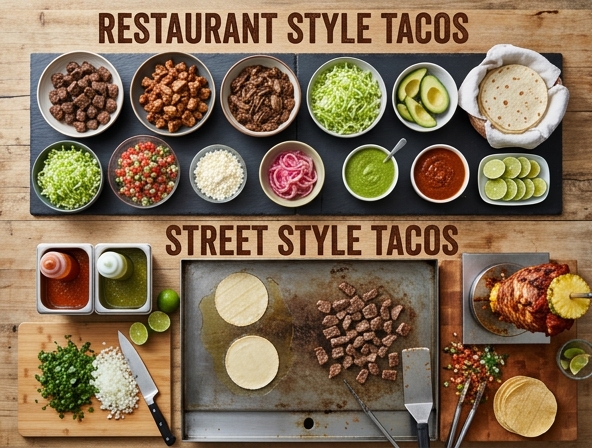
| Feature | Street-Style Tacos | Restaurant-Style Tacos |
|---|---|---|
| Primary Focus | Efficiency and speed of service | Culinary interpretation and guest experience |
| Preparation Methodology | Standardized, fast-paced techniques | Methodical, upscale techniques (e.g., sous-vide) |
| Flavor Integrity | Strict adherence to traditional profiles | Respectful innovation of traditional profiles |
| Strategic Goal | High-volume delivery of authentic flavor | Creating a unique, brand-aligned menu |
The Taco Dialectic: Restaurant vs. Street Style Preparation
The taco is more than just a meal; it is a cultural icon, a portable masterpiece of culinary engineering that has transcended its humble origins to become a global phenomenon. However, as the taco has migrated from the bustling street corners of Mexico City to the white-tablecloth establishments of New York and Los Angeles, a clear bifurcation has emerged. We now live in a world defined by two distinct philosophies: the lightning-fast, utilitarian "Street Style" and the measured, aesthetic "Restaurant" or "Gourmet Style." Understanding the differences in their preparation techniques is not merely an academic exercise; it is essential for anyone who truly wishes to appreciate the depth of the taco craft.
The Philosophy of the Street: Speed, Tradition, and Utility
Street-style tacos, or tacos de calle, are defined by their efficiency and their adherence to a time-honored rhythm. The goal of the street vendor is to provide a hot, flavorful, and satisfying experience in under sixty seconds. Every preparation technique is geared toward high-volume throughput and flavor intensity.
1. The Tortilla as a Vessel
In street-style preparation, the tortilla is almost exclusively small (typically four inches in diameter) and made of nixtamalized corn. It is rarely served solo; you will often see a "double-stack" method. This isn't just for structural integrity against succulent fats and juices; it's a nod to the fact that the first tortilla often tears under the weight of the protein. The tortillas are frequently lightly warmed on a seasoned, well-greased comal, picking up the residual flavors of previous meats cooked on that same surface.
2. The Art of the Trompo and the Flat-Top
The hallmark of street preparation is the direct application of heat. The trompo-a vertical rotisserie-is the centerpiece for al pastor, where the meat is shaved off in thin, crispy-yet-tender ribbons. For carne asada, the meat is cooked over high-heat griddles, ensuring a rapid sear that traps moisture. The focus here is on the Maillard reaction-that deep, savory crust achieved through intense heat and minimal intervention.
3. Minimalist Garnishes
Street tacos operate on the "less is more" principle. Toppings are restricted to white onion, chopped cilantro, a squeeze of lime, and a punchy, salsa-forward heat. There are no slaws, no microgreens, and no complex emulsions. The flavor profile relies on the interplay of the charred meat, the earthy corn, and the sharp, acidic bite of the onion and salsa.
The Restaurant Approach: Innovation, Complexity, and Presentation
Conversely, the restaurant-style taco is an act of culinary curation. Here, the chef is not beholden to the constraints of the sidewalk. The preparation is slower, more deliberate, and often leans into fusion or high-concept gastronomy. The objective is to provide a multi-layered sensory experience rather than just immediate sustenance.
1. The Artisan Tortilla
In a restaurant setting, the tortilla is often a showpiece of its own. Chefs may experiment with heirloom corn varieties, different colors (blue, red, or yellow corn), or even house-made flour tortillas infused with fats like lard or duck fat to enhance flavor and texture. These tortillas are usually larger, sturdier, and toasted to order with precise intent, sometimes even being hand-pressed tableside.
2. Advanced Cooking Methodologies
Restaurant kitchens utilize techniques that would be impossible in a street cart. You might find proteins prepared via sous-vide for perfect, uniform tenderness before being finished on a grill. Braising is common, with slow-cooked carnitas or barbacoa spending hours in complex, aromatic stocks. The preparation of the proteins often involves dry rubs, overnight marinades, and reductions that add a layer of sophistication to the final bite.
3. The Architecture of Toppings
The "gourmet" taco is an exercise in architectural plating. Where the street taco is folded and handed over, the restaurant taco is composed. You will find house-made pickled red onions, radish shavings, fruit-based salsas (like mango or pineapple habanero), creamy avocado emulsions, and even edible flowers. The goal is a balance of textures-crunchy, creamy, acidic, and tender-all working in harmony within a single structure.
Key Technical Divergences at a Glance
- Protein Texture: Street style favors quick-sear, high-heat crispiness. Restaurant style favors long-form cooking and tenderness.
- Salsa Integration: Street tacos use salsas as a finish (usually applied by the customer). Restaurant tacos often incorporate specific, complex salsas into the composition of the taco before it reaches the table.
- Temperature Control: Street tacos are served at a variable heat, often varying from the cool onion/cilantro to the scorching meat. Restaurant tacos are designed for a consistent, balanced temperature profile.
Bridging the Divide
While the gap between the street cart and the upscale kitchen seems vast, they are united by the same fundamental purpose: the taco. The rise of "elevated street food" has seen many chefs applying restaurant-quality techniques to the classic formats, creating a middle ground where tradition meets technical innovation. Whether you are standing on a curb in Mexico City eating a suadero taco with your hands, or sitting in a dining room in a modern metropolis with a craft cocktail in hand, the taco remains the great equalizer.
Ultimately, neither style is "superior." The street-style taco offers an authenticity of culture and a visceral connection to the history of the food, while the restaurant-style taco offers a window into the creativity and ambition of the modern chef. The preparation techniques-whether driven by the speed of the street or the patience of the kitchen-are simply tools used to achieve the same end: the perfect marriage of dough, protein, and fire.
Disclaimer:
The information provided on Eateryn is for general educational and informational purposes only and is not intended as medical, nutritional, or healthcare advice. It should not be used to diagnose, treat, cure, or prevent any disease or medical condition.
Always consult a qualified physician, registered dietitian, or other certified healthcare professional before making changes to your diet, exercise routine, or lifestyle, or regarding any medical questions or concerns you may have. Never disregard or delay seeking professional medical advice because of something you have read on this website.