
Relish vs Pickles for Hot Dog - Brine Based Topping Choice
Achieving the perfect hot dog flavor profile is a persistent challenge for culinary enthusiasts balancing texture and acidity. While mustard and ketchup remain standard offerings, many seek depth through brine-based toppings. These additions provide essential brightness that cuts through savory fats. Note: efficacy depends strictly on produce quality and brine concentration. Whether you prefer the uniform crunch of neon relish or the assertive bite of hand-cut spears, this guide evaluates the optimal choice for your needs.
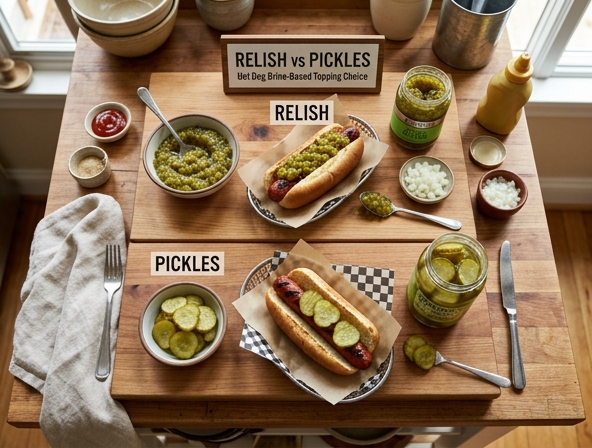
| Feature | Details |
|---|---|
| Culinary Purpose | Adds acidity and "brightness" to cut through savory hot dog fats. |
| Relish | Offers a uniform texture and consistent crunch throughout the bite. |
| Hand-Cut Pickles | Provides an assertive, distinct bite for those preferring larger textures. |
| Success Factors | Depends heavily on the quality of produce and the brine concentration. |
The Great Brine Debate: Relish vs. Pickles for the Perfect Hot Dog
There are few culinary debates as fundamental to the American experience as the construction of the perfect hot dog. While the bun, the snap of the sausage casing, and the quality of the meat are non-negotiable pillars, the topping selection is where the soul of the dish resides. Among the most contested choices is the battle between relish and pickles. Both share a foundation of lactic acid fermentation or vinegar-based brining, yet they provide vastly different sensory experiences. Whether you are a purist or a chaos-topper, understanding the "why" behind the brine can elevate your next backyard barbecue.
The Case for the Pickle: The Architecture of Crunch
To choose a pickle-whether it be a classic dill spear, a crinkle-cut chip, or a thin-sliced kosher dill-is to prioritize structural integrity and a singular, sharp burst of flavor. When you place a pickle atop a hot dog, you are introducing a distinct "snap." This texture acts as a vital counterpoint to the soft, pillowy nature of a steamed or toasted bun and the savory, fatty profile of the sausage.
Pickles offer a "clean" bite. Because they are placed whole or sliced, they maintain their moisture independently. When you take a bite of a hot dog adorned with a dill spear, you get the distinct interaction of meat-to-pickle in every chew. Furthermore, pickles are more versatile in their flavor profiles. A garlic-heavy kosher dill adds a savory, herbal note, while a bread-and-butter pickle offers a sweet-savory complexity that can temper the saltiness of a stadium-style dog.
The Case for Relish: The Harmony of Integration
If pickles are about structural definition, relish is about integration. Relish-a finely chopped mixture of pickled cucumbers, vinegar, sugar, and sometimes peppers or mustard seeds-is designed for surface area. By mincing the ingredient, you create a topping that blankets the entire hot dog, ensuring that every single bite contains a uniform level of acidity and sweetness.
Consider the legendary Chicago-style hot dog. The neon-green sweet pickle relish is not an afterthought; it is a structural necessity. It fills the nooks and crannies between the sport peppers, the tomato wedges, and the sausage. Relish creates a cohesive experience. Where a pickle might slide off or require repositioning, relish stays put. It also manages to permeate the bun, infusing the bread with its vinegary tang, which bridges the gap between the savory sausage and the sweet dough of the bun.
The Science of the Brine: Balancing the Fat
Why do we crave these brined toppings in the first place? It comes down to the chemistry of the hot dog. A hot dog is essentially a vehicle for fat-emulsified proteins and lipids that are rich, heavy, and savory. Without an acidic counterpoint, a hot dog becomes palate-fatiguing by the second or third bite.
The acetic acid in the vinegar or the lactic acid from fermentation acts as a palate cleanser. It cuts through the residual fat coating your tongue, resetting your taste buds so that the next bite of sausage tastes just as rich as the first. Whether it's the crunch of a pickle or the dispersed morsels of relish, you are essentially using "brine technology" to maintain flavor intensity throughout the meal.
The Variables: Choosing Your Weapon
Your choice between the two should often depend on the dog itself:
- The Stadium Dog (Boiled/Steamed): Use relish. These dogs are soft and need the textural variety that finely chopped relish provides without being overwhelmed by a bulky spear.
- The Griddled/Charred Dog: Use pickles. A charred skin has its own snap. A crisp, thick-cut pickle chip complements the charred texture rather than fighting it.
- The "Loaded" Dog: If you are adding onions, chili, or cheese, relish is your friend. It disperses evenly among other toppings, whereas large pickles can make the hot dog top-heavy and structurally unstable.
- The Gourmet Dog: If you are using high-end sausages like bratwurst or specialty venison dogs, opt for artisanal pickles. High-quality sausages have delicate flavors that can be lost in the sugar-heavy brine of commercial relish.
The "Third Way": The Modern Culinary Hybrid
If you find yourself paralyzed by this choice, take heart: the culinary world has begun to bridge the gap. "Quick pickles" (or refrigerator pickles) are becoming a staple in modern kitchens. By lightly pickling thin ribbons of cucumber or jalapeño with a quick vinegar-sugar-salt brine, you get the structural presence of a pickle with the distribution ease of a relish.
Alternatively, many chefs are moving toward "coarse relish"-a blend where the pickles are chopped into larger, irregular chunks. This provides the best of both worlds: the flavor integration of a relish and the satisfying crunch of a hand-sliced pickle.
Final Verdict: Context is King
There is no universal victor in the relish vs. pickle war. The hot dog is a democratic food, one that adapts to the local geography and the individual preferences of the eater. If you seek a singular, explosive crunch, the pickle is your champion. If you prioritize the symphony of flavors and a consistent taste experience from start to finish, the relish is your companion.
Ultimately, the brine-based topping is about balance. Whether you choose the chopped variety or the sliced, remember that the goal is the same: to slice through the richness of the meat and elevate the simple, humble hot dog into a culinary event. So, the next time you fire up the grill, don't just reach for the jar out of habit-think about the experience you want to create, and pick your brine accordingly.
Disclaimer:
The information provided on Eateryn is for general educational and informational purposes only and is not intended as medical, nutritional, or healthcare advice. It should not be used to diagnose, treat, cure, or prevent any disease or medical condition.
Always consult a qualified physician, registered dietitian, or other certified healthcare professional before making changes to your diet, exercise routine, or lifestyle, or regarding any medical questions or concerns you may have. Never disregard or delay seeking professional medical advice because of something you have read on this website.