
Raw vs Pre-Cooked Filling for Apple Pie - Managing Fruit Shrinkage and Texture
Bakers often struggle with unsightly gaps between the crust and filling caused by fruit shrinkage. While the standard raw-filling method is common, it frequently results in unpredictable moisture release and structural collapse. Pre-cooking your fruit offers a superior, stabilized density that maintains integrity throughout the bake. Stipulation: success requires precise heat management to avoid over-softening the fruit's texture. High-end patisseries, such as *Bouchon Bakery*, favor this technique for consistent results. Let us now examine the technical nuances of both approaches.
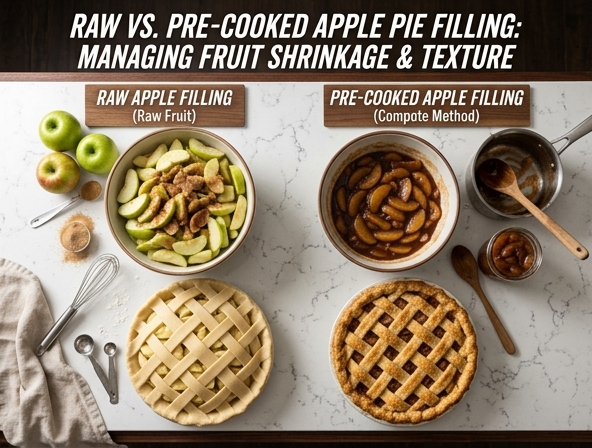
| Technique | Advantages | Challenges / Requirements | Resulting Consistency |
|---|---|---|---|
| Raw Filling | Commonly used; standard approach. | Prone to fruit shrinkage, unpredictable moisture release, and structural collapse. | Unpredictable |
| Pre-Cooked Filling | Stabilized density; maintains structural integrity throughout the bake. | Requires precise heat management to avoid over-softening the fruit. | High (favored by Bouchon Bakery) |
The Apple Pie Dilemma: Raw vs. Pre-Cooked Filling
There is perhaps no greater heartbreak for a baker than pulling a golden, lattice-crusted apple pie from the oven, only to find a cavernous, air-filled gap between the fruit and the crust. This phenomenon, affectionately known as the "apple pie gap," is more than a cosmetic issue; it is a structural failure caused by the intersection of biology, physics, and heat management. At the heart of this struggle lies one of the most debated topics in professional and home baking: should you use a raw apple filling or a pre-cooked one?
The Anatomy of the Problem: Why Apples Shrink
To understand the debate, we must first understand the apple. An apple is approximately 85% water, locked within a cellular matrix of pectin. When you heat an apple, several things happen simultaneously:
- Cellular Breakdown: Heat destroys the pectin structure that gives apples their crunch, causing them to soften.
- Osmosis and Release: As the sugar in your filling draws water out of the apple cells (osmosis), the fruit loses its volume.
- Evaporation: In a raw-filled pie, the water released by the apples has nowhere to go but into the crust or into the air, causing the fruit to shrink significantly as it bakes.
This volume loss is what creates the gap. If the apples shrink by 20% during the baking process, but your crust remains rigid, you are left with an unsightly void that makes the pie difficult to slice and aesthetically unappealing.
The Case for the Raw Filling Method
The traditional home-style approach involves tossing raw, sliced apples with sugar, spices, and a thickening agent, then pouring them directly into the crust. Many bakers prefer this method for a few key reasons:
- Freshness and Texture: Proponents argue that raw apples retain a brighter, more distinct flavor. Because the apples cook only once, they have a "just-picked" quality that appeals to those who dislike the slightly "saucy" texture of pre-cooked fillings.
- Convenience: It saves significant time. There is no need to stand over a stove reducing juices or pre-cooking fruit, allowing the oven to do all the heavy lifting.
- Simplicity: It is the classic method passed down through generations. When executed perfectly, it provides a rustic, home-baked aesthetic.
However, the raw method requires a disciplined approach to moisture management. To prevent the dreaded "soggy bottom," bakers often macerate the apples for an hour before baking, draining off the excess liquid and thickening it into a syrup before adding it back to the pie. Without this step, the excess juice will boil over, causing the bottom crust to turn into a gummy, unbaked mess.
The Argument for Pre-Cooking: The Professional's Choice
If you have ever eaten a pie at an award-winning bakery, the chances are high that the filling was pre-cooked. By sautéing the apples with sugar, butter, and spices before filling the crust, you exert total control over the finished product.
The Benefits of Pre-Cooking:
- Eliminating the Gap: When you pre-cook the apples, you are essentially "shrinking" them to their final volume before they ever touch the crust. This ensures the pie stays packed with fruit from bottom to top.
- Starch Activation: Pre-cooking allows you to incorporate your thickener (cornstarch, flour, or tapioca) and ensure it is fully hydrated and activated. This results in a stable, syrupy filling that holds its shape when sliced, rather than running across the plate.
- Flavor Concentration: The sautéing process caramelizes the edges of the apples and concentrates the flavors of your spices, resulting in a deeper, more complex profile.
The primary downside to this method is the potential to overcook the apples. If you sauté them for too long, they will turn into applesauce. The key is to cook them until they are just barely tender-the "al dente" of the fruit world-knowing they will continue to soften in the oven.
Managing Texture: The Science of Thickening
Regardless of whether you choose raw or pre-cooked, the choice of thickener is paramount. If you choose raw, tapioca starch is often the gold standard because it gels at a lower temperature and produces a clearer, more translucent syrup. If you are pre-cooking, cornstarch is excellent for creating a thick, glossy hold. Avoid flour if you want a clear, shiny filling; it tends to produce a cloudy, matte appearance that can look dusty when cold.
The "Happy Medium": Par-Cooking
For those who fear the mushiness of fully pre-cooked apples but despise the shrinkage of raw ones, par-cooking is the ultimate compromise. In this method, you toss your raw apple slices with sugar and let them sit for 30 minutes to release their juices. You then strain the juice, boil it down on the stove until it is thick and syrupy, and pour that hot syrup over the raw apples just before filling the crust. This "hot-pack" method encourages the apples to begin their softening process immediately, significantly reducing the gap without sacrificing the structural integrity of the individual fruit slices.
Conclusion: Which Method Should You Choose?
The choice between raw and pre-cooked filling ultimately comes down to your priorities. If you are aiming for a nostalgic, rustic pie where the fruit maintains a crisp-tender bite and you don't mind a small air pocket, the raw filling method with maceration is your best bet.
However, if you are looking for a perfectly filled, clean-slicing, and intensely flavorful pie, the pre-cooking or par-cooking method is undeniably superior. By taking the time to manage the water content and the volume of your fruit before it ever hits the pastry, you ensure that your pie is as delicious on the inside as it is beautiful on the outside. In the world of pastry, control is not the enemy of tradition-it is the secret to perfection.
Disclaimer:
The information provided on Eateryn is for general educational and informational purposes only and is not intended as medical, nutritional, or healthcare advice. It should not be used to diagnose, treat, cure, or prevent any disease or medical condition.
Always consult a qualified physician, registered dietitian, or other certified healthcare professional before making changes to your diet, exercise routine, or lifestyle, or regarding any medical questions or concerns you may have. Never disregard or delay seeking professional medical advice because of something you have read on this website.