
Raw vs Caramelized Onions for Hot Dog - Enhancing Your Flavor Profile
Raw vs. Caramelized Onions for Hot Dog: Enhancing Your Flavor Profile
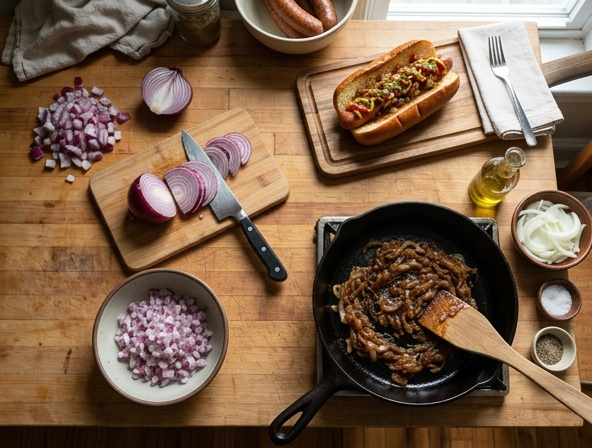
Many diners find standard hot dog toppings underwhelming, struggling to achieve a truly balanced flavor profile. While mustard and ketchup remain industry staples, elevating your dish requires deliberate culinary layering. Selecting the right onion texture transforms a simple meal into a sophisticated experience. Note that raw onions offer sharp, acidic intensity, whereas caramelized variations provide deep, mellow sweetness. Crisp white onions provide necessary structure, while slow-cooked yellow onions harmonize savory elements. This guide explores how these distinct applications redefine your hot dog's profile.
| Onion Type | Flavor Profile | Culinary Impact |
|---|---|---|
| Raw Onions | Sharp and acidic | Provides crisp structure and intense flavor contrast |
| Caramelized Onions | Deep and mellow sweetness | Harmonizes savory elements for a sophisticated, slow-cooked finish |
Raw vs. Caramelized Onions for Hot Dogs: Enhancing Your Flavor Profile
The hot dog is a culinary canvas. While the quality of the sausage and the freshness of the bun are foundational, it is the toppings that elevate a simple street-food staple into a memorable dining experience. Among the most classic, versatile, and essential of these toppings is the onion. Yet, a heated debate persists among backyard grill masters and professional chefs alike: should the onion be served raw and crisp, or slow-cooked and caramelized?
To understand the impact of your choice, one must look at the science of flavor, the physics of texture, and the overarching goal of balancing the rich, savory profile of a hot dog.
The Raw Onion: A Masterclass in Contrast
When you opt for raw onions-usually white or yellow varieties finely diced-you are choosing to introduce a sharp, pungent, and refreshing element to the palate. The chemistry here is defined by sulfur compounds, which provide that signature "bite."
The primary advantage of the raw onion is texture. A hot dog is inherently soft: the bun is pillowy, the meat is emulsified and tender, and most condiments like mustard or relish lack structural resistance. Raw onion provides a much-needed "crunch." This physical contrast wakes up the mouth and prevents the eating experience from becoming monotonous.
Furthermore, the sharp acidity of a raw onion acts as a palate cleanser. Hot dogs are often fatty and salty. The sulfuric bite of a raw onion cuts through this richness, preventing the tongue from becoming overwhelmed by the fat of the casing. It is the reason why raw onion is an indispensable component of the "classic" New York-style street dog, where it pairs perfectly with vinegary sauerkraut and spicy brown mustard.
The Caramelized Onion: The Deep Dive into Umami
In contrast, caramelizing onions is an exercise in patience and chemical transformation. By slowly cooking diced or sliced onions over low heat, you trigger the Maillard reaction-a process where amino acids and reducing sugars rearrange themselves, creating new, complex flavor compounds. The result is a total metamorphosis: the aggressive, sharp pungency disappears, replaced by a deep, jammy sweetness and a rich, savory umami undertone.
Caramelized onions transform the hot dog into a more "gourmet" or "comfort-forward" dish. They integrate seamlessly with the sausage, acting almost like a chutney. Because they are soft, they don't provide the textural crunch of raw onions, but they do provide a silky mouthfeel that coats the tongue. This sweetness is a brilliant counterpoint to saltier, bolder sausages, such as smoked frankfurters, bacon-wrapped dogs, or artisanal sausages featuring herbs like sage or rosemary.
The Pairing Guide: When to Choose Which?
Choosing between raw and caramelized isn't just a matter of preference; it is a matter of strategic flavor pairing. Consider these variables before reaching for the knife:
- The Sausage Style: If you are serving a standard, high-fat pork or beef frank, raw onions are usually the superior choice. They cut through the grease. If you are serving a more sophisticated, spice-heavy, or game-meat sausage, caramelized onions provide a sweetness that complements the complexity of the meat.
- The Condiment Profile: If your hot dog is loaded with acidic toppings-like pickled jalapeños, dill relish, or cider-vinegar-based slaw-raw onions might push the acidity levels too high. Caramelized onions act as a balancing force, mellowing out high-acid toppings.
- The Setting: Raw onions are synonymous with the casual, "grab-and-go" vibe of a ballpark or a quick lunch. Caramelized onions require a longer preparation time and are best suited for sit-down dinners or backyard barbecues where the food is meant to be savored slowly.
Pro-Tips for Execution
Whether you choose raw or caramelized, the technique matters as much as the decision itself.
Perfecting the Raw Onion
To ensure your raw onions are as pleasant as possible, try the "ice bath" method. After dicing your onions, soak them in a bowl of ice water for 10–15 minutes before serving. This removes the harsh, lingering sulfurous aftertaste while maintaining the crunch. It turns a "strong" raw onion into a crisp, clean-tasting topping that won't overpower the rest of your meal.
Mastering Caramelization
Never rush caramelization. High heat will burn the sugars, turning them bitter rather than sweet. Use a heavy-bottomed pan, a knob of butter, and a pinch of salt. Cook them over medium-low heat, stirring occasionally, for at least 30 to 45 minutes. If they dry out, add a splash of water, beef broth, or even a drop of balsamic vinegar to deglaze the pan and intensify the color and flavor. The goal is a deep, golden-brown hue, not charred black.
The Hybrid Approach: The Best of Both Worlds
For those who find it impossible to choose, there is the "Hybrid approach." You can top your hot dog with a base of rich, caramelized onions and sprinkle a light dusting of finely diced raw scallions or red onions on top. This provides the best of both worlds: the deep, slow-cooked sweetness as a foundation, and the crisp, bright snap of a raw onion as a finish. It adds a visual pop and a layered sensory experience that demonstrates true culinary intent.
Conclusion
The hot dog is a simple pleasure, but it doesn't have to be a one-note experience. By understanding the function of the onion-whether as a sharp, acidic foil or a deep, savory accent-you gain the ability to tailor your hot dog to the specific profile of the sausage and the mood of the meal. Do not look at onions as a mere garnish; treat them as a deliberate flavor modifier. Whether you opt for the crisp bite of raw or the velvety depth of caramelized, you are taking a step toward perfecting the ultimate hot dog.
Disclaimer:
The information provided on Eateryn is for general educational and informational purposes only and is not intended as medical, nutritional, or healthcare advice. It should not be used to diagnose, treat, cure, or prevent any disease or medical condition.
Always consult a qualified physician, registered dietitian, or other certified healthcare professional before making changes to your diet, exercise routine, or lifestyle, or regarding any medical questions or concerns you may have. Never disregard or delay seeking professional medical advice because of something you have read on this website.