
Ranch Vs Blue Cheese For Buffalo Wings - Which Dipping Sauce Reigns Supreme
The Definitive Debate: Ranch vs. Blue Cheese
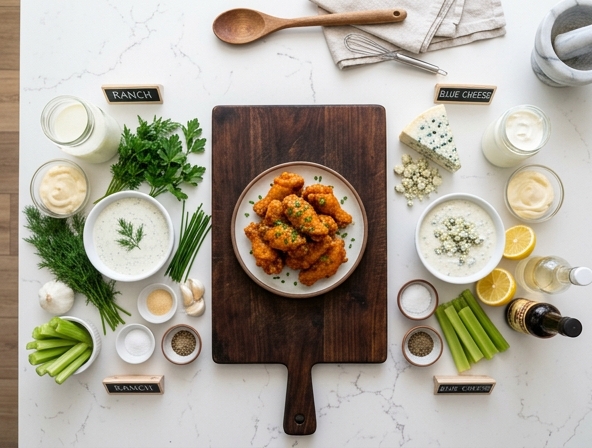
Choosing the ideal accompaniment for Buffalo wings is a common source of indecision for many diners. While blue cheese is the traditional standard, ranch has emerged as a pervasive, modern alternative. Understanding these flavor profiles offers a strategic advantage in elevating your meal. Please note that taste remains subjective, though culinary history favors distinct pairings. From local gastropubs to national chains, these staples provide essential balance. Below, we analyze the sensory dynamics to determine the optimal choice.
| Feature | Blue Cheese | Ranch |
|---|---|---|
| Historical Status | Traditional standard for Buffalo wings. | Pervasive, modern alternative. |
| Culinary Role | Provides a bold, distinct flavor profile. | Offers a versatile, crowd-pleasing balance. |
| Usage Context | Common in traditional gastropubs. | Widely popular across national chains. |
| Subjectivity | Subject to personal taste preferences. | Subject to personal taste preferences. |
Ranch Vs. Blue Cheese: The Great Buffalo Wing Debate
If you have ever found yourself sitting at a sports bar or a local wing joint, staring at a plate of steaming, vinegary, cayenne-drenched Buffalo wings, you have likely encountered the most divisive choice in American culinary history. It is a decision that has sparked arguments between friends, split up families, and even dictated the success of restaurant menus: Ranch or Blue Cheese?
While some view this merely as a condiment preference, others see it as a litmus test for one's palate. Are you a purist who honors the history of the Buffalo wing, or are you a pragmatist seeking the ultimate cooling agent to soothe the fire of your favorite sauce? To settle this, we must dive deep into the origins, the flavor chemistry, and the cultural weight of these two titans of the dipping world.
The Case for Blue Cheese: The Traditionalist's Choice
To understand why Blue Cheese is the "original" pairing, we have to look back to Buffalo, New York, in the mid-1960s. When Teressa Bellissimo first tossed fried wings in hot sauce at the Anchor Bar, she served them alongside celery sticks and-crucially-blue cheese dressing. In the mid-century culinary landscape, blue cheese was a signifier of sophistication; it was bold, pungent, and decidedly grown-up.
From a culinary perspective, Blue Cheese is the "correct" choice because of its flavor complexity. The defining characteristics of a classic Buffalo wing are acidity (from vinegar) and heat (from cayenne). Blue cheese, being a fermented dairy product, offers a "funky" sharpness that stands up to the aggressive profile of the sauce rather than being washed away by it. The crumbles of blue cheese provide texture, while the high fat content of the base (typically sour cream or mayonnaise) creates a rich, creamy contrast that lingers on the tongue, balancing the sharp, acidic bite of the vinegar-heavy hot sauce.
The Case for Ranch: The People's Champion
While Blue Cheese holds the title of the "traditionalist's choice," Ranch dressing is the undisputed champion of mass appeal. Developed in the 1950s by Steve Henson on a California ranch (hence the name), this buttermilk-and-herb-based dressing exploded in popularity throughout the 1980s and 90s to become the most consumed salad dressing in America.
Why does Ranch work so well with wings? It is all about the herbs. Ranch is a symphony of dill, chives, parsley, and garlic, underpinned by a smooth, buttermilk tang. Unlike the polarizing, aggressive "funk" of blue cheese, Ranch provides a cooling, herbaceous blanket. For those who find the sharp bite of blue cheese off-putting, Ranch offers a neutral, comforting relief. It is the ultimate "reset" button for the palate, allowing the diner to dive back into a plate of extra-hot wings without feeling overwhelmed by an intense cheese profile. In short, Ranch is the diplomat of the wing plate: friendly, approachable, and universally liked.
The Culinary Science: Why We Dip
Beyond tradition and popularity, there is an actual scientific reason why we need a dipping sauce for wings. The "Buffalo" experience is designed to be intense. The combination of chili peppers, salt, and vinegar triggers pain receptors in the mouth. This is the "high" that hot wing lovers chase.
The human brain loves contrast. If a wing is too acidic, we crave something alkaline to balance it. If a wing is too spicy, we crave fat to coat the tongue and dissipate the capsaicin. Both Blue Cheese and Ranch provide this, but they do it in different ways:
- Fat-to-Acid Ratio: Blue cheese is typically higher in fat and salt, making it a stronger partner for vinegar-based sauces.
- Aromatic Profile: Ranch brings aromatic herbs (dill/garlic) into the fold, which changes the profile of the wing from "savory-spicy" to "herbal-savory-spicy."
Which Reigns Supreme?
So, which one actually wins? If you are a purist attending a wing festival in Buffalo, you go with Blue Cheese. It honors the heritage of the dish, and its robust flavor profile holds its own against the most potent of hot sauces. It is the sophisticated choice that demands respect.
However, if you are looking for pure, unadulterated comfort, Ranch is the victor. There is a reason it has become the default side for everything from pizza crusts to fried pickles. It is versatile, soothing, and fundamentally linked to the "fun" side of pub food.
The truth is that the "correct" choice is entirely dependent on the wing itself. A high-quality, craft-made buffalo wing with a heavy vinegar presence almost always begs for the blue cheese. But a standard, mass-produced wing at a casual happy hour? A side of creamy, herb-packed Ranch is exactly what the doctor ordered.
Ultimately, the rivalry isn't really about which sauce is "better." It's about the joy of the wing experience. Whether you are Team Blue or Team Ranch, the fact remains that a wing without a dipping partner is a lonely, incomplete experience. So, the next time the waiter asks, "Blue cheese or Ranch?" don't agonize over the decision. Simply pick the one that makes your heart-and your taste buds-the happiest. Or, if you're feeling bold, do what the true wing aficionados do: order both.
Disclaimer:
The information provided on Eateryn is for general educational and informational purposes only and is not intended as medical, nutritional, or healthcare advice. It should not be used to diagnose, treat, cure, or prevent any disease or medical condition.
Always consult a qualified physician, registered dietitian, or other certified healthcare professional before making changes to your diet, exercise routine, or lifestyle, or regarding any medical questions or concerns you may have. Never disregard or delay seeking professional medical advice because of something you have read on this website.