
Queso Fresco vs Cotija for Tacos - Selecting the Ideal Salty Finish
Many home chefs struggle to achieve an authentic taco finish, often relying on generic shredded cheese that masks subtle flavor profiles. While mild options like Monterey Jack serve as standard pantry staples, they lack the specific crystalline structure required for professional balance. Queso Fresco and Cotija offer a unique, salty elevation. Note: select Fresco for cooling acidity on black bean tacos, or aged Cotija for bold intensity on carnitas. This guide details how to master your presentation.
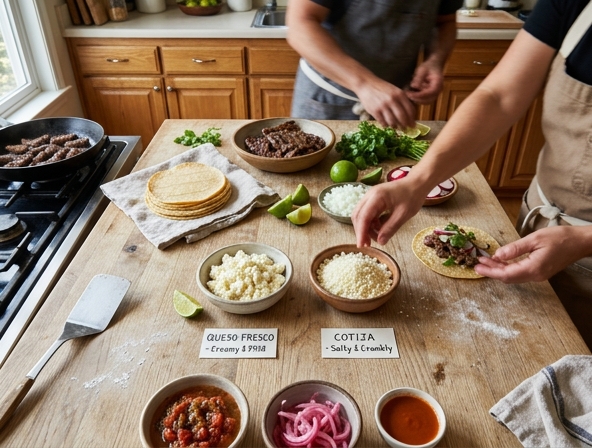
| Cheese Type | Flavor Profile | Best Taco Pairing |
|---|---|---|
| Queso Fresco | Mild with cooling acidity | Black bean tacos |
| Cotija | Bold, intense, and aged | Carnitas |
| Recommendation: Avoid generic shredded cheeses; use these specific options to achieve a professional, salty finish. | ||
Queso Fresco vs. Cotija for Tacos: Selecting the Ideal Salty Finish
When you are assembling the perfect taco, every element-from the quality of the heirloom corn tortilla to the acidity of the lime and the heat of the salsa-plays a critical role. However, the final flourish, the crowning crumb of cheese, is often what elevates a taco from "good" to "extraordinary." If you find yourself staring at the refrigerated dairy case in a Mexican grocer, torn between a package of Queso Fresco and a block of Cotija, you are not alone. While they may look similar in their crumbled states, they offer vastly different experiences on the palate.
Understanding Queso Fresco: The Gentle Cream
Queso Fresco, which translates literally to "fresh cheese," is the workhorse of the Mexican kitchen. It is an unaged, non-melting cheese typically made from cow's milk (or a blend of cow and goat milk). Because it is not aged, it retains a high moisture content and a mild, slightly tangy, milky flavor profile. Its texture is firm enough to be crumbled, yet it retains a soft, slightly spongy quality that is almost reminiscent of a very dry, fresh mozzarella or a mild ricotta.
When to use Queso Fresco:
- Balancing Bold Heat: Because it is relatively mild, Queso Fresco acts as a cooling agent. If you are serving tacos with a ferocious habanero salsa or deeply spiced, smoky meats, Fresco provides a creamy contrast that soothes the heat without competing with the flavor.
- Vegetarian Tacos: In tacos featuring black beans, roasted sweet potatoes, or sautéed zucchini, the milky character of Fresco adds a gentle, comforting richness that doesn't overpower the delicate earthiness of the vegetables.
- Crowd-Pleasing Plates: If you are serving a group that includes those who aren't fans of intense, funky, or overly salty flavors, Queso Fresco is the safer, more approachable choice.
Understanding Cotija: The Salty Powerhouse
Cotija is often referred to as the "Parmesan of Mexico," and for good reason. It is an aged cheese, starting as a fresh curd and then left to mature for several months. During this process, it develops a firm, dry, and granular texture. Unlike Queso Fresco, Cotija does not soften when heated; it holds its shape, making it the perfect finishing touch for hot tacos straight off the comal.
The flavor profile of Cotija is intense. It is markedly salty, pungent, and savory, with a deep umami character that lingers on the tongue. Because of its density and sharp profile, a little bit goes a long way. It doesn't just sit on top of your taco; it actively seasons it.
When to use Cotija:
- Cutting Through Richness: If you are serving tacos with fatty meats like carnitas, barbacoa, or rich birria, the sharp, salty punch of Cotija cuts through the grease, providing a necessary contrast that keeps every bite exciting.
- Sweet and Savory Combinations: Tacos al Pastor, which rely on the sweetness of roasted pineapple and the marinade of achiote, are significantly improved by the salt-forward nature of Cotija. The cheese acts as a foil, preventing the sweet notes from becoming cloying.
- The "Street Taco" Aesthetic: If you are aiming for that quintessential street-style taco experience, Cotija is the classic choice. Its dry texture allows it to cling to the meat and salsa, ensuring that every bite has that consistent burst of salty complexity.
The Fundamental Difference: Moisture and Aging
The decision between these two cheeses essentially comes down to your goal for the final dish. Queso Fresco is about adding texture and a cooling, creamy counterpoint. Cotija is about adding flavor intensity and seasoning.
It is important to remember that neither of these is a "melting cheese." If you are looking for that gooey, cheese-pull effect you might associate with Tex-Mex dishes, you are looking for a completely different category, such as Queso Oaxaca or Chihuahua cheese. Applying heat to Fresco will soften it slightly, but it will never turn into a liquid fondue. Applying heat to Cotija will simply result in warm, crumbly pieces of cheese.
Selecting the Ideal Finish for Your Taco
To help you decide which path to take, consider the "weight" of your taco filling:
Scenario A: The "Bright & Fresh" Taco
If you are building a taco with grilled white fish, pickled onions, cabbage slaw, and a light lime crema, go with Queso Fresco. It complements the brightness of the citrus and the crunch of the slaw without masking the delicate flavor of the fish.
Scenario B: The "Heavy & Hearty" Taco
If you are serving chorizo and potato tacos, lengua (beef tongue), or a rich, slow-cooked beef brisket, reach for the Cotija. The strength of the meat requires a cheese that can stand up to it. The saltiness of the Cotija will essentially act as the "seasoning" for that specific bite, bridging the gap between the meat's heavy fats and the acidity of your salsa.
Expert Tips for Serving
Regardless of which cheese you choose, the way you prepare it matters. For both, always crumble them by hand rather than grating them with a fine zester, unless you are aiming for a dusting effect. Large, rustic crumbles offer a better mouthfeel, allowing you to experience the cheese as a distinct ingredient rather than just a salty powder.
Furthermore, quality matters. Seek out brands that emphasize traditional production methods. A high-quality Cotija should have a pale, off-white color and a distinct, lingering tang; a high-quality Queso Fresco should smell like sweet, fresh cream. Avoid the pre-crumbled plastic tubs whenever possible; purchasing a block and crumbling it fresh preserves the texture and moisture of the cheese, which makes an undeniable difference in the final quality of your taco.
Ultimately, there is no "wrong" choice-only a stylistic one. Whether you opt for the mild, cooling touch of Queso Fresco or the sharp, savory impact of Cotija, you are honoring the tradition of Mexican street food. Experiment with both, notice how they interact with different proteins, and soon, you will instinctively know which one your taco is calling for the moment the meat leaves the grill.
Disclaimer:
The information provided on Eateryn is for general educational and informational purposes only and is not intended as medical, nutritional, or healthcare advice. It should not be used to diagnose, treat, cure, or prevent any disease or medical condition.
Always consult a qualified physician, registered dietitian, or other certified healthcare professional before making changes to your diet, exercise routine, or lifestyle, or regarding any medical questions or concerns you may have. Never disregard or delay seeking professional medical advice because of something you have read on this website.