
Pumpernickel vs Rye for Bagel - Identifying the best dark bread
Choosing the ideal dark bagel is often frustrating, as options frequently lack sufficient depth or texture. While common plain or everything bagels serve standard needs, dark, grain-heavy breads offer an unmatched complexity for artisanal sandwiches. A key stipulation: pumpernickel provides a dense, fermented bite, while rye offers a lighter, acidic profile. Renowned establishments like Katz's utilize these specific profiles to elevate their meat pairings. The following analysis compares these two distinct breads to determine your best choice.
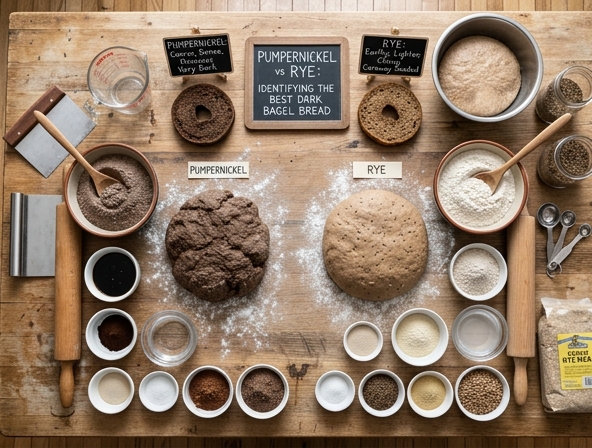
| Feature | Pumpernickel | Rye |
|---|---|---|
| Texture | Dense | Lighter |
| Flavor Profile | Fermented | Acidic |
| Best Use | Deep, complex artisanal sandwiches | Versatile artisanal meat pairings |
| General Summary | Both breads are ideal for elevating sandwiches, with the choice depending on whether a dense, fermented bite or a lighter, acidic profile is desired. | |
Pumpernickel vs. Rye: The Battle for the Ultimate Dark Bagel
In the world of bagels, the spectrum of flavor is vast. While the plain, sesame, and everything bagels often hog the spotlight at the local deli, there exists a darker, more sophisticated category that commands respect: the dark breads. If you have ever stared down a menu board wondering whether to choose the Rye or the Pumpernickel, you are not alone. Both bring a deep, earthy intensity to the bagel experience, yet they are distinct in their chemistry, their history, and their ultimate role on your breakfast plate.
The Rye Bagel: The Deli's Reliable Workhorse
Rye flour has been a staple of Northern and Eastern European baking for centuries, prized for its ability to thrive in colder climates where wheat often fails. When transformed into a bagel, rye doesn't behave like standard wheat flour. It is naturally low in gluten, which presents a technical challenge for the baker. A true "rye bagel" is, in reality, a high-protein wheat flour dough heavily bolstered with dark rye flour and, frequently, a healthy dose of caraway seeds.
The Flavor Profile: A well-made rye bagel is characterized by a subtle, sourdough-like tang. It is less about being "dark" and more about being "aromatic." The caraway seeds provide a sharp, herbaceous note that cuts through the fattiness of cream cheese or the saltiness of cured meats. The texture is usually slightly tighter than a plain bagel, with a crust that crackles slightly more due to the specific starch composition of the rye.
The Pumpernickel Powerhouse: A Study in Depth
If rye is the reliable workhorse, pumpernickel is the brooding artisan. Traditional German pumpernickel is a vastly different beast than its Americanized bagel counterpart. In its pure form, it is made from coarsely ground rye meal and baked at low temperatures for up to 24 hours. The dark color isn't just dye; it is the result of the Maillard reaction-a long, slow transformation of sugars into complex, savory flavors.
The Flavor Profile: A Pumpernickel bagel is designed to evoke that deep, slow-baked intensity. To achieve the signature darkness in a bagel, bakers often use dark molasses, cocoa powder, or instant coffee to deepen the color, alongside significant rye flour. The result is a bagel that is sweet, malty, and incredibly earthy. It doesn't just taste like bread; it tastes like a foundation.
The Technical Divide: Why the Dough Matters
When you bite into these breads, you are experiencing a conflict between modern bagel chemistry and ancient grain properties. Because rye flour lacks the elastic gluten structure required to hold the "chew" of a perfect bagel, bakers must use a delicate hand.
- Structural Integrity: Rye bagels use less rye flour to maintain the signature New York "tug." If they used too much, the bagel would crumble.
- The Boiling Process: Both rye and pumpernickel bagels must be boiled before baking to gelatinize the starches. For these darker breads, this step is crucial for achieving that thin, shiny skin that protects the softer, rye-infused interior.
- Coloring Agents: Be wary of "imposter" pumpernickel. If a bagel is jet black but lacks that deep, fermented malt flavor, it has likely been colored with nothing more than caramel coloring or molasses for aesthetic purposes.
The Ultimate Pairing Guide: Choosing Your Fighter
Choosing between these two is rarely about which is "better" and almost always about what you intend to put on top of it. The flavor profiles dictate the culinary experience.
When to Choose Rye:
Rye is the champion of the "Deli Classic." Its caraway-forward profile thrives when paired with:
- Smoked Fish: The sharpness of the rye cuts through the richness of smoked salmon or whitefish salad perfectly.
- Pastrami and Mustard: The spice of the caraway mirrors the spice of a good deli mustard.
- Sharp Cheddar or Swiss: The tang of the rye complements fermented dairy products beautifully.
When to Choose Pumpernickel:
Pumpernickel is the king of "Indulgence." Its malty, molasses-rich sweetness works best with:
- Plain or Veggie Cream Cheese: The bread is the star here; the cream cheese provides a neutral canvas for the intense, complex flavor of the pumpernickel.
- Sweet Spreads: A smear of butter and a touch of honey or jam works surprisingly well on a pumpernickel bagel, playing into those dark, molasses-adjacent notes.
- Smoked Turkey: The subtle sweetness of the pumpernickel balances the savory, lean profile of turkey, creating a more sophisticated sandwich.
The Verdict
So, which is the best dark bread for your bagel? If you seek a bagel that functions as a spicy, savory platform for your favorite deli meats, the Rye bagel is your undisputed champion. It provides that essential herbal snap that has defined lunch counters for generations.
However, if you are looking for a bagel that offers a more contemplative, complex flavor experience-something that feels more like a gourmet experience than a quick breakfast-reach for the Pumpernickel. Its deep, malty character turns a simple bagel into a meal that feels grounded, rustic, and profoundly satisfying.
Ultimately, the "best" is subjective, but by understanding the difference between the sharp, caraway-cracked bite of the Rye and the deep, molasses-malted hearth of the Pumpernickel, you are no longer just ordering by color. You are ordering by intent. The next time you find yourself at the counter, skip the plain bagel and embrace the dark side-you now have the knowledge to pick the one that will transform your breakfast into a masterpiece.
Disclaimer:
The information provided on Eateryn is for general educational and informational purposes only and is not intended as medical, nutritional, or healthcare advice. It should not be used to diagnose, treat, cure, or prevent any disease or medical condition.
Always consult a qualified physician, registered dietitian, or other certified healthcare professional before making changes to your diet, exercise routine, or lifestyle, or regarding any medical questions or concerns you may have. Never disregard or delay seeking professional medical advice because of something you have read on this website.