
Provolone vs Whiz for Philly Cheesesteak - Comparing The Two Most Iconic Cheeses
Provolone vs. Whiz for Philly Cheesesteak
Choosing the ideal cheese for a Philly cheesesteak is a common dilemma for even the most discerning diners. While many recipes default to standard pantry staples, the nuances of your selection define the overall profile. Understanding how Provolone versus Cheez Whiz interacts with the ribeye's fat is vital. Note that preference remains subjective, though each offers distinct textures. We will examine the flavor intensity of Provolone alongside the creamy consistency of Whiz, guiding your future culinary decisions.
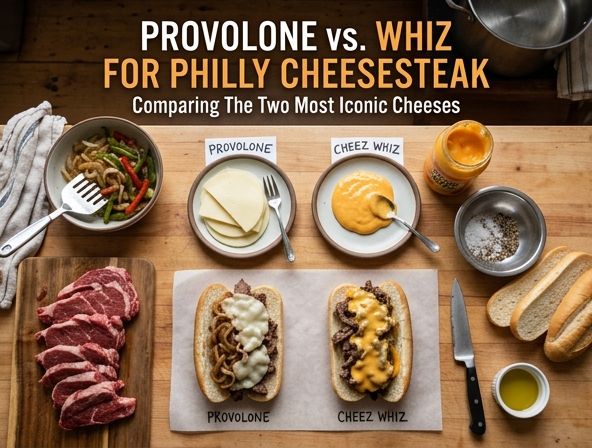
| Feature | Provolone | Cheez Whiz |
|---|---|---|
| Flavor Profile | Offers distinct, more intense flavor notes. | Provides a classic, savory, and familiar taste. |
| Consistency | Provides a structural, melty texture. | Renowned for its smooth, creamy mouthfeel. |
| Culinary Role | Interacts uniquely with the ribeye's fat for a sophisticated balance. | Serves as the iconic, traditional standard for the sandwich. |
| Verdict | Subjective preference based on intensity. | Subjective preference based on texture. |
Provolone vs. Whiz for Philly Cheesesteak: Comparing The Two Most Iconic Cheeses
In the landscape of American comfort food, few debates are as heated, as storied, or as fundamentally Philly as the question of cheese on a cheesesteak. If you walk into a staple sandwich shop in South Philadelphia, you aren't just ordering lunch; you are participating in a local rite of passage. While the debate over "wit or wit-out" (onions) is legendary, the choice between Cheez Whiz and Provolone is where the true culinary philosophy of the diner is revealed.
The Case for the Golden Standard: Cheez Whiz
For many tourists and quite a few locals, Cheez Whiz is the definitive topping for a Philly cheesesteak. It is the bold, neon-orange emulsification that represents the modern evolution of the sandwich. When Pat's King of Steaks began experimenting with processed cheese in the mid-20th century, they weren't looking for high-end culinary refinement; they were looking for utility and flavor.
The Chemistry of the Melt: The primary argument for Cheez Whiz is its texture. Because it is an emulsified cheese product, it maintains a consistent, velvety viscosity even as the sandwich cools. It doesn't harden or separate like natural cheese can. When drizzled over a pile of thinly shaved, seared ribeye, it acts as a cohesive binder, soaking into the nooks and crannies of the meat and seeping into the soft, porous interior of a fresh Amoroso roll.
The Flavor Profile: Whiz provides a sharp, salty punch that cuts through the richness of the beef fat. Because the meat itself is seasoned simply-usually just salt and pepper-the cheese acts as the primary seasoning agent. The result is a high-octane experience that feels indulgent and unpretentious. It's the "classic" choice for a reason: it's engineered to create a perfect bite every single time.
The Traditionalist's Choice: Provolone
If Whiz is the icon of the modern cheesesteak, Provolone is the soul of the traditionalist. Many older Philadelphia establishments and those who prefer a more "refined" sandwich swear by it. Unlike the processed, one-note nature of Whiz, Provolone offers complexity.
The Depth of Flavor: Provolone is a real, aged cheese. When it melts, it offers a distinct, milky, and slightly nutty profile. Depending on the shop, you might find "mild" provolone, which offers a creamy, subtle background note, or "sharp" provolone, which provides a pungent, piquant tang that stands up well to the intense flavor of the grilled beef.
The Texture Factor: Provolone behaves differently than Whiz. It creates a satisfying "pull" when you take a bite, a stringy, molten texture that feels more organic. It provides a structural foundation rather than a liquid coating. When melted correctly-often tucked under the meat on the griddle to allow the fat to permeate the cheese-it becomes a semi-solid layer of umami that elevates the meat rather than masking it.
The Comparison: Which One Wins?
Texture and Mouthfeel
Cheez Whiz wins on pure consistency. It is the "glue" that keeps the sandwich together. If you are eating a cheesesteak on the go, Whiz is less likely to slide out of the roll. Provolone, however, provides a more substantial "chew." It is for those who enjoy the interaction between the crust of the beef and the gooey, stretching nature of natural cheese.
Flavor Balance
Whiz is aggressive. It is high in sodium and carries a distinct, manufactured tang that defines the "Philly experience" for many. Provolone is more nuanced. It allows the quality of the meat to shine through more clearly. If you are eating a cheesesteak with high-quality, well-marbled ribeye, a mild provolone will complement the meat; Whiz might overpower it.
The Social Context
There is a social aspect to this choice. Ordering "Whiz wit" is the signature move of the tourist or the die-hard fan of the greasy-spoon experience. It is the quintessential Philly aesthetic-messy, unapologetic, and loud. Choosing Provolone often signals a desire for a "better" sandwich-one that feels more like a deliberate culinary choice than a late-night indulgence.
The Third Contender: The American Wildcard
While the debate is officially titled "Provolone vs. Whiz," we would be remiss not to mention American cheese. Frequently requested by locals as the "middle ground," white American cheese offers the meltability of Whiz with a much more natural, creamy flavor. Many cheesesteak aficionados believe that American cheese provides the best of both worlds: the perfect melt without the artificial aftertaste of Whiz, and more richness than the sometimes-dry Provolone.
Conclusion: The Verdict
So, which is the "right" choice? The truth is, there is no right answer. The cheesesteak is a living culinary tradition, and its beauty lies in its versatility.
- Choose Cheez Whiz if: You want the nostalgic, authentic, "South Philly" experience. You prefer a salty, creamy, uniform bite where the cheese is as much a part of the sauce as it is a dairy product.
- Choose Provolone if: You are a purist who values the flavor of the meat. You want a sandwich that feels slightly more sophisticated and enjoy the complex, nutty profile that only real, aged cheese can provide.
- Choose American if: You want a balanced, creamy sandwich that melts perfectly but stays true to the flavor of the beef.
Ultimately, the best cheesesteak is the one in your hand. Whether it's dripping with liquid gold or held together by a pull of sharp Provolone, the Philly cheesesteak remains one of the greatest inventions in American dining. Try both, compare them, and you might find that your loyalty shifts depending on the day-or perhaps, depending on which shop you're standing in.
Disclaimer:
The information provided on Eateryn is for general educational and informational purposes only and is not intended as medical, nutritional, or healthcare advice. It should not be used to diagnose, treat, cure, or prevent any disease or medical condition.
Always consult a qualified physician, registered dietitian, or other certified healthcare professional before making changes to your diet, exercise routine, or lifestyle, or regarding any medical questions or concerns you may have. Never disregard or delay seeking professional medical advice because of something you have read on this website.