
Provolone vs American for Philly Cheesesteak - Choosing The Perfect Cheese Blend
Provolone vs. American: The Cheesesteak Dilemma
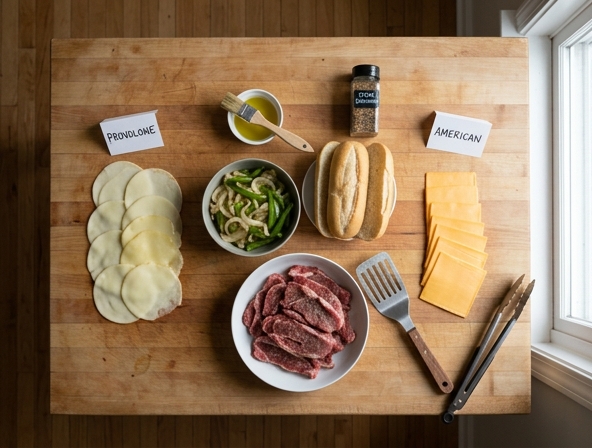
Choosing between Provolone and American cheese often feels like a culinary compromise. While traditional Philly establishments frequently default to Cheez Whiz or standard slices, achieving a perfect melt requires specific knowledge. Mastering this balance grants you professional-grade results. Stipulation: temperature control is vital for proper texture. Note that legends like Pat's favor mild options, while purists demand aged sharp Provolone. Below, we examine the interplay of flavor and emulsification to help you curate your signature blend.
| Feature | American Cheese | Provolone Cheese |
|---|---|---|
| Flavor Profile | Mild and creamy | Sharp and robust (especially aged varieties) |
| Melt & Texture | Provides reliable, smooth emulsification | Requires precise temperature control for optimal texture |
| Culinary Context | Standard for mainstream melts and Cheez Whiz styles | Favored by purists and traditionalists |
| Preparation Tip | Regardless of choice, temperature control is the critical factor for achieving a professional-grade cheesesteak. | |
Provolone vs. American: The Great Philly Cheesesteak Cheese Debate
To the uninitiated, a Philly cheesesteak might look like a simple assembly of thin-sliced ribeye and melted cheese stuffed into a long roll. To the residents of Philadelphia, however, it is a culinary institution, a cultural shorthand, and the subject of one of the most heated debates in American food history. At the center of this controversy-surpassing even the arguments over the inclusion of green peppers or the necessity of "wit" (fried onions)-is the choice of cheese.
While Cheez Whiz often captures the spotlight as the quintessential "tourist" choice, the real battle for the soul of the cheesesteak happens between two heavyweights: Provolone and American. Each brings a completely different philosophy of flavor and texture to the table. If you are looking to master the perfect cheesesteak at home, understanding the science behind these two options is essential.
The Case for American: The Master of Melt
When you walk into a classic Philly steak shop, American cheese-specifically white American-is often the go-to for the locals who want a seamless, creamy experience. There is a reason for this: science.
American cheese is a processed product containing emulsifiers like sodium citrate. These ingredients prevent the proteins and fats from separating when heated. The result is a consistent, velvety melt that coats every individual strand of thinly sliced ribeye. When you take a bite of a cheesesteak made with American, you aren't just tasting cheese; you are experiencing a cohesive "steak-and-cheese" paste that distributes flavor evenly across the palate.
The flavor profile of American cheese is mild, salty, and subtle. It doesn't compete with the beef; instead, it acts as a binder. For those who prioritize mouthfeel and the classic "greasy-good" experience, American is the undisputed champion. It provides that signature "goo" that pulls away from the roll, defining the nostalgic comfort food experience of a late-night Philly staple.
The Case for Provolone: The Purist's Choice
If American cheese is about texture, Provolone is about character. For many purists, American is considered too "fake" or "processed." Provolone offers a much more sophisticated flavor profile, with a sharpness and tang that cuts through the intense richness of the seared, fatty ribeye.
Provolone is a semi-hard Italian cheese that undergoes a longer aging process, leading to a complex fermentation profile. When choosing Provolone for a cheesesteak, the degree of sharpness is the critical variable. "Mild" Provolone is creamy and slightly sweet, providing a subtle contrast to the meat. "Sharp" Provolone, however, is a game-changer. It introduces a salty, pungent, and slightly fermented punch that demands the steak be seasoned perfectly. It elevates the sandwich from a piece of fast food into a savory, nuanced meal.
However, Provolone comes with a technical challenge: it doesn't melt with the same ease as American. If the chef isn't careful, the cheese can turn oily or clump into distinct, rubbery strings rather than a smooth sauce. Achieving a perfect Provolone-based cheesesteak requires a bit more technique-often involving a steam cover over the steak-and-cheese mixture to encourage uniform melting.
The "Cheez Whiz" Elephant in the Room
We cannot discuss cheese on a Philly cheesesteak without acknowledging the neon-orange legend. Cheez Whiz was introduced in the 1950s and quickly became a staple at spots like Pat's King of Steaks. It provides the highest degree of saltiness and a unique, nostalgic flavor profile that many argue is the "true" taste of Philadelphia.
Yet, for the home cook, Cheez Whiz is often a polarizing choice. It is heavily processed and can overwhelm the delicate nuances of high-quality beef. While it remains a cultural icon, many food enthusiasts prefer the structural integrity and superior taste of high-quality deli American or sharp Provolone.
The Art of the Blend: Why Choose Just One?
Why choose between texture and flavor when you can have both? Many professional chefs and seasoned Philly home cooks have turned to the "blend" strategy to achieve the ultimate sandwich. By combining white American with a mild or sharp Provolone, you create a synergy that covers all the bases.
Here is why the blend works:
- Structural Binding: The American cheese acts as the emulsifier, ensuring that the cheese stays creamy and doesn't turn into an oily mess.
- Flavor Depth: The Provolone provides that essential tang and savory depth that American lacks on its own.
- Melt Consistency: By chopping the meats and cheese together on the griddle, the two cheeses meld into a singular sauce that clings to the beef perfectly while still providing a complex taste profile.
Tips for the Perfect Melt
Regardless of which cheese you choose, the way you apply it to the meat is just as important as the cheese itself. To achieve that professional-quality finish:
- Chop the Meat First: Use a sharp bench scraper or spatula to finely chop your ribeye as it sears. The smaller the pieces, the more surface area there is for the cheese to coat.
- The "Tent" Method: Once the meat is cooked and seasoned, mound it into the shape of your roll. Place your cheese slices directly on top of the mound. Add a splash of water to the edge of the griddle and immediately cover the meat with a dome or a metal bowl. The steam is the secret weapon for melting the cheese evenly without drying out the meat.
- Don't Over-Cook: Once the cheese is glossy and starting to flow, it's ready. If you leave it under the heat too long, the fats in the cheese will break, leaving you with an oily sandwich rather than a cheesy one.
The Verdict
Choosing between Provolone and American is not about finding the "better" cheese; it is about deciding what kind of experience you want. If you are aiming for the ultimate nostalgic comfort experience that mimics the classic Philly street food style, go with white American cheese. If you are looking to highlight the quality of the beef and prefer a more refined, savory sandwich, opt for a high-quality sharp Provolone.
For those who want to reach the pinnacle of cheesesteak perfection, a 70/30 blend of American to Provolone is arguably the best of both worlds. It provides the reliable, gooey texture that holds the sandwich together while delivering the sophisticated sharpness that makes every bite memorable. Ultimately, the perfect cheesesteak is the one that brings you the most joy-whether it's dripping with processed goodness or elevated with aged, sharp Provolone.
Disclaimer:
The information provided on Eateryn is for general educational and informational purposes only and is not intended as medical, nutritional, or healthcare advice. It should not be used to diagnose, treat, cure, or prevent any disease or medical condition.
Always consult a qualified physician, registered dietitian, or other certified healthcare professional before making changes to your diet, exercise routine, or lifestyle, or regarding any medical questions or concerns you may have. Never disregard or delay seeking professional medical advice because of something you have read on this website.