
Prosciutto vs Pepperoni for Pizza - Gourmet Toppings Versus Traditional Staples
Choosing the perfect pizza topping often balances comfort against culinary ambition. While pepperoni remains the traditional staple-delivering reliable, spicy flavor-many palates now demand sophisticated refinement. Prosciutto offers a delicate, salty depth that transforms standard crusts into gourmet offerings. It is important to note, however, that prosciutto requires post-bake application to maintain its silky texture, unlike heat-stable pepperoni. Renowned wood-fired pizzerias consistently demonstrate this nuance. We will now compare the sensory profiles and technical applications of both.
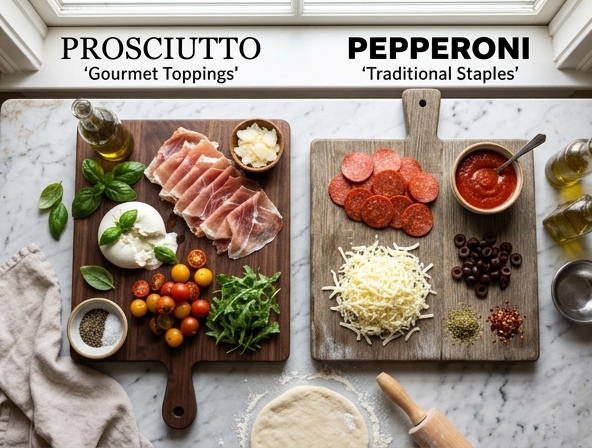
| Feature | Pepperoni | Prosciutto |
|---|---|---|
| Classification | Traditional staple | Gourmet topping |
| Flavor Profile | Spicy, reliable, and robust | Delicate, salty, and refined |
| Preparation | Heat-stable; added before baking | Applied post-bake to preserve texture |
| Texture | Maintains consistent bite | Silky and tender |
The Great Pizza Debate: Prosciutto vs. Pepperoni
In the expansive, bubbling landscape of pizza toppings, few debates carry as much weight-or elicit as much passion-as the clash between pepperoni and prosciutto. It is a battle of philosophies: the industrialized, spicy comfort of the American classic versus the refined, salt-cured elegance of the Italian artisan. Whether you are a casual Friday night diner or a self-proclaimed pizzaiolo, understanding the interplay between these two giants is essential for crafting the perfect pie.
The Pepperoni Legacy: The American Staple
Pepperoni is, by all accounts, the undisputed king of the American pizzeria. Born from the early 20th-century Italian-American diaspora, pepperoni is a uniquely American invention. Unlike its European cousins-salami or soppressata-pepperoni is characterized by its fine grain, vibrant red hue, and a distinct, sharp spice profile derived from a blend of peppers and paprika. It is designed specifically to withstand the brutal environment of a high-temperature pizza oven.
When you toss a handful of pepperoni slices onto a raw pie, you are setting the stage for a transformation. As the oven heat rises, the fats within the pepperoni render, creating that iconic “cup and char” effect where the edges curl upward, trapping a tiny, flavorful pool of spiced oil. This oil bleeds into the mozzarella, turning the cheese a pale, orange-tinted gold. For many, this flavor profile-salty, spicy, greasy, and comforting-is the singular definition of pizza.
The Art of Prosciutto: The Gourmet Refinement
On the other side of the spectrum lies prosciutto di Parma. If pepperoni is the brash, loud rock-and-roll drummer of the pizza world, prosciutto is the delicate, melodic violinist. Prosciutto is an Italian dry-cured ham, aged for months (or even years) to achieve a buttery, melt-in-your-mouth texture. It is a product of time, geography, and meticulous craftsmanship.
Unlike pepperoni, prosciutto is not designed to be baked. If you throw thin ribbons of prosciutto into a 700-degree wood-fired oven, you ruin the integrity of the fat and the silkiness of the meat. Instead, the gourmet approach involves baking the pizza with a simple base-perhaps a white sauce, ricotta, or a light layer of mozzarella-and then draping the prosciutto over the hot pie the moment it leaves the oven. The ambient heat of the pizza warms the fat just enough to make it translucent, without cooking away the complex, nutty sweetness that defines high-quality cured ham.
Texture and Temperature: A Culinary Clash
The fundamental difference between these two toppings lies in their relationship with heat. Pepperoni is an active ingredient; it demands the oven to reach its full potential. The interaction between the high heat and the nitrates in the cured meat creates a savory "umami bomb." Without the heat, pepperoni is merely a slice of cold salami.
Conversely, prosciutto is a finishing touch. Its appeal lies in its contrast. A successful prosciutto pizza typically relies on the tension between textures: the crunch of a blistered, airy crust, the creaminess of fresh mozzarella or burrata, and the tender, almost velvet-like drape of the prosciutto. When you bite into a prosciutto pizza, you are getting a multifaceted experience that changes as you chew, whereas a pepperoni pizza provides a consistent, reliable punch of flavor in every bite.
Pairing Strategy: When to Use Which
Choosing between these two isn't just a matter of preference; it is a matter of menu design and palate intent. Pepperoni thrives in the world of high-acid, robust tomato sauces. It needs a thick layer of shredded mozzarella to handle the grease it releases. It is a topping that pairs best with a cold beer and a rowdy group of friends. It is the ultimate "utility" topping-it makes everything else on the pizza taste better by osmosis.
Prosciutto, however, requires a more nuanced touch. It demands balance. It pairs exquisitely with ingredients that highlight its saltiness and sweetness: fresh arugula tossed in a lemon vinaigrette, shavings of aged Parmigiano-Reggiano, or even a drizzle of balsamic glaze or fig jam. A prosciutto pizza is a contemplative dish; it is best enjoyed with a glass of crisp white wine or a light Italian red, perhaps as the centerpiece of an evening meal rather than a quick snack.
The Gourmet Evolution
As the "artisanal pizza" movement continues to reshape the landscape, we are seeing a fascinating fusion of these two worlds. Restaurants are experimenting with "hot honey" on pepperoni pizzas to bridge the gap toward the sweet-salty complexity of prosciutto, or using spicy, calabrian-chili-infused cured meats that mimic the intensity of pepperoni while maintaining the artisanal status of Italian cold cuts.
The rise of the "gourmet" pizza shop has certainly pushed prosciutto into the spotlight, moving it from the corner of a fancy charcuterie board to the center of the pizza box. This transition represents a shift in consumer taste: we are moving away from the "more is more" philosophy of the 1990s (pile on the meats!) toward a "quality over quantity" mindset where three thin, translucent strips of high-end, D.O.P. (Protected Designation of Origin) prosciutto hold more culinary value than a mountain of mass-produced pepperoni.
Final Verdict
Ultimately, there is no winner, because there is no true competition. Pepperoni and prosciutto serve different human needs. Pepperoni satisfies the primal urge for salt, fat, and heat-the very foundations of what makes junk food so irresistibly addictive. It is the staple of the neighborhood slice shop for a reason. Prosciutto satisfies the urge for elegance, balance, and luxury. It is the topping of the modern, sophisticated trattoria.
The true pizza enthusiast doesn't choose a side; they choose the occasion. Keep the pepperoni in the fridge for the game-day marathon, and reserve the prosciutto for the long, slow dinner conversation. By understanding the distinct roles these ingredients play, you can ensure that every pizza you eat-or create-is perfectly aligned with the moment at hand.
Disclaimer:
The information provided on Eateryn is for general educational and informational purposes only and is not intended as medical, nutritional, or healthcare advice. It should not be used to diagnose, treat, cure, or prevent any disease or medical condition.
Always consult a qualified physician, registered dietitian, or other certified healthcare professional before making changes to your diet, exercise routine, or lifestyle, or regarding any medical questions or concerns you may have. Never disregard or delay seeking professional medical advice because of something you have read on this website.