
Pressure Frying vs Open Frying for Fried Chicken - Replicating Fast Food Quality
Mastering Texture: Pressure vs. Open Frying
Achieving that signature fast-food crunch while retaining internal moisture remains a persistent culinary challenge. While many kitchens rely on standard open-frying, the results often lack the consistent, golden-crust profile of commercial setups. Mastering pressure frying unlocks professional-grade heat distribution, effectively sealing in natural juices. Note that this method demands specialized, safety-rated equipment, unlike conventional dutch ovens. Iconic chains like KFC set the industry standard through these controlled cycles. This guide details how to bridge the gap between amateur output and commercial-quality chicken.
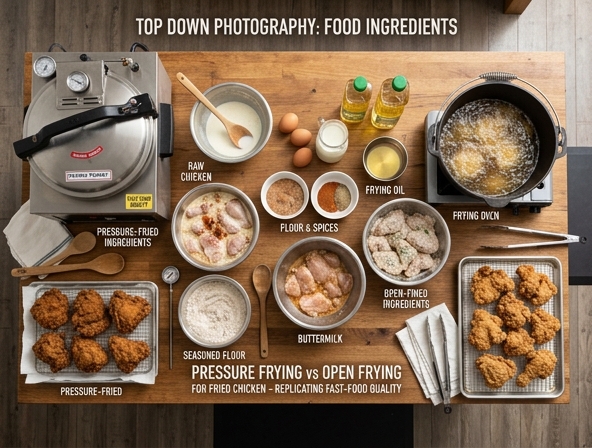
| Comparison Aspect | Pressure Frying | Open Frying |
|---|---|---|
| Primary Benefit | Superior moisture retention and consistent heat distribution. | Standard method; easier to execute but lacks professional consistency. |
| Texture & Quality | Professional-grade, golden-crust, succulent interior. | Variable results; often lacks the signature fast-food "crunch." |
| Equipment Needs | Requires specialized, safety-rated pressure fryers. | Can be done with basic kitchen tools like a Dutch oven. |
| Industry Standard | Used by iconic chains (e.g., KFC) for mass-market consistency. | Typically associated with home or amateur cooking output. |
Pressure Frying vs. Open Frying: The Quest for Fast Food Fried Chicken Perfection
For home cooks and culinary enthusiasts alike, few challenges are as alluring-or as frustrating-as attempting to replicate the elusive quality of iconic fast-food fried chicken. You know the texture: a crust that is remarkably crisp yet light, shielding meat that remains impossibly succulent and juicy. While many attribute this to "secret spice blends," the true magic lies in the physics of the cooking process itself. The fundamental divide in the professional kitchen is between pressure frying and open frying.
The Science of Pressure Frying: The Commercial Secret
Pressure frying is the method that built empires like KFC and Broaster Chicken. In a commercial pressure fryer, chicken is submerged in oil and cooked in a sealed, pressurized environment. To understand why this works, one must look at the boiling point of water. At sea level, water boils at 212°F (100°C). When you increase the atmospheric pressure inside a sealed chamber, the boiling point of the moisture inside the chicken rises significantly.
This creates a twofold effect. First, the higher temperature allows the chicken to cook much faster, reducing the time the breading spends in the oil and preventing it from becoming overly dark or scorched. Second, and most importantly, it locks moisture inside the meat. Because the boiling point of the internal juices is raised, they do not turn into steam and escape as easily as they would in an open pot. The result is chicken that is cooked through to the bone while retaining a level of tenderness that is nearly impossible to replicate in an open fryer.
The Art of Open Frying: The Southern Tradition
Open frying is the classic, traditional method most home cooks utilize. Whether using a deep fryer, a Dutch oven, or a heavy cast-iron skillet, open frying relies on atmospheric pressure. In this method, moisture from the chicken turns into steam and escapes into the oil. As this moisture leaves the meat, it creates tiny channels that allow a small amount of oil to penetrate the crust, resulting in that classic, deeply golden, crunchy exterior.
The beauty of open frying lies in the crust's texture. Without the moisture-trapping environment of a pressure fryer, the breading becomes dehydrated and crisp, creating a "shatter" when you bite into it. While this method can lead to slightly drier meat if not monitored closely, it allows for a more varied crust profile-think of the craggy, jagged edges of Southern-style fried chicken that seem to soak up hot sauce or honey perfectly.
Comparative Analysis: Moisture vs. Texture
When choosing between these two methods, the cook must decide which characteristic they prioritize:
- Moisture Retention: Pressure frying is the clear winner. The pressurized environment prevents the rapid evaporation of internal juices, ensuring that even white meat remains moist. Open frying requires precise temperature control and brining to achieve similar results.
- Crust Profile: Open frying produces a more distinct, hearty crust. The steam escaping from the chicken creates a more complex, porous exterior, which many home chefs find more satisfying than the slightly softer, tighter crust produced by a pressure fryer.
- Cooking Efficiency: Pressure fryers are workhorses. They can process large batches in under 15 minutes. Open frying is a more labor-intensive, time-consuming process that requires constant vigilance regarding oil temperature recovery times.
Can You Replicate Fast Food Quality at Home?
The biggest hurdle for the home cook is equipment. Professional pressure fryers are expensive, bulky, and, quite frankly, dangerous if not handled correctly. A standard stovetop pressure cooker is not designed for oil and should never be used for frying, as the gaskets and valves are not built to withstand hot oil, leading to catastrophic fire risks.
However, you can replicate the *experience* of fast-food chicken using open frying techniques if you focus on these three pillars:
- The Brine: To compensate for the moisture loss inherent in open frying, a long buttermilk brine is essential. The acidity tenderizes the meat, while the salt ensures the protein retains water during the intense heat of the fry.
- Oil Temperature Management: The "fast food" result depends on a stable oil temperature. Using a heavy-duty cast-iron Dutch oven provides the thermal mass needed to prevent the oil temperature from crashing when the cold chicken is added. Keep your oil strictly between 325°F and 350°F.
- The "Double Fry" Technique: Some chefs mimic the efficiency of professional fryers by frying the chicken to 75% doneness, letting it rest, and then performing a quick, high-heat flash fry just before serving. This creates a superior, extra-crisp crust that rivals commercial pressure-fried chicken.
Conclusion: The Verdict
Pressure frying is a technological marvel that guarantees consistency, moisture, and speed-the "Holy Trinity" of fast food chains. It is a process of science that turns chicken into a standardized, reliable commodity. Open frying, by contrast, is a craft. It is less forgiving, requires more attention, and varies from batch to batch, but it offers a rustic, artisanal quality that many connoisseurs prefer.
If you are looking to replicate the specific succulence of a KFC drumstick, you are chasing a feat of engineering that requires high-end equipment. But if your goal is the best possible fried chicken in a home kitchen, stop trying to force your equipment to perform like a factory. Embrace the open fryer, master your brine, control your heat, and enjoy the distinct, superior crunch that only a traditional open-fry can deliver.
Disclaimer:
The information provided on Eateryn is for general educational and informational purposes only and is not intended as medical, nutritional, or healthcare advice. It should not be used to diagnose, treat, cure, or prevent any disease or medical condition.
Always consult a qualified physician, registered dietitian, or other certified healthcare professional before making changes to your diet, exercise routine, or lifestyle, or regarding any medical questions or concerns you may have. Never disregard or delay seeking professional medical advice because of something you have read on this website.