
Potato Starch vs Rice Flour for Fried Chicken - Creating A Gluten Free Crust
Achieving a crisp, gluten-free fried chicken crust is notoriously difficult. Many home cooks default to generic flour blends, often resulting in gummy, unappealing textures. By selecting the correct starch, you gain a professional-grade, shatter-crisp finish that rivals traditional wheat coatings. Note that while both are gluten-free, their molecular structures behave differently under heat; potato starch provides superior expansion, whereas rice flour ensures structural rigidity. This guide evaluates both options to optimize your frying process.
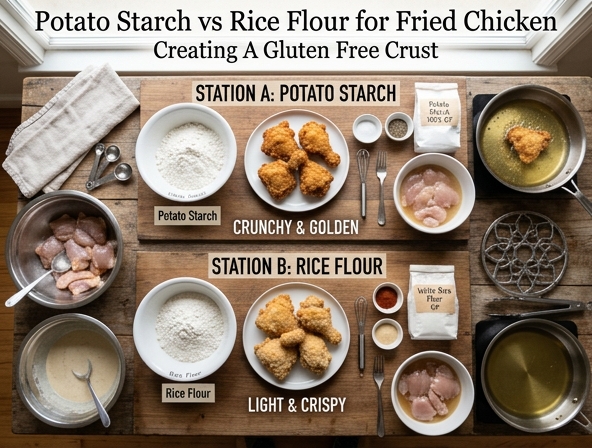
| Starch Type | Key Characteristic | Resulting Texture |
|---|---|---|
| Potato Starch | High expansion under heat | Shatter-crisp, professional-grade finish |
| Rice Flour | Superior structural rigidity | Sturdy, stable crust |
| Summary: While generic flour blends often result in gummy textures, selecting between or combining potato starch and rice flour allows for a superior, crispy, gluten-free fried chicken crust. | ||
The Science of the Shatter: Potato Starch vs. Rice Flour for Gluten-Free Fried Chicken
For the gluten-free home cook, few culinary achievements are as elusive-or as rewarding-as the perfect piece of fried chicken. We crave that definitive, auditory "shatter" when the tooth hits the crust, followed by a succulent, juice-filled interior. Traditionally, wheat flour provides the structure for this crust, utilizing gluten proteins to create a chewy, durable barrier. When you remove gluten from the equation, you are essentially stripping the foundation out of the building. To recreate that iconic experience, we must look to the science of starches and flours.
The debate between potato starch and rice flour is the central pivot point of gluten-free frying. While both are pantry staples, they behave in fundamentally different ways when submerged in hot oil. Understanding the chemistry behind these two ingredients is the secret to moving from "acceptable gluten-free alternative" to "restaurant-quality fried chicken."
The Case for Potato Starch: The Glassy Crunch
Potato starch is a root-derived starch, distinct from potato flour (which contains fibers and proteins). Because it is essentially pure starch, it possesses a unique crystalline structure. When potato starch is hydrated and heated, it undergoes gelatinization quickly, forming a thin, translucent, and incredibly crispy film around the protein.
This is the secret behind the legendary "Korean-style" fried chicken. Potato starch is remarkably effective at repelling oil. Because the crust is so efficient at preventing oil absorption, the resulting chicken is light, airy, and remarkably non-greasy. The texture is often described as "glass-like"-it is sharp, thin, and shatters instantly upon contact. If your goal is a delicate, ultra-crispy coating that allows the flavor of the seasoning to take center stage, potato starch is your primary tool.
The Case for Rice Flour: The Substantial Crust
Rice flour, particularly white rice flour, offers a different profile. Unlike potato starch, which is pure starch, rice flour contains a small amount of rice protein and fiber. This gives the crust more "body" and structure. If you are aiming for a classic, Southern-style fried chicken that feels substantial and holds up to a heavy coating of spice or a soak in a savory glaze, rice flour is often the superior choice.
However, rice flour comes with a caveat: texture. If the flour is not ground finely enough, it can leave a "gritty" sensation on the palate. To maximize the success of rice flour, look for "superfine" or "extra-fine" varieties. When fried, rice flour creates a crisp, golden-brown crust that mimics the density of wheat flour more closely than any other gluten-free alternative. It is sturdy, reliable, and provides an excellent canvas for thicker seasonings and spice rubs.
The Synergy: Why a Blend is Often Best
While chefs often swear by one or the other, the most successful gluten-free fried chicken recipes frequently employ a hybrid approach. By combining potato starch and rice flour, you are leveraging the best properties of both ingredients: the structural integrity of rice flour and the glass-like crispness of potato starch.
A common professional ratio is a 70/30 split, favoring potato starch for the outer crisp, or a 50/50 split for a more balanced "traditional" bite. The starch creates the shatter, while the flour creates the substance. When these two work in tandem, the crust becomes more than just a topping; it becomes a resilient barrier that protects the meat while providing an addictive, multifaceted texture profile.
Critical Techniques for Gluten-Free Frying
Choosing your flour is only half the battle. In the absence of gluten, your technique must compensate for the lack of elasticity and moisture retention. To achieve the perfect crust, keep the following in mind:
- The Double-Fry Method: This is non-negotiable. The first fry cooks the chicken through at a lower temperature (around 325°F). The second fry, at a higher temperature (375°F), dehydrates the exterior of the crust, creating that final, lasting crunch.
- Moisture Management: Gluten-free crusts are notoriously sensitive to moisture. Pat your chicken bone-dry before dredging. If the meat is too wet, the starch will hydrate into a gummy paste before the oil can crisp it up.
- The "Wetting" Agent: For a thicker crust, use a wet-to-dry dredge. Dip the chicken in a liquid (buttermilk or a mix of egg and gluten-free sparkling water) before tossing it in your flour/starch blend. The carbonation in sparkling water can help create tiny air pockets in the crust, further improving the lightness of the final product.
- Temperature Control: Gluten-free starches can burn faster than wheat flour. Monitor your oil temperature religiously. If the oil drops too low, the chicken will soak up the grease and lose its crunch; if it gets too high, your starch will brown (or burn) before the chicken is cooked through.
Troubleshooting Common Issues
If your chicken is coming out soggy, you are likely facing one of two issues: excessive moisture or inadequate oil temperature. Remember that starches are hygroscopic-they love to absorb water. Once the chicken is fried, do not cover it tightly with foil or place it on a flat plate where steam can get trapped underneath. Always rest your fried chicken on a wire rack to allow steam to escape from all sides. If the steam is trapped, it will turn your crispy crust into a soft, doughy mess within minutes.
If the crust is falling off, it is likely that your dredge wasn't allowed to "rest." After coating the chicken in your flour/starch mix, let it sit on a rack for 10–15 minutes before frying. This allows the starch to hydrate slightly and adhere to the surface of the meat, preventing the "shedding" effect common with gluten-free coatings.
Conclusion: The Path to Mastery
There is no single "correct" answer in the potato starch vs. rice flour debate; there is only the texture you are trying to achieve. If you crave the light, delicate, and ultra-crisp sensation of a high-end tempura or Korean fried chicken, lean heavily into potato starch. If you are looking to replicate the comforting, hearty, golden crust of a Sunday dinner, prioritize fine rice flour. By experimenting with these ratios and strictly adhering to double-frying techniques, you will find that you don't need gluten to produce the most satisfying fried chicken of your life.
The key is in the kitchen-don't be afraid to experiment with small batches. Adjust your ratios, tweak your oil temperatures, and listen for the sound of the shatter. With these ingredients at your disposal, you aren't just making "gluten-free" chicken; you are making superior fried chicken, regardless of the flour you choose.
Disclaimer:
The information provided on Eateryn is for general educational and informational purposes only and is not intended as medical, nutritional, or healthcare advice. It should not be used to diagnose, treat, cure, or prevent any disease or medical condition.
Always consult a qualified physician, registered dietitian, or other certified healthcare professional before making changes to your diet, exercise routine, or lifestyle, or regarding any medical questions or concerns you may have. Never disregard or delay seeking professional medical advice because of something you have read on this website.