
Poppy Seed vs Sesame for Bagel - Deciding on crunchy seeds
Choosing the ideal bagel topping often feels like a difficult compromise between flavor and texture. While standard poppy and sesame options dominate the industry, many operators overlook how these seeds fundamentally alter the consumer's experience. Mastery of seed composition grants you precise control over your product's crunch. Note that optimal results require rigorous temperature management. Whether mimicking traditional New York delis or artisanal boutiques, your choice matters. This guide compares their specific textural profiles and aesthetic benefits.
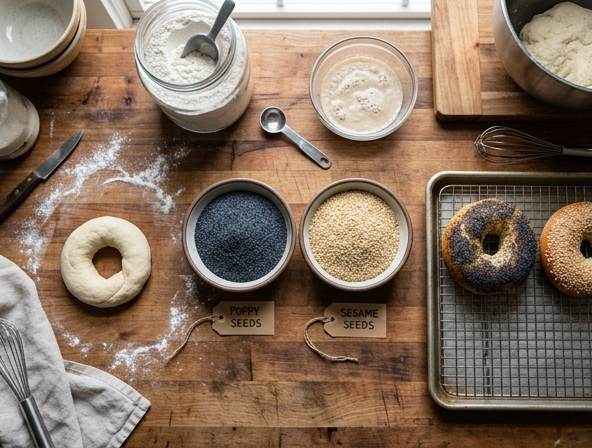
| Comparison Aspect | Poppy Seeds | Sesame Seeds |
|---|---|---|
| Textural Profile | Fine, subtle crunch | Bold, distinct crunch |
| Operational Requirement | Requires precise temperature management | Requires precise temperature management |
| Consumer Experience | Adds a delicate nutty finish | Provides a robust, savory bite |
| Market Application | Classic New York deli style | Versatile; traditional to artisanal |
The Great Bagel Debate: Poppy Seed vs. Sesame Seed
For the true bagel aficionado, the bagel is more than just bread with a hole in the middle-it is an architectural marvel of dough engineering. It requires a perfect marriage of a chewy, blistered exterior and a dense, steaming interior. However, once that foundation is established, the conversation shifts to the crowning glory: the toppings. While the world of bagel adornments has expanded to include onion, garlic, salt, and the chaotic masterpiece known as the "everything" blend, two titans remain locked in a perpetual struggle for dominance: the poppy seed and the sesame seed.
The Case for the Poppy Seed: The Subtle Artisan
Poppy seeds, small, slate-blue, and unassuming, carry a history as rich as the dough they decorate. In the world of baking, they provide a textural dimension that is entirely unique. Unlike the bold, upfront crunch of other seeds, the poppy seed offers a "micro-crunch"-a subtle, satisfying grit that dances across the palate without overwhelming the delicate flavor of the bagel itself.
Flavor-wise, poppy seeds bring an earthy, slightly nutty profile that pairs beautifully with the traditional malt-heavy flavor of a New York-style bagel. When baked, they release a faint oiliness that adds a depth of character often missed by casual eaters. They are the choice of the purist. When you bite into a poppy seed bagel, you are tasting the bagel first, with the seeds acting as a seasoning rather than a primary ingredient. Furthermore, there is an aesthetic appeal to the poppy seed; the way they speckle a dark, glossy crust creates a visual elegance that feels quintessentially old-world.
The Case for the Sesame Seed: The Toasted Titan
On the other side of the aisle stands the sesame seed. If the poppy seed is a whisper, the sesame seed is a resounding shout. These seeds are structural. They provide a robust, audible crunch that signals to the brain that you are eating something substantial. When sesame seeds hit the high heat of a bagel oven, they undergo a transformation-the Maillard reaction turns these pale, teardrop-shaped seeds into golden-brown morsels of toasted bliss.
The flavor profile of the sesame seed is intense and savory. They possess a natural high oil content that, when toasted, releases a deep, nutty aroma that defines the "bagel shop" scent we all know and love. A sesame seed bagel is not just a carrier for cream cheese; it is a flavor companion. Whether paired with a plain schmear or an aggressive lox and caper setup, the sesame seed holds its own, providing a savory anchor to the entire experience.
Comparative Analysis: Texture, Taste, and Versatility
When deciding between the two, one must consider the intended application. Here is how they stack up in the culinary ring:
- Texture: Poppy seeds provide a granular, secondary crunch that complements the crust. Sesame seeds provide a primary, structural crunch that adds bulk and "bite" to the bagel.
- Flavor: Poppy seeds are floral and earthy, best suited for those who prefer the bagel to be the star. Sesame seeds are bold, toasted, and savory, intended to add their own layer of flavor to the sandwich.
- Versatility: Sesame seeds bridge the gap between savory and sweet better than poppy seeds. A sesame bagel works with butter and jam, while a poppy seed bagel can feel slightly out of place in a sugary context.
- The "Cleanliness" Factor: Both are notoriously messy. Poppy seeds are notorious for finding their way into the crevices of your teeth and staying there, while sesame seeds have a tendency to shed like snow on your shirt the moment you pull the bagel apart.
The "Everything" Compromise
It would be impossible to discuss this rivalry without addressing the ultimate peace treaty: the "Everything" bagel. By combining poppy, sesame, garlic, onion, and coarse salt, the Everything bagel essentially admits that choosing one seed is a tragedy. However, even within this blend, the tension persists. Many connoisseurs argue that the dominance of the garlic and onion in an Everything bagel masks the nuanced beauty of the poppy seed, effectively turning the poppy into nothing more than a black-and-white fleck for visual contrast.
If you truly want to appreciate the unique qualities of the poppy seed or the sesame seed, you must enjoy them in their singular, unadulterated form. There is a purity to a dedicated sesame bagel that is lost when it is competing with the sharp bite of dehydrated onion.
How to Choose Your Champion
So, how does one decide? Consider the mood of your meal. If you are preparing a sophisticated breakfast-perhaps a simple slab of high-quality butter or a mild honey-walnut cream cheese-the poppy seed is your best friend. Its subtlety prevents it from clashing with the delicate creaminess of the spread.
Conversely, if you are building a heavy-duty sandwich-think thick-cut bacon, egg, and cheddar-the sesame seed is non-negotiable. Its robust flavor can stand up to the saltiness of the meat and the richness of the cheese. It provides the necessary textural contrast to prevent your sandwich from feeling like a soft, homogenous mush.
Conclusion: A Personal Pilgrimage
Ultimately, the battle between poppy and sesame is a testament to the versatility of the bagel itself. Whether you prefer the refined, micro-textured elegance of the poppy or the bold, toasted, savory crunch of the sesame, you are participating in a tradition that celebrates texture as much as taste.
There is no "correct" choice, only the choice that satisfies your current craving. Perhaps the best approach is to stop viewing them as rivals and start viewing them as different tools in your culinary arsenal. The next time you find yourself standing in front of the glass case at your local bagel shop, don't default to your usual. Look at the two bins, consider your schmear, and embrace the crunch that speaks to you in that moment. After all, the beauty of the bagel lies in its ability to be exactly what you need it to be.
Disclaimer:
The information provided on Eateryn is for general educational and informational purposes only and is not intended as medical, nutritional, or healthcare advice. It should not be used to diagnose, treat, cure, or prevent any disease or medical condition.
Always consult a qualified physician, registered dietitian, or other certified healthcare professional before making changes to your diet, exercise routine, or lifestyle, or regarding any medical questions or concerns you may have. Never disregard or delay seeking professional medical advice because of something you have read on this website.