
Plant-Based Vs. Beef For Burger - Nutritional Trends Explained
Plant-Based Vs. Beef For Burger: Nutritional Trends Explained
Many consumers struggle to balance flavor satisfaction with health-conscious nutritional goals when selecting burger options. Industry reports often present conflicting data on processed plant alternatives versus traditional beef. Understanding these distinctions grants consumers the clarity required to align personal health markers with dietary preferences. Please note that nutrient profiles vary significantly by processing level. Analyzing products like the Beyond Burger against lean ground beef provides a baseline. This report evaluates protein density, fats, and sodium levels.
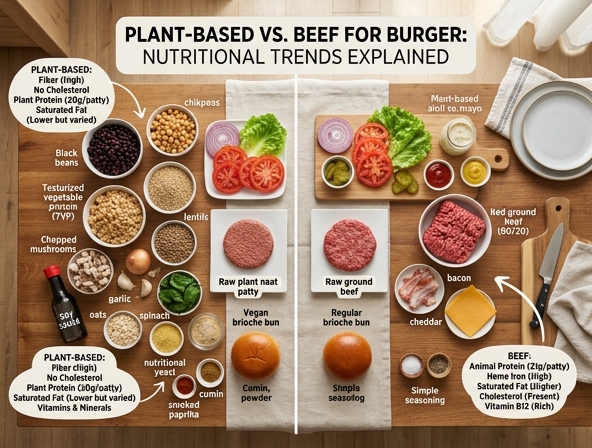
| Nutritional Metric | Plant-Based Burger (e.g., Beyond) | Lean Ground Beef | Key Takeaway |
|---|---|---|---|
| Protein Density | Plant-derived protein isolates | Natural animal protein | Both provide significant protein, but sources and amino acid profiles differ. |
| Fat Content | Often derived from added vegetable oils | Contains natural saturated and unsaturated fats | Fat profiles vary based on oil types used in plant-based processing. |
| Sodium Levels | Typically higher due to processing | Naturally lower in sodium | Plant-based options often require more sodium for flavor and shelf-stability. |
| Processing Level | Highly processed | Minimally processed (whole food) | Processing levels significantly impact the overall nutrient profile. |
Plant-Based Vs. Beef: The Nutritional Evolution of the Modern Burger
For decades, the burger was synonymous with a single food item: a circular patty of ground beef, grilled to perfection, and served on a bun. It was the quintessential symbol of Western dietary habits. However, the last decade has seen a tectonic shift in the culinary landscape. The rise of "plant-based meat" has moved from niche health food stores into mainstream fast-food chains and high-end restaurants alike. As these two titans-traditional beef and lab-engineered plant proteins-vie for a spot on your dinner plate, it is essential to look past the marketing and examine the nutritional trends driving this massive shift.
The Case for Beef: Tradition and Bioavailability
Beef has long been a staple of the human diet, primarily due to its nutrient density. From a purely nutritional standpoint, beef is a "complete" protein, meaning it contains all nine essential amino acids in proportions that the human body can readily utilize. This high biological value makes it an efficient fuel source for muscle repair and metabolic function.
Beyond protein, beef is an unparalleled source of essential micronutrients. It is rich in Heme iron, which is significantly more bioavailable-meaning easier for the body to absorb-than the non-heme iron found in plants. Furthermore, beef provides a high concentration of Vitamin B12, zinc, and selenium. For individuals struggling with anemia or specific nutrient deficiencies, beef remains an effective dietary intervention.
However, the nutritional conversation surrounding beef is not without its caveats. The primary concern among health organizations is the saturated fat and cholesterol content. Excessive consumption of red meat has been epidemiologically linked to cardiovascular disease and elevated LDL cholesterol. Furthermore, the way beef is processed-specifically, the shift toward factory-farmed, grain-fed cattle-has prompted discussions regarding the inflammatory profile of the fatty acids found in modern beef compared to the leaner, grass-fed alternatives of the past.
The Plant-Based Revolution: Engineering "Meat"
The new wave of plant-based burgers, led by companies like Beyond Meat and Impossible Foods, is a feat of food science. These are not the black-bean-and-rice patties of the 1990s; they are precision-engineered to replicate the texture, "bleed," and taste of animal fat and muscle fibers.
The nutritional profile of these burgers is fascinating because it is a result of laboratory optimization rather than biological necessity. By using pea protein, soy protein, and mung bean isolates, these products mirror the protein content of beef. They utilize coconut and sunflower oils to mimic the mouthfeel of intramuscular beef fat. To achieve the savory, "bloody" flavor of a medium-rare burger, they often use heme-an iron-containing molecule-derived from genetically engineered yeast or plant roots.
The primary advantage of the plant-based burger is the absence of dietary cholesterol and the significant reduction in saturated fats compared to high-fat beef blends. Additionally, these patties provide a modest amount of fiber-a nutrient completely absent in animal products-which is vital for gut health and blood sugar regulation.
Nutritional Head-to-Head: A Breakdown
When placing these two options side-by-side, the "healthier" choice often depends on the specific nutritional goal of the consumer:
| Nutrient | Beef Burger (80/20) | Plant-Based Burger |
|---|---|---|
| Protein | High (Complete) | Moderate-High (Often fortified) |
| Saturated Fat | High | Moderate (Coconut oil based) |
| Cholesterol | Present | Absent |
| Sodium | Low-Moderate | High |
| Fiber | Zero | Low-Moderate |
One of the most surprising findings for many consumers is the sodium content. Because plant-based proteins are bland by nature, manufacturers add significant amounts of salt to replicate the savory profile of meat. Frequently, a popular plant-based burger can contain 20–30% more sodium than a standard beef patty. For individuals managing hypertension or sensitive to salt, this is a critical, often-overlooked factor.
The "Health Halo" and the Ultra-Processed Reality
Perhaps the most significant nutritional trend to understand is the "health halo" surrounding plant-based meats. Because they are "plant-based," there is a subconscious assumption that they are automatically healthier. However, nutritionists argue that many of these products fall into the category of "ultra-processed foods."
While beef is a single-ingredient food, a plant-based burger may contain upwards of 20 ingredients, including stabilizers, emulsifiers, methylcellulose, and artificial flavorings. For the diet-conscious, this raises questions about the long-term metabolic effects of consuming highly refined, processed plant isolates. The trend is moving toward "whole-food" plant options-like lentils, mushrooms, and nuts-which do not mimic meat but provide superior nutritional density without the heavy processing.
Sustainability as a Nutritional Context
Nutritional trends cannot be fully decoupled from environmental impact. The planetary health diet-a movement championed by organizations like the EAT-Lancet Commission-suggests that our nutritional choices must account for the sustainability of our food systems. Beef production is notoriously resource-intensive, requiring vast amounts of water and land and contributing significantly to greenhouse gas emissions. Plant-based alternatives require a fraction of these resources. For many, the "nutritional" decision is now an ethical one, where the benefit of a lower carbon footprint is considered part of the overall health impact of the food consumed.
The Verdict: Balance Over Binary
Ultimately, the rivalry between plant-based and beef burgers is less about finding a single "superfood" and more about understanding one's own dietary requirements. If your goal is to minimize saturated fat and cholesterol, the plant-based burger is a useful tool, provided you account for the higher sodium intake and recognize it as a processed food. If you prioritize whole foods and high bioavailability of micronutrients like B12 and iron, high-quality, grass-fed beef consumed in moderation remains a nutrient-dense option.
The healthiest approach is to move away from the binary mindset. The burger, whether plant-derived or animal-derived, should be treated as an occasional treat rather than the foundation of a diet. By filling the rest of your week with whole, unprocessed vegetables, legumes, and lean proteins, the nutritional differences between a single burger choice become significantly less impactful. We are currently living through a golden age of food innovation; the real trend, therefore, is not choosing the "better" burger, but choosing a diverse diet that supports both personal longevity and planetary health.
Disclaimer:
The information provided on Eateryn is for general educational and informational purposes only and is not intended as medical, nutritional, or healthcare advice. It should not be used to diagnose, treat, cure, or prevent any disease or medical condition.
Always consult a qualified physician, registered dietitian, or other certified healthcare professional before making changes to your diet, exercise routine, or lifestyle, or regarding any medical questions or concerns you may have. Never disregard or delay seeking professional medical advice because of something you have read on this website.