
Paprika vs Cayenne Pepper for Fried Chicken - Balancing Sweet And Spicy Profiles
Paprika vs. Cayenne Pepper for Fried Chicken
Achieving a balanced fried chicken profile often feels elusive, frequently resulting in breadings that are either bland or aggressively hot. While standard salt and black pepper provide a basic foundation, they lack essential nuance. Paprika and cayenne offer elevated profiles that transform coatings into professional-grade experiences. Note that these spices require heat activation to reach peak potency. From smoked paprika's depth to cayenne's sharp kick, we will examine how to calibrate these flavors effectively.
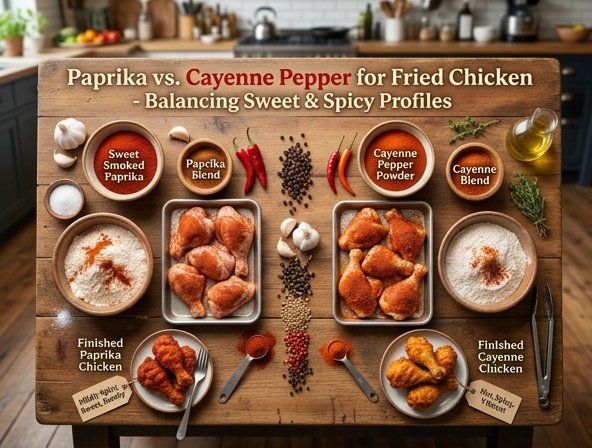
| Feature | Description |
|---|---|
| Primary Goal | Achieving a balanced, professional-grade fried chicken coating beyond basic salt and pepper. |
| Paprika's Role | Adds depth and nuance to the flavor profile (especially smoked varieties). |
| Cayenne's Role | Provides a sharp, aggressive heat to sharpen the breading profile. |
| Technical Requirement | Spices must undergo heat activation during the frying process to reach their full potency. |
Paprika vs. Cayenne Pepper for Fried Chicken: Balancing Sweet and Spicy Profiles
The quest for the perfect piece of fried chicken is a journey through texture and seasoning. While the crunch of the crust and the juiciness of the meat are non-negotiable pillars, the true soul of the dish lies in the spice blend. Among the vast array of seasonings in a pantry, two red powders stand out as the undisputed heavyweights of the fried chicken world: paprika and cayenne pepper. While they might look similar in the jar, their roles in the culinary architecture of fried chicken are vastly different. Understanding how to balance their sweet and spicy profiles is the secret to elevating your fried chicken from merely edible to truly memorable.
The Role of Paprika: The Foundation of Color and Depth
Paprika is, in many ways, the backbone of a great dredge. Derived from dried and ground red peppers (often Capsicum annuum), paprika provides a depth of flavor that is often described as earthy, mildly sweet, and deeply savory. Unlike spices that focus purely on heat, paprika is a structural component of your flour mixture.
When frying, paprika performs two critical functions:
- Color Development: Because of its high concentration of natural pigments, paprika gives the fried chicken that signature deep golden-brown or mahogany color. Without it, your crust might look pale and uninviting, regardless of how crispy it is.
- Flavor Base: Paprika provides a "sweet" base note that helps round out the sharper, more aggressive spices in your rub. It offers a subtle fruitiness that complements the fats in the chicken skin and the buttermilk in the marinade.
It is important to understand the varieties. Sweet paprika is the standard, offering a mild pepper flavor. Smoked paprika, however, introduces a campfire-like aroma that can drastically alter the final profile of your chicken, veering it toward a more rustic, barbecue-forward flavor. For a classic Southern style, stick to sweet or a blend of sweet and mild Hungarian paprika.
The Role of Cayenne: The Sting and the Wake-Up Call
If paprika is the foundation, cayenne pepper is the lightning bolt. Cayenne is significantly hotter than paprika, typically clocking in between 30,000 and 50,000 Scoville Heat Units. It is not just "hot" in the way that ghost peppers are; it possesses a clean, sharp, and immediate heat that strikes the back of the palate.
In the context of fried chicken, cayenne serves to cut through the richness of the fried oil and the heavy coating of the batter. Without cayenne, fried chicken can often feel "flat" or overly greasy. A touch of cayenne acts as a palate cleanser, forcing you to reach for the next bite. However, because it is potent, it must be used with precision. Too little, and you lose that addictive kick; too much, and the bitterness of the pepper can overwhelm the delicate meat underneath.
The Golden Ratio: Creating Harmony
Balancing paprika and cayenne is a matter of understanding synergy. The sweetness of the paprika acts as a buffer for the intense heat of the cayenne. This is why you will rarely see a high-quality fried chicken recipe that uses cayenne without a substantial amount of paprika to support it.
The "Standard" Baseline: A classic starting ratio for home cooks is a 4:1 ratio-four parts paprika to one part cayenne. This allows the paprika to dominate the color and provide a savory, sweet undertone, while the cayenne provides a warm, lingering hum of heat that hits the throat only after the initial crunch.
If you prefer a Nashville-style heat, you might push this toward a 2:1 ratio, but caution is advised. As you increase the amount of cayenne, you must also increase your salt content slightly. Salt is a flavor enhancer that bridges the gap between spice and meat; without enough salt, high levels of cayenne will taste like dry, burnt dust rather than a well-rounded spice blend.
Application Techniques: Dredge vs. Batter
Where you place these spices matters just as much as how much you use. For the most balanced flavor, you should season both your marinade and your dredge.
In the Marinade: Mix your cayenne into the buttermilk or brine. Because the liquid penetrates the meat, the spice will infuse the chicken itself. Use less cayenne here, as heat intensifies during the frying process.
In the Dredge: This is where the paprika shines. By mixing your paprika and cayenne into the seasoned flour, you ensure that every bite of the crust carries the full weight of your spice blend. As the flour fries in the hot oil, the paprika's natural sugars caramelize, contributing to a savory, nutty aroma that defines top-tier fried chicken.
Pro-Tips for Success
- Freshness Matters: Spices lose their potency over time. If your paprika is a dull, dusty brown color, it will taste like sawdust. Ensure your spices are vibrant in color and fragrant when you open the jar.
- Watch the Heat: Paprika contains natural sugars. If your oil temperature is too high (above 375°F / 190°C), the paprika in your crust will burn, leading to a bitter, blackened exterior. Keep your fry temperature steady at 350°F to allow the flavors to bloom without scorching.
- The "Bloom": If you are making a wet batter, stir your spices into a small amount of warm oil or melted butter before adding them to your liquid ingredients. This "blooming" process helps release the essential oils in the paprika and cayenne, creating a more robust flavor profile.
Conclusion: Crafting Your Signature Crust
Ultimately, the battle between paprika and cayenne is a false dichotomy. They are not competitors; they are dance partners. Paprika provides the stage, the color, and the sweet, earthy depth; cayenne provides the drama, the fire, and the excitement. When balanced correctly, these two ingredients transform simple flour and chicken into a complex culinary experience. Experiment with your ratios, pay attention to the quality of your spices, and don't be afraid to adjust until your fried chicken possesses that perfect, addictive harmony of sweet and spicy.
Disclaimer:
The information provided on Eateryn is for general educational and informational purposes only and is not intended as medical, nutritional, or healthcare advice. It should not be used to diagnose, treat, cure, or prevent any disease or medical condition.
Always consult a qualified physician, registered dietitian, or other certified healthcare professional before making changes to your diet, exercise routine, or lifestyle, or regarding any medical questions or concerns you may have. Never disregard or delay seeking professional medical advice because of something you have read on this website.