
Pan-Pressed vs Toaster Oven for Grilled Cheese Sandwich - Comparing Crispiness Levels
Achieving the ideal golden-brown crunch without compromising the cheese's melt is a common culinary frustration. While stovetop pan-searing remains the industry standard, many home cooks now utilize toaster ovens for efficiency. Mastering these thermal dynamics grants you precise control over your sandwich's final structural integrity. Note that results depend heavily on your specific appliance's heat distribution. Cast-iron pans offer superior caramelization, while toaster ovens provide consistent, hands-free convection. We will now compare these methods to refine your technique.
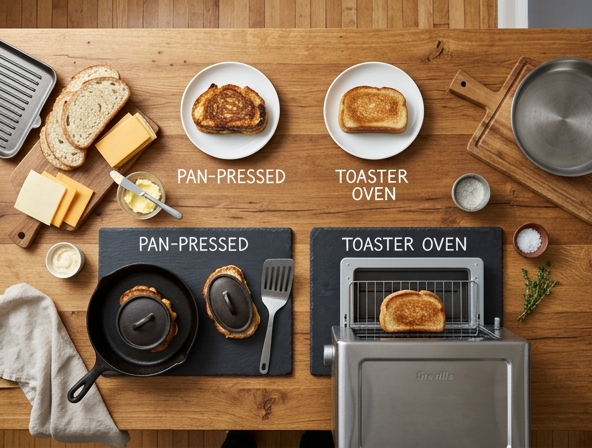
| Cooking Method | Primary Benefit | Key Characteristics | Important Note |
|---|---|---|---|
| Pan-Pressed (Stovetop) | Superior Caramelization | Industry standard for achieving a perfect golden-brown crunch. | Best results are typically achieved using cast-iron cookware. |
| Toaster Oven | Efficiency & Convenience | Provides hands-free, consistent convection heat. | Performance varies based on the specific appliance's heat distribution. |
The Ultimate Grilled Cheese Showdown: Pan-Pressed vs. Toaster Oven
The grilled cheese sandwich is a pillar of culinary comfort. It is deceptively simple-bread, fat, and cheese-yet it serves as a battleground for passionate debates among food enthusiasts. While the ingredients are constant, the methodology of execution can radically transform the final product. Specifically, the contest between the classic pan-pressed stovetop method and the more modern toaster oven approach reveals deep differences in texture, heat penetration, and, most importantly, the elusive quality of "crispiness."
The Philosophy of the Pan-Pressed Method
For purists, the stovetop skillet is the only way to achieve grilled cheese perfection. This method is essentially a form of shallow frying. By placing the sandwich in a preheated cast iron or non-stick pan, you are creating immediate, high-intensity contact between the bread's exterior and the cooking surface.
The magic of the pan-pressed method lies in lipid-mediated heat transfer. Whether you use butter or mayonnaise (the secret weapon of many professionals), the fat acts as a conductive medium, filling the microscopic crevices of the bread to ensure an even, golden-brown sear. When you apply pressure-either with a spatula or by placing a weighted second pan on top-you are effectively compressing the bread, increasing the surface area contact with the heat source.
This results in a crust that is not merely toasted, but seared. It possesses a distinct "shatter" when bitten, characterized by a deep, nutty flavor profile derived from a robust Maillard reaction. Because the cooking process is relatively fast, the interior of the bread remains slightly moist, creating a beautiful contrast between the crisp, fried exterior and the pillowy, soft crumb inside.
The Toaster Oven Method: Precision and Evenness
The toaster oven, conversely, treats the grilled cheese more like a baked good. It relies on radiant heat-and in many modern units, convection-to cook the sandwich. Because the heat is ambient, the process is gentler and more uniform. There is no "flipping" required, which preserves the structural integrity of the sandwich and keeps the cheese exactly where you put it.
However, the nature of the crispiness here is fundamentally different. In a toaster oven, the bread undergoes a process closer to dehydration. As the heat circulates, it pulls moisture out of the bread, turning it into a crunchy, toast-like state. While the crust is certainly crisp, it lacks the depth of the fried, buttery sear found in the skillet. It is a "dry" crisp rather than a "rich" one.
The primary advantage of the toaster oven is the melt-to-toast ratio. Because the sandwich is heated from all sides at once, the cheese has more time to reach its optimal flow point without the risk of the bread burning. If you prefer a sandwich where the cheese is perfectly molten from edge to edge without risking a charred crust, the toaster oven is a superior piece of technology.
The Science of Crispiness: A Comparative Breakdown
1. Texture Profile
- Pan-Pressed: Offers a complex, multi-layered texture. You get the crunch of the fried crust, the chew of the toasted bread, and the steam-softened interior. It feels more indulgent and "fatty" on the palate.
- Toaster Oven: Provides a uniform, consistent crunch. It is more akin to a high-quality piece of sourdough toast. It feels cleaner and lighter, but it lacks the tactile variety of the pan-pressed version.
2. The Maillard Reaction vs. Dehydration
The pan-pressed method maximizes the Maillard reaction-the chemical reaction between amino acids and reducing sugars that gives browned food its distinctive flavor. The constant contact with the hot metal surface caramelizes the butter and bread sugars intensely. The toaster oven, while it does induce browning, relies more heavily on drying out the surface of the bread to achieve crispiness. Consequently, the flavor profile of the pan-pressed sandwich is often described as "savory-rich," whereas the toaster oven version is "toasty-sweet."
3. Moisture Control
One of the greatest risks of the toaster oven is moisture loss. If the heat is too low or the time too long, the entire sandwich can become dry or brittle. The pan-pressed method locks moisture into the center of the sandwich because the rapid sear creates a barrier that prevents the interior from drying out before the cheese melts.
Which Method Reigns Supreme?
The choice between pan-pressed and toaster oven often comes down to your priorities in a grilled cheese sandwich:
Choose the Pan-Pressed Method if: You value the experience of a "fried" sandwich. You want that deep, golden-brown crust, a significant buttery richness, and a textural contrast between the exterior crunch and the soft, steam-filled center. It is the classic choice for a reason; it is the culinary equivalent of comfort in its most concentrated form.
Choose the Toaster Oven Method if: You are aiming for consistency and convenience. If you are preparing sandwiches for a crowd, or if you are using delicate breads that might fall apart under the pressure of a spatula, the toaster oven is the professional's choice for repeatability. It is also the superior method for those who prefer a "cleaner" sandwich where the cheese is perfectly melted and the bread is toasted evenly, without the greasy finish of the pan.
Final Verdict
While the toaster oven offers impressive control, the pan-pressed method remains the gold standard for the quintessential grilled cheese sandwich. The combination of intense, conductive heat and the addition of fat creates a level of flavor complexity that radiant heat simply cannot replicate. To achieve the absolute peak of crispiness, utilize a cast-iron skillet, use mayonnaise on the exterior for a higher smoke point and better browning, and apply a steady, consistent weight for the first two minutes of cooking. The result will be a sandwich that is not just crisp, but a masterclass in texture and taste.
Disclaimer:
The information provided on Eateryn is for general educational and informational purposes only and is not intended as medical, nutritional, or healthcare advice. It should not be used to diagnose, treat, cure, or prevent any disease or medical condition.
Always consult a qualified physician, registered dietitian, or other certified healthcare professional before making changes to your diet, exercise routine, or lifestyle, or regarding any medical questions or concerns you may have. Never disregard or delay seeking professional medical advice because of something you have read on this website.