
Oven Baked Vs Sous Vide For Buffalo Wings - Perfecting The Internal Tenderness
Achieving the perfect buffalo wing texture often feels elusive; dry, stringy meat is a common frustration for home cooks. While traditional deep frying or standard oven baking remain the industry standards, they frequently compromise internal moisture. Sous vide technology offers a superior alternative, ensuring consistent, buttery tenderness through precise temperature control. Note that a post-cook sear remains essential for crispy skin. Techniques like these consistently deliver restaurant-quality results. This guide compares both methods to optimize your culinary process.
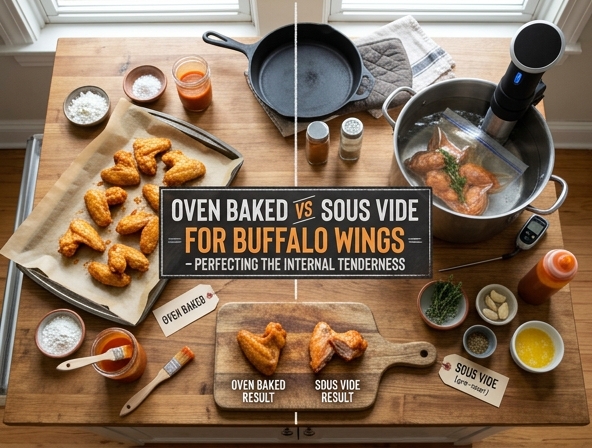
| Method | Key Advantage | Main Drawback | Outcome |
|---|---|---|---|
| Oven Baking | Traditional and accessible | Risk of dry or stringy meat | Classic wing texture |
| Sous Vide | Precise temperature control | Requires post-cook searing for crispiness | Superior, buttery tenderness |
Oven Baked vs. Sous Vide for Buffalo Wings: Perfecting Internal Tenderness
The Buffalo wing is a cornerstone of American culinary culture. It is a dish defined by a paradox: it must possess a skin that is shatteringly crisp, yet the meat underneath should be impossibly succulent, pulling away from the bone with the slightest resistance. For decades, the debate centered on frying versus baking. However, as precision cooking enters the home kitchen, a new contender has emerged. When it comes to the specific pursuit of internal tenderness, how does the traditional oven stack up against the scientific precision of the sous vide bath?
The Oven Baked Approach: Mastering Thermodynamics
Oven baking is the classic home-cook method, but it is often misunderstood. Many believe that the oven inherently dries out wings. In reality, the oven is an excellent tool for tenderness, provided you manage the thermodynamics correctly. The primary challenge with oven-baked wings is the rendering of the fat. Chicken wing skin is rich in fat and collagen, and if not cooked at a sustained, high-enough temperature, the meat can become rubbery while the skin remains flaccid.
To achieve tenderness in the oven, the "Low and Slow to High and Fast" method is king. By starting the wings at a lower temperature (around 300°F/150°C), you allow the collagen to break down into gelatin without rapidly seizing the proteins. This transition creates a moist environment within the muscle fibers. Following this with a high-heat blast (450°F/230°C) crisps the exterior. The result is a classic, authentic wing texture-one that retains a bit of "chew" which many purists argue is essential to the Buffalo experience.
The Sous Vide Revolution: Precision at the Cellular Level
Sous vide cooking-submerging vacuum-sealed wings in a temperature-controlled water bath-changes the game entirely. When you cook a wing at 155°F (68°C) for two to three hours, you are essentially performing a form of controlled braising. Because the temperature is locked in, the meat cannot overcook. It will remain at the exact stage of tenderness you desire, regardless of whether it spends two hours or four in the bath.
The beauty of the sous vide method lies in cellular breakdown. In a conventional oven, moisture evaporates as the heat rises. In a bag, that moisture is trapped. The enzymes in the chicken fibers have a longer window to break down connective tissues into succulent, buttery meat. If you value a wing that is almost "confit" in texture-where the meat is remarkably consistent from the center to the bone-sous vide is objectively superior. You are guaranteed a level of internal tenderness that is virtually impossible to replicate through dry heat alone.
Comparing the Texture Profiles
When you hold a sous vide wing, the meat feels different. It is velvety and consistent. There is no risk of the "dry fiber" texture that occurs when oven temperatures fluctuate. However, there is a trade-off. Some diners find sous vide wings to be *too* soft. Because the proteins are so fully relaxed, the wing loses the slight, firm "snap" associated with traditional fried or high-heat baked wings.
The oven-baked wing, conversely, retains more of the muscle's natural bite. If your preference leans toward a wing that feels "meaty" and substantial, the oven provides a more familiar mouthfeel. If you are chasing the "fall-off-the-bone" experience, the sous vide method is the undisputed champion.
The Hybrid Masterclass: The Best of Both Worlds
For the true wing aficionado, the secret isn't choosing one over the other; it's leveraging both. The "Hybrid Method" is currently the gold standard for home chefs looking to achieve restaurant-quality tenderness while maintaining that iconic crispy skin.
The Workflow:
- Step 1: The Sous Vide Bath. Season your wings generously with salt and garlic powder. Seal them in a bag and cook at 155°F (68°C) for 2 hours. This guarantees the internal tenderness and ensures the meat is fully cooked and succulent.
- Step 2: The Chill. This is the most crucial, often overlooked step. Remove the wings from the bag and pat them aggressively dry with paper towels. Place them on a wire rack in the refrigerator for at least an hour. Drying the surface is the enemy of steam and the friend of crispiness.
- Step 3: The High-Heat Finish. Preheat your oven to 500°F (260°C) or utilize an air fryer at 425°F. Because the meat is already perfectly cooked and tender from the sous vide process, you only need to focus on rendering the fat and crisping the skin. Five to ten minutes at high heat will transform the exterior without compromising the buttery interior.
Final Verdict: Which Should You Choose?
If you are cooking for a crowd and need efficiency, the oven-baked method, using a convection setting and a wire rack, is the most practical choice. It offers a respectable level of tenderness that satisfies the majority of wing lovers. You get a great result with significantly less gear and prep time.
However, if you are hosting a dinner where the quality of the food is the main event, the sous vide method-specifically when followed by a high-heat crisping finish-is in a league of its own. It eliminates the risk of dry, stringy meat and provides a level of succulent tenderness that feels truly luxurious. In the quest for the perfect Buffalo wing, sous vide gives you the control, but the oven provides the final, essential transformation. Combine them, and you will never look at a standard bar wing the same way again.
Disclaimer:
The information provided on Eateryn is for general educational and informational purposes only and is not intended as medical, nutritional, or healthcare advice. It should not be used to diagnose, treat, cure, or prevent any disease or medical condition.
Always consult a qualified physician, registered dietitian, or other certified healthcare professional before making changes to your diet, exercise routine, or lifestyle, or regarding any medical questions or concerns you may have. Never disregard or delay seeking professional medical advice because of something you have read on this website.